Post
Why Travel Insurance Claims Get Denied: The Fine Print
2026-09-15
The short answer
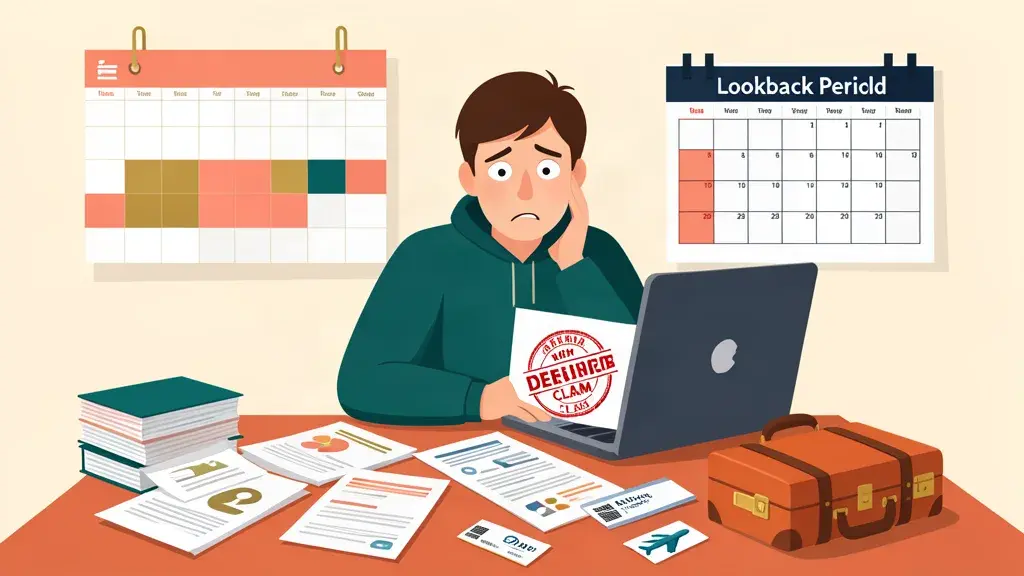
Travel insurance works — until it doesn’t. Industry data shows 20-30% of all travel insurance claims are denied, and the single biggest reason isn’t a coverage gap or a technicality. It’s paperwork. Missing receipts. Late filings. Medical records that don’t use the magic words the adjuster needs.
This post breaks down the denial playbook with dated sources: the lookback periods that void pre-existing condition coverage, the 30-day filing deadline that catches most travelers, the appeal success rates when you fight back, and the documentation checklist that pays for itself.
The data comes from Squaremouth (the largest US travel insurance marketplace, 4.7M customers), Emergency Assistance Plus, Travel Guard, and the Reddit horror stories that reveal how denials actually play out in practice.
The denial landscape in 2026
Squaremouth’s claims center reports that roughly 20-30% of travel insurance claims are denied due to fixable errors — missing documentation, clerical mistakes, or misunderstanding what the policy covers (Squaremouth, 2026).
Emergency Assistance Plus aggregates broader industry data for 2026:
- The US travel insurance market hit $8.91 billion in 2026, growing at 15.62% CAGR (Mordor Intelligence, 2026)
- 63% of travelers say they’d book travel if they knew insurance covered it (Squaremouth, 2026)
- Average trip cost rose 24% YoY to $9,668 — meaning the stakes per claim are higher than ever (Squaremouth, 2026)
- Trip cancellation claims average $5,511 in payouts; some exceed $50,000
- Emergency medical claims average $1,816 per claim and represent over 27% of all paid claims
- Average delay claim: $512; average delayed baggage: $256
The takeaway: people are filing more claims for more money, and the denial rate is holding steady at one in four. Understanding why claims get denied before you buy — and before you file — is worth more than any premium savings.
Reason #1: Missing or insufficient documentation
This is the big one. Squaremouth’s claims team reports that missing or insufficient documentation is the #1 reason travel insurance claims are denied — not policy exclusions, not pre-existing conditions, not coverage gaps. Just paperwork.
What triggers it:
- No receipt for the expense you’re claiming
- Medical records that don’t explicitly state the treatment was an “emergency” or “medically necessary”
- No airline-issued delay/cancellation documentation (the airline’s email confirmation isn’t enough — most providers want the formal incident report)
- Photos of damaged baggage without a property irregularity report (PIR) from the airline
- Credit card statements that don’t match the claimed amount
The fix: Before you even leave, photograph every receipt. Ask the treating physician to write “emergency” or “medically necessary” in their notes. Get the airline’s formal delay report at the gate — don’t wait for the email. File the PIR before leaving the airport baggage claim.
Reason #2: The pre-existing condition lookback period
This is the trap that catches experienced travelers. Most travel insurance policies define a pre-existing condition as any injury, sickness, or medical issue that first occurred, worsened, or manifested symptoms within the 60-180 days BEFORE your policy purchase date (Squaremouth, 2026).
How it works in practice:
- You buy a policy on September 1 for an October trip
- You saw a doctor for knee pain on July 15 (47 days before purchase)
- In September 20, your knee locks up and you cancel the trip
- The claim is denied: the July 15 visit falls within the lookback period, making the knee a pre-existing condition
The lookback period varies by plan:
- Standard plans: 180 days (Travel Guard standard, most comprehensive policies)
- Better plans: 90 days (Travel Guard Deluxe)
- Best plans with waivers: 0 days (if you buy a pre-existing condition waiver, usually available if you buy within 14-21 days of initial trip deposit)
The fix: Buy your insurance within 14-21 days of your first trip payment to qualify for a pre-existing condition waiver. Keep records showing your condition was “stable” during the lookback period — no new treatments, no medication changes, no specialist referrals.
Reason #3: Missing the claims deadline
Most providers enforce a strict filing deadline — typically 30 to 90 days after the incident. Miss it, and your claim is closed. Period. No appeal. No reconsideration.
Squaremouth’s guidance is explicit: “Once you miss this deadline, your claim will be considered closed for good” (Squaremouth, 2026).
This catches travelers who assume they have months to file. Some policies give you 30 days from the date of the covered event; others give 90 days from the end of the trip. The exact window varies by provider.
The fix: File immediately. Don’t wait for the airline’s refund to process. Don’t wait for the hospital’s final bill. Submit what you have and supplement later. Squaremouth explicitly recommends this approach.
Reason #4: Event falls outside policy coverage
Travel insurance doesn’t cover everything. Common exclusions that trigger denials:
- Elective treatments and routine care — that dental cleaning or annual physical isn’t an “emergency”
- High-risk activities — many policies exclude skydiving, scuba below 30m, mountaineering, and bungee jumping unless you buy an adventure sports rider
- Foreseen events — if a hurricane is named before you buy the policy, damage from that specific storm is excluded (but subsequent storms may be covered)
- Alcohol-related incidents — injuries sustained while intoxicated are commonly excluded
- Mental health conditions — anxiety, depression, and bipolar disorders frequently trigger exclusions unless specifically waived
The fix: Read the policy’s exclusion section before buying. If you’re doing adventure activities, confirm they’re covered. If you’re traveling during hurricane season, buy before the storm is named.
Reason #5: Filing for foreseen events
Travel insurance is designed to cover unforeseen events — disruptions you couldn’t have predicted when you bought the policy. The most common “foreseen event” denials involve weather.
Example: Hurricane Maria is forecast to hit the Caribbean in 5 days. You buy a policy today. Maria damages your resort. Claim denied: the storm was a known, foreseen event when you purchased coverage.
The fix: Buy early. The CFAR (Cancel For Any Reason) add-on is the ultimate hedge — it lets you cancel for any reason not covered by the policy, including foreseen events. CFAR purchases nearly doubled in 2026, rising from 6.9% to 13.5% of policies sold (Squaremouth, 2026).
How to appeal a denied claim
If your claim is denied, Squaremouth outlines a four-step appeals process:
-
Don’t panic. 20-30% of denials are for fixable errors — missing paperwork, clerical mistakes, incomplete documentation.
-
Understand the denial type. A “soft denial” means the provider needs more information — fixable. A “hard denial” requires a formal appeal.
-
File your appeal within the deadline. Typically 30, 60, or 90 days from the denial notice. Missing this deadline closes the claim permanently.
-
Request claims advocate intervention. Squaremouth offers a Zero Complaint Guarantee where their licensed claims adjusters mediate between you and the provider. They’ve successfully overturned denials for customers.
Success rates: While Squaremouth doesn’t publish specific appeal success rates for travel insurance, the broader health insurance industry data is encouraging: internal appeals succeed roughly 44-56% of the time overall, and administrative errors are overturned about 78% of the time (CareRoute, 2026). If you believe the denial was wrong, appeal. The worst they can say is no.
The 2026 claim filing checklist
Based on Squaremouth’s documentation guide and real-world denial patterns:
For trip cancellation/interruption:
- Original booking confirmation and receipts
- Cancellation confirmation from airline/hotel/tour operator
- Written explanation of why you canceled (medical, family emergency, etc.)
- Medical records (if health-related) stating the condition and that travel was not advised
- Proof of refunds received or denied from other sources
For medical emergencies:
- Itemized medical bills (not just the credit card receipt)
- Medical records from the treating physician
- Proof the treatment was an “emergency” or “medically necessary”
- Receipts for any medications prescribed during treatment
For baggage claims:
- Property Irregularity Report (PIR) from the airline — file BEFORE leaving the airport
- Photos of damaged items
- Original purchase receipts for high-value items
- Proof of any airline reimbursement received
For travel delays:
- Formal airline delay report (get it at the gate, don’t wait for email)
- Receipts for meals, accommodation, and transportation during the delay
- Proof the delay exceeded your policy’s threshold (typically 6+ hours)
Universal requirements:
- Your policy number and coverage details
- Proof of travel (boarding passes, hotel confirmations)
- Proof of payment for the trip (credit card statement, bank transfer)
- Government-issued ID
- The claim form itself — filled out completely, signed, and submitted within the deadline
What the data says about 2026 travelers
Squaremouth’s Summer 2026 report reveals a traveler population that’s spending more and protecting more:
- Average trip cost: $9,668 (up from $7,794 in 2025) — a 24% increase
- CFAR coverage purchases doubled from 6.9% to 13.5% — travelers want flexibility
- Insurance buying is happening earlier — 62 days average between trip deposit and policy purchase, down from 71 days in 2025
- Boomers (40.2% of trips) and Gen X (26.0%) dominate insured travel
- South Africa ($24,221) and Tanzania ($23,879) are the highest-cost insured destinations — meaning claims there are expensive
The trend is clear: travelers are buying earlier, covering more, and claiming more. The denial rate holding at 20-30% means understanding the process is more valuable than ever.
The receipts discipline
The receipts discipline for travel insurance is simple:
Before the trip:
- Buy within 14-21 days of first trip payment (pre-existing condition waiver)
- Photograph and back up every booking receipt
- Understand your policy’s exclusions and lookback period
- Get the adventure sports rider if you’re doing anything beyond walking tours
During the trip:
- Get formal documentation for every disruption (delay reports, medical records, PIRs)
- Photograph everything — damaged baggage, hospital bills, pharmacy receipts
- Ask doctors to write “emergency” or “medically necessary”
- Keep every receipt, no matter how small
After the trip:
- File within 30 days of the incident
- Submit what you have — supplement later if requested
- Appeal if denied (44-56% success rate on internal appeals)
- Escalate to your state insurance department if the appeal fails
The policies are written to be claimed. But the paperwork burden is real. Treat documentation like a travel expense — budget time for it, and the payouts will follow.
Related reading:
- Travel Insurance in 2026: What’s Covered and What Isn’t
- Consular Filter 2026: Countries That Require Visa Insurance
- Cruise Insurance Timing: Why 14–21 Days Early Isn’t Optional
- Travel Emergency Guide: What to Do When Things Go Wrong Abroad
- Solo Female Travel Safety 2026: Risks, Scams, and Practical Precautions
Sources
- Squaremouth — What to Do if Your Travel Insurance Claim Was Denied (2026)
- Squaremouth — Pre-Existing Conditions Coverage (lookback period 60-180 days)
- Squaremouth — Summer 2026 Travel Trends (24% YoY spending increase, CFAR 13.5%)
- Emergency Assistance Plus — 35+ Travel Insurance Statistics 2026
- Mordor Intelligence — US Travel Insurance Market 2026 ($8.91B, 15.62% CAGR)
- MoneyGeek — Travel Insurance Look-Back Period Explained (60-180 days)
- Travel Guard — Pre-Existing Medical Condition Plans (90-day lookback on Deluxe)
- Reddit r/travel — Travel Insurance Denied Claims Horror Stories (2026)
- Chase Sapphire — Trip Delay Insurance Warning (2026)
- Forbes — Third of Travel Insurance Claims Rejected for Missing Paperwork (Summer 2026)