Destination guide · Europe
Budapest
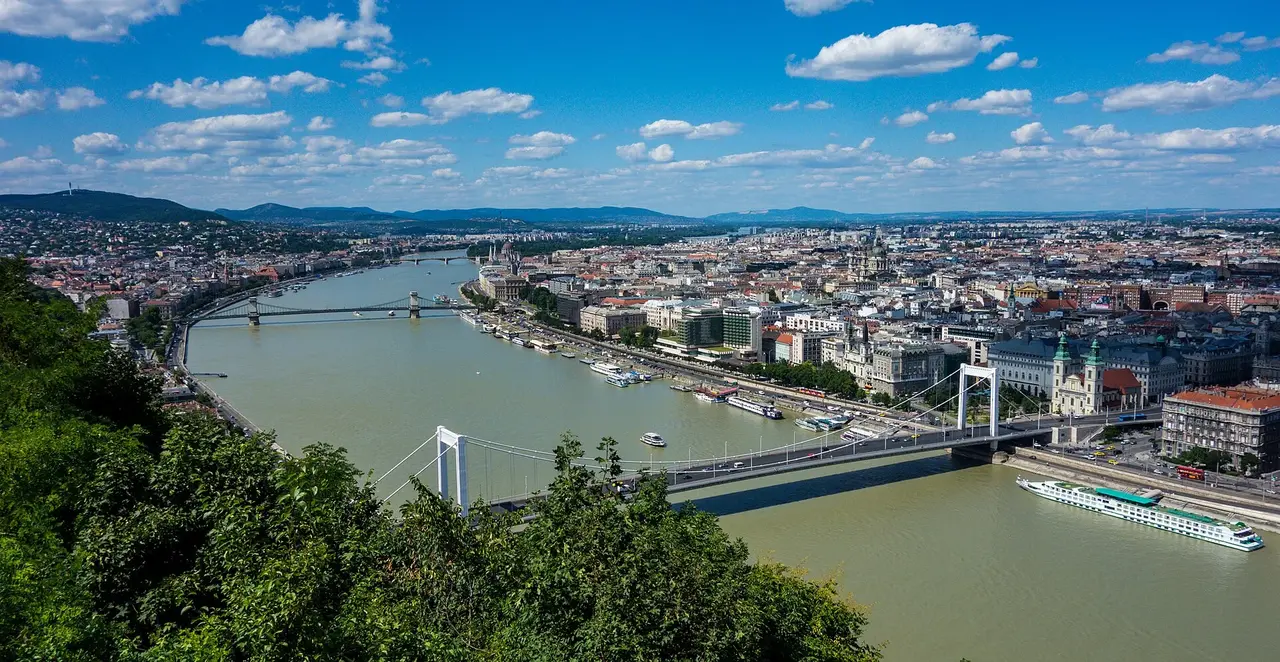
Danube-split grandeur — thermal baths, ruin bars, and one of Europe's best urban parks, at prices that undercut the West by half.
The short answer
- Cost: mid-range ≈ $87–156/day
- Best time: Spring (Apr–May) and Autumn (Sep–Oct)
- Vibe: Danube-split grandeur
Currency
HUF
1 USD = 320.34 HUF
ECB reference rates via the Frankfurter mirror (providers=ecb), 25 September 2026
Country
Hungary
Best time
Spring (Apr–May) and Autumn (Sep–Oct)
Verified
September 2026
Money & cards
Currency is the Hungarian forint (HUF). Cards are widely accepted in restaurants, bars, and shops, but carry cash for the Great Market Hall, smaller ruin bars, and some thermal bath ticket counters. Euros are accepted at some tourist spots but at poor rates.
SourceTipping
[inferred from local custom] Tipping 10% is standard at sit-down restaurants; rounding up for drinks at bars. Not obligatory but expected for good service.
SIM / eSIM
eSIMs for Hungary start from ~$2–10 (Traveltomtom 2026; eSIMfly 2026) depending on data. Prepaid SIMs available from Telenor, Telekom, and Vodafone at the airport and city stores.
SourcePower plugs
[inferred] Plug type C/F (Europlug/Schuko), 220V 50Hz — standard European two-pin sockets.
SourceWhat a day costs
Verified August 2026
Per person, per day, by travel style — local currency HUF, converted at 320.34 HUF/USD. Conversion rate: ECB reference rates via the Frankfurter mirror (providers=ecb), 25 September 2026.
- Budget 12,000–20,000 HUF/day (~$39–65) per Never Ending Footsteps (2026) and Radical Storage (2026).
- Mid-range 28,000–50,000 HUF/day (~$91–162); comfortable 60,000–100,000 HUF/day (~$194–324) — consistent across both published sources.
- Accommodation is the swing factor: hostel dorms ~€15–25; private rooms/guesthouses ~€40–80; mid-range hotels ~€80–150 (Booking.com observed Aug–Sep 2026).
- Converted at ~309 HUF/USD (Trading Economics, Aug 2026); the forint has strengthened ~9% over 12 months, so USD buying power is slightly lower than 2025.
- No tourist tax; VAT 27% is in posted prices.
Day by day
- 1
Pest on foot
- 2
Buda Castle Hill
- 3
Jewish Quarter + thermal baths
- 4
Markets + Margaret Island
- 5
Day trip: Szentendre
- Return for opera or final baths — Upper-gallery tickets from ~2,000 HUF; or Széchenyi again.
Plan Budapest with our tools
Every tool runs in your browser against our dated cost dataset — no sign-up.
TL;DR
Budapest is Europe’s bargain grand dame — a Danube-split capital where thermal baths cost less than a cinema ticket and ruin bars pour cocktails in crumbling courtyards for a fraction of Western prices. The site’s hand-verified dataset (September 2026) puts mid-range at 28,000–50,000 HUF/day, flights ~$600 from major hubs. Spring (Apr–May) and autumn (Sep–Oct) are the sweet spots; summers are hot, busy, and 30–50% pricier. Hungary is in the Schengen zone — 90 days visa-free for US/UK/EU citizens.
Who it’s for
- Budget travelers who want capital-city depth at half the Western price ($35–65/day is a real mid-range, not survival)
- Thermal bath lovers: 1,000+ years of bathing culture, with full-day entry under $50
- Nightlife people: the Jewish Quarter’s ruin bars are a global original — no cover, no velvet rope, just beer in a crumbled synagogue
- Architecture fans: Art Nouveau, Neo-Gothic Parliament, medieval Castle Hill, and the riverfront all in one walkable city
- Not for: those who want a polished, homogenous city — Budapest is gloriously uneven, with grand boulevards running into neglected corners
Quick Facts
| Currency | Hungarian forint (HUF) — cards widely accepted; cash for markets, ruin bars, street food |
| Time zone | CET (UTC+1), CEST (UTC+2) in summer |
| Visa | Schengen zone — 90/180 days visa-free for US/UK/EU citizens (GOV.UK 2026); ETIAS not in operation, no launch date published |
| Entry | Budapest Ferenc Liszt International (BUD) — bus 100E to center ~2,500 HUF; Bolt/Főtaxi ride-hail ~7,000–10,000 HUF |
| Transit | Metro, trams, buses, and HÉV suburban trains — single ticket 500 HUF, 72-hour travel card 5,750 HUF (Budapest By Locals 2026) |
| SIM/eSIM | eSIMs from ~$2–10; prepaid SIMs at airport/city stores (Traveltomtom 2026) |
| Taxes | No tourist tax; VAT 27% in posted prices |
| Peak months | [inferred] Jun–Aug |
| Daily mid (verified) | 28,000–50,000 HUF (~$87–156) — hand-verified September 2026, breakdown below |
Getting there
Flights into BUD (Budapest Ferenc Liszt International). Express bus 100E runs 24/7 to Deák Ferenc tér (city center) for ~2,500 HUF — buy tickets from the BKK vending machines at the airport. Ride-hailing apps (Bolt, Főtaxi) are licensed and avoid the unlicensed taxi touts who prey on arriving passengers; expect ~7,000–10,000 HUF to central districts.
Where to stay
- District V (Belváros/Lipótváros) — the historic core; walking distance to Parliament, Chain Bridge, St. Stephen’s Basilica. Best for first-timers. Mid-range hotels from ~€80–150/night.
- District VI (Terézváros) — Andrássy Avenue, the Opera House, and the best of both worlds: central but with neighborhood cafés. Local favorite.
- District VII (Erzsébetváros/Jewish Quarter) — ruin bars, the Dohány Synagogue, and the most energetic nightlife. Lively late; some streets are noisy.
- District I (Castle District, Buda side) — quiet, romantic, hillside views. Fewer dining options after dark but the most peaceful base.
Hostel dorms from ~€15–25/night; private rooms in guesthouses from ~€40–80/night (based on Booking.com and hostel listings observed August–September 2026).
Where to eat
- Great Market Hall (Nagycsarnok) — the cheapest local meal: lángos (fried dough with sour cream and cheese) for 1,000–2,000 HUF on the upper floor; goulash stalls on the ground floor from 1,500 HUF.
- Daily lunch menu (napi menü) — most traditional restaurants offer soup + main + sometimes dessert for 2,500–4,500 HUF. The best value in the city.
- Ruin bars & Jewish Quarter — Kazinczy Street and the surrounding lanes for casual dining; main courses 3,000–6,000 HUF.
- New York Café — “the world’s most beautiful café”; a coffee and pastry runs 3,000–5,000 HUF. Tourist pricing, but the interior earns it.
- Fröccs (wine spritzer) — the local drink: 6–9 HUF/cl at a borozó (wine bar). A half-liter glass runs ~1,000–1,500 HUF.
Itinerary sketch (5 days)
Mirrors the site’s itinerary dataset (src/data/itineraries.ts):
Day 1: Pest on foot — St. Stephen’s Basilica (dome climb for the view) → Andrássy Avenue walk → House of Terror (the Arrow Cross/Communist-era museum; sobering but essential) → Heroes’ Square → City Park (Varosliget) for a stroll → Széchenyi Thermal Baths (go late afternoon for the sunset soak).
Day 2: Buda Castle Hill — Castle Hill Funicular or walk up → Buda Castle courtyards and Hungarian National Gallery (free with Budapest Card) → Matthias Church → Fisherman’s Bastion (free to walk the lower terraces; upper towers charge ~1,000 HUF) → Citadella on Gellért Hill for sunset (reopened spring 2026 after renovation; park free, exhibition ticketed).
Day 3: Jewish Quarter + thermal baths — Dohány Street Synagogue (largest in Europe; entry ~7,000 HUF) → Kazinczy Street food options → Afternoon at Rudas Thermal Baths (the rooftop octagonal pool has Danube views; coed days only — check schedule) → Evening ruin bar crawl starting at Szimpla Kert (the original; go early or it’s packed).
Day 4: Markets + Margaret Island — Great Market Hall (go before noon for the best produce) → Váci Street (touristy but unavoidable) → Liberty Bridge → Margaret Island (rent a bike or a Bringóhintó pedal-cart, ~2,000–3,000 HUF/hour) → Rudas or Veli Bej Baths if you missed Day 3.
Day 5: Day trip — Szentendre (45 min by HÉV suburban train from Batthyány tér; riverside artists’ village) OR Lake Balaton & Tihany (wine region, beaches; ~2h by train). Both are classic half-day escapes. Alternatively, spend a second afternoon at Széchenyi or catch an opera at the Hungarian State Opera House (upper-gallery tickets from ~2,000 HUF).
Cost guide (from dataset, re-verified 29 September 2026)
| Item | Budget | Mid | Comfortable |
|---|---|---|---|
| Daily (per person) | 12,000–20,000 HUF (~$37–62) | 28,000–50,000 HUF (~$87–156) | 60,000–100,000 HUF (~$187–312) |
| Flights (round-trip, major hub) | $600 [inferred baseline] | $600 [inferred baseline] | $600 [inferred baseline] |
Hand-verified against multiple published sources — shown side by side, NOT averaged:
- NeverEndingFootsteps 2026 daily breakdown: accommodation €23, food €27, transport €4.50, activities €4.20 — totals
€58.70/day ($63) for a mid-range solo traveler. - RadicalStorage 2026 brackets: budget $35–65/day, mid-range $70–140/day, luxury $140+/day — consistent with this dataset.
- Budapest-trip.com 2026: mid-range €50–80/day, backpackers €30–45/day — the budget bracket here is consistent with the backpacker tier; the mid bracket maps to the upper end of “mid-range” solo travel.
- Re-check 29-Sep-2026: BudgetYourTrip’s live Budapest page reports a $129 (Ft40,590) all-styles average per day, split $47 meals / $12 local transport / $124 hotels. The meals and transport lines corroborate this guide’s budget and mid bands; the $124 hotel line is well above the room cost the mid band implies, which is the same hotel-driven pattern the Taipei guide documents. The mid band is defensible for a solo traveller booking ahead, not for a pair taking the cheapest available room — readers booking two people should expect the upper end.
Re-verified 29 September 2026: live USD/HUF is 323.54 (open.er-api, 30-Sep-2026 00:02 UTC), against the 309.23 cited in the August pass — a 4.4% drift, so the HUF figures above and the USD conversions both render lower now than the August stamp implied. The dataset carries 320.34 (ECB reference rate via the Frankfurter mirror, 25-Sep-2026), which is the rate the rendered table uses. Cross-checked against Numbeo’s Budapest cost of living index. Stamp note: this section previously read “hand-verified September 2026” while quoting an August rate — a stamp-inflation defect, corrected here. Use the Trip Planner with your dates.
Safety
Budapest is broadly safe for tourists — the UK Foreign Office flags only petty theft (pickpocketing on trams, in crowded tourist areas, and around nightlife districts) and taxi overcharging (GOV.UK 2026). Canada’s travel advisory notes standard precautions.
Real risks to know:
- “Friendly girl” scam — a woman approaches solo (usually male) tourists in the Jewish Quarter and suggests a “favorite local bar.” It leads to an overpriced strip club with a threatening bill. Walk away immediately; don’t engage.
- Unlicensed taxis — they lurk outside the airport and nightlife areas. Always use Bolt, Főtaxi, or the official taxi queue. A ride from the airport should never exceed ~12,000 HUF.
- Pickpockets — busy trams (especially 4/6), Váci Street, and the Great Market Hall. Use a front pocket or money belt.
- Nighttime in outer districts — Districts VIII and IX are fine during the day but some parts feel sketchy after dark. Stick to main streets.
Emergency number: 112.
Good to know (2026)
- Thermal bath etiquette — Széchenyi and Rudas require swimwear (no topless sunbathing). Bring your own towel (rental ~1,500–2,500 HUF) and flip-flops. Shower before entering pools. Rudas has designated coed and single-sex days — check rudasfurdo.hu before going.
- The Gellért Baths are closed — major renovation until 2028. Don’t plan around them.
- Citadella reopened spring 2026 — after 11 years of construction, the fortress on Gellért Hill has a new exhibition, green park, and panorama deck. The best sunset viewpoint in the city.
- ETIAS is not live — the EU has published no launch date, so visa-exempt travelers (US, UK, Canada, etc.) need nothing today; check the official EU site before booking in the Schengen zone. Check etias.com for updates.
- Ride-hailing over street taxis — Bolt and Főtaxi are licensed, app-based, and avoid fare haggling. Always.
- Hungarian is the language — English is widely spoken in central districts and by younger people; less so outside tourist areas. “Köszönöm” (thank you) goes a long way.
- Water is safe — tap water is drinkable. Bring a bottle and refill.
- Tipping culture — not obligatory but 10% at sit-down restaurants is standard. At bars, rounding up is fine.
Frequently asked questions
- How much does a day in Budapest cost?
- From the site's verified dataset (September 2026): budget 12,000–20,000 HUF, mid-range 28,000–50,000 HUF, comfortable 60,000–100,000 HUF per person per day — roughly $39–$324 depending on style.
- Do I need cash in Budapest?
- Cards work in most central establishments, but the Great Market Hall, many ruin bars, some bath ticket counters, and street food vendors are cash-only or cash-preferred. Carry 5,000–10,000 HUF as a cash float.
- Are Budapest's thermal baths worth it?
- Yes — they're the real deal, not a tourist trap. Széchenyi (13,200 HUF weekday full-day) is the iconic yellow palace with outdoor pools; Rudas (12,000 HUF weekday) has a rooftop pool with Danube views. Gellért Baths are closed for renovation until 2028.
- What's the best time to visit Budapest?
- Spring (April–May) and autumn (September–October) offer mild weather and fewer crowds. Summer (June–August) is peak season — hotter, busier, and 30–50% pricier for accommodation. Winter is cold but the magical Christmas markets (late November–December) compensate.
- Is Budapest safe for solo travelers?
- Very — it's broadly safe for solo female travelers. The main risks are petty pickpocketing on trams/metro and tourist-targeting scams (the 'friendly girl' bar scam in District VII, unlicensed taxis). Use ride-hailing apps (Bolt, Főtaxi) instead of street taxis.
Sources & facts
| Best time to visit | Spring (Apr–May) and Autumn (Sep–Oct) |
|---|---|
| Prices verified | September 2026 |
| Page last updated | — |
| Sources |
|