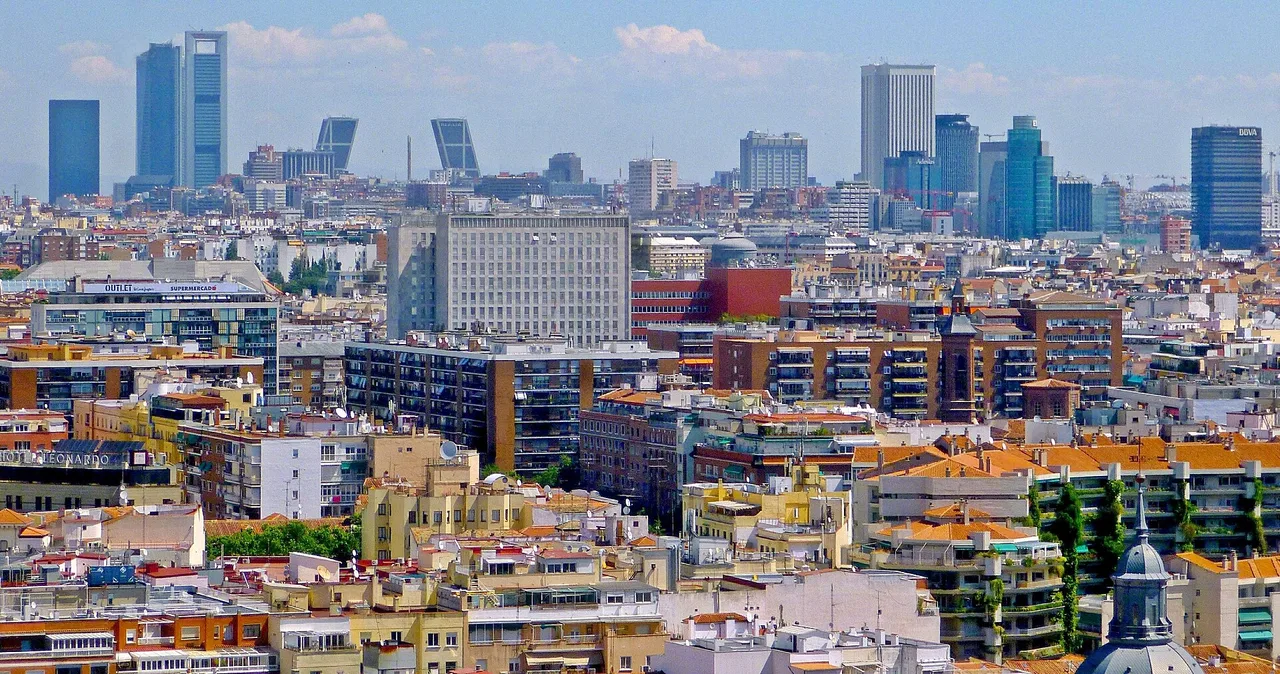
Destination guide · Europe
Madrid
Madrid is the European capital where the receipts line is not a tourist tax and not an entry fee — it is the border officer asking for proof of means. Spain's entry rules require EUR 122.10 per person per day, with a statutory floor of EUR 1,098.90, and the ministerio publishes those two numbers inconsistently across its own consulate pages (EUR 1,099 in Washington, EUR 1,221 in Houston) while EUR-Lex gives the statutory form. The daily cost is a genuinely fair Western European number — mid EUR 160-180, about US$179-201 — and the museums are the cheapest in any comparable capital because all three of the Prado, the Reina Sofia and the Thyssen publish free hours, so the Paseo del Arte pass can be skipped entirely. The airport is a rarity: a closed EUR 33 flat taxi fare to anywhere inside the M-30 with no supplements. There is no Madrid tourist tax in 2026, unlike Barcelona. Spain is Level 2 on the US advisory (terrorism and unrest, updated 1 August 2026, with Ceuta raised to Level 3), and the day-to-day risk in Madrid is pickpocketing on the Sol-Gran Via-Atocha corridor rather than anything violent.
The short answer
- Cost: mid-range ≈ $179–201/day
- Best time: Mid-September to mid-October and May are the two good windows. July and August are the hottest months and the city empties; January, February and August carry the lowest hotel rates. Peak pricing periods to book around are May (San Isidro, mid-May), late June to early July (Orgullo) and the October autumn peak.
- Vibe: Madrid is the European capital where the receipts line is not a tourist tax and not an entry fee
Currency
EUR
1 USD = 0.8934 EUR
ECB reference rates via the Frankfurter mirror (providers=ecb), 23 October 2026
Country
Spain
Best time
Mid-September to mid-October and May are the two good windows. July and August are the hottest months and the city empties; January, February and August carry the lowest hotel rates. Peak pricing periods to book around are May (San Isidro, mid-May), late June to early July (Orgullo) and the October autumn peak.
Verified
October 2026
Money & cards
The euro (EUR, €). 1 USD = 0.8934 EUR on the house rate (FALLBACK_RATES.EUR, refreshed 23 October 2026 from the ECB reference rate of 1.1193 USD per EUR, queried through the Frankfurter ECB mirror on 24 October 2026 — the same rate this page renders). Cards are accepted almost everywhere including the metro, but carry €20–40 in cash for market stalls and small bars. There is NO tourist tax in Madrid in 2026: neither the city nor the Comunidad de Madrid levies one, and the region abolished its own taxes under Ley 3/2021 with effect from 1 January 2022 — so do not budget a per-night levy the way you must in Barcelona. VAT (IVA) is 21% and is included in posted prices.
SourceTipping
Tipping is not expected in Spain. Service is included, locals leave small change or round up, and 5–10% in a restaurant is generous rather than normal. On a bar counter a euro on a €3 coffee is a gesture, not a requirement. [inferred from local custom and the TonyPlan Madrid cost page]
SIM / eSIM
Vodafone, Movistar and Orange all sell prepaid SIMs at Barajas and in every town, and EU and US eSIMs from Airalo or Holafly work on arrival. Data is cheap by Western European standards. Roaming from another EU country works at no extra cost.
Power plugs
Plug types C and F (Europlug and Schuko), 230V, 50Hz — the two-pin continental European standard. US, UK and Australian visitors need a plug adapter; most laptop and phone chargers are dual-voltage (100–240V) so a converter is not needed.
SourceWhat a day costs
Verified October 2026
Per person, per day, by travel style — local currency EUR, converted at 0.8934 EUR/USD. Conversion rate: ECB reference rates via the Frankfurter mirror (providers=ecb), 23 October 2026.
- BANDS ARE A UNION OF DISAGREEING SOURCES, NOT AN AVERAGE. Budget EUR 60-85: floor EUR 60 (TonyPlan, October 2026 — "a hostel dorm brings the budget figure down to about EUR 60"; BudgetYourTrip EUR 63/day budget tier), ceiling EUR 85 (TourBookGo "around EUR 55-85 per day"; TonyPlan EUR 83/day sharing a budget double). Mid EUR 160-180: floor EUR 160 (BudgetYourTrip EUR 162/day mid tier; TonyPlan EUR 166/day), ceiling EUR 180 (TourBookGo, CityMiamor and Madrid-Trip all cap their mid tier at EUR 180/day). Comfortable EUR 250-450: floor EUR 250 (CityMiamor "Comfortable EUR 250 and up"), ceiling EUR 450 (GotRipzi luxury EUR 450/day; BudgetYourTrip luxury EUR 418/day). THE SOURCES DISAGREE BY UP TO ~2x ON THE TOP TIER (TourBookGo puts its comfortable tier at EUR 220-350/day, TonyPlan at EUR 340/day, BudgetYourTrip luxury at EUR 418/day and GotRipzi at EUR 450/day) AND ON THE MID FLOOR (TourBookGo says EUR 110-180/day against BudgetYourTrip EUR 162 and TonyPlan EUR 166), so the band floors sit where the component-derived sources converge and the ceilings at the highest published figure. No first-party Madrid cost figure exists — no city government, tourism board or hotel association publishes a daily budget — so every endpoint here is commercial or editorial, and the page says so.
- ENTRY — FIRST PARTY, SPANISH MAE (exteriores.gob.es, Conditions for entry into Spain, retrieved 24 Oct 2026): US passport holders are visa-exempt for up to 90 days in any 180-day period. The statutory financial-means test is EUR 122.10 per person per day (10% of the 2026 gross minimum wage) with a floor of EUR 1,098.90 per person regardless of stay length; the MAE states the amount is "122 euros per day" and "at least 1099 euros" for stays of 9 days or more, and that bank letters and online bank statements are NOT accepted — cash, traveller cheques, or a card with a recent statement. THE MAE PUBLISHES THE TWO FIGURES INCONSISTENTLY ACROSS ITS OWN CONSULATE PAGES: the Washington page prints EUR 122.10/day and EUR 1,099 minimum, while the Houston page prints EUR 122.10/day and a flat EUR 1,221 minimum. EUR-Lex OJ C/2026/02444 (quoting Order PRE/1282/2007) gives the statutory form: 10% of the minimum wage (EUR 122.10) x days x dependants, and 90% of the minimum wage (EUR 1,098.90) per person. Budget to the EUR 1,098.90 statutory figure. Passport must be valid at least 3 months beyond departure, issued within the last 10 years, with at least 2 blank pages.
- EES IS OPERATIONAL AND ETIAS IS NOT. The EU Entry/Exit System became fully operational at all external border crossing points on 10 April 2026 (eu-LISA / travel-europe.europa.eu, retrieved 24 Oct 2026), so non-EU nationals are now biometrically registered and passport-stamped out. ETIAS is NOT in operation and no applications are being collected; the Commission removed its "last quarter of 2026" wording in July 2026 and has published no replacement date (SchengenVisaInfo, 19 Oct 2026; ABTA told its 13 Oct 2026 convention there is now no official launch date). The Spanish MAE still carries the older "expected to become operational in the last quarter of 2026" line — a stale first-party statement, published as such rather than reconciled. Nothing to apply for and nothing to pay in 2026.
- ATTRACTION FEES ARE FIRST-PARTY AND THE FREE HOURS ARE THE REAL FINDING. Royal Palace: EUR 18 standard, EUR 9 reduced, EUR 0 free under 5 / over-65 students / large families, and FREE Monday-Thursday 17:00-19:00 (16:00-18:00 winter) for EU citizens, residents and Latin American citizens with accreditation (Patrimonio Nacional ticket page, retrieved 24 Oct 2026). Prado: EUR 15 general, EUR 7.50 reduced, free for the last two hours before closing every day (museodelprado.es). Reina Sofia: EUR 12 general, free two hours before closing, closed Tuesdays (museoreinasofia.es). Thyssen-Bornemisza: EUR 14 full access, free Mondays 12:00-16:00 (permanent collection only) and Saturday nights 21:00-23:00 (museothyssen.org). Paseo del Arte card: EUR 32.80 for all three, 20% off, valid one year. Almudena Cathedral: the nave is free with a requested EUR 1 donation; the museum, sacristy, chapter house and dome are a separate EUR 8 ticket (EUR 5 reduced), open Monday-Saturday 10:00-14:30 only. MADRID'S THREE BIG MUSEUMS ALL HAVE FREE HOURS, so a careful traveller can visit all three for EUR 0 — the EUR 32.80 pass only pays if you value the 20% discount and the one-year validity more than the free windows.
- TRANSPORT AND THE AIRPORT ARE THE CLEANEST MONEY ON THIS PAGE. Adolfo Suarez Madrid-Barajas (MAD) to anywhere inside the M-30 ring is a CLOSED EUR 33 flat taxi fare, no night, luggage or weekend supplements (Ayuntamiento de Madrid Tariff 4, in force 1 January 2026). Metro line 8 costs a EUR 1.50-2.00 single plus a mandatory EUR 3.00 airport supplement, about EUR 5 a head. In town: Tarjeta Multi card EUR 2.50, Zone A single EUR 1.50-2.00 (EUR 1.50 up to 5 stations, +EUR 0.10 per station, capped at EUR 2.00), 10-trip Metrobus EUR 12.20 at the standard rate (Metro de Madrid / CRTM fares valid to 31 December 2026). There is NO Madrid tourist tax in 2026 — neither the city nor the Comunidad de Madrid levies one, and the region abolished its own taxes under Ley 3/2021 with effect from 1 January 2022 — so do not budget a per-night levy here the way you must in Barcelona.
- SAFETY — SPAIN IS LEVEL 2 AND MADRID IS THE PICKPOCKET CITY. The US State Department advisory for Spain is Level 2, Exercise increased caution, risk indicators terrorism and unrest; it was updated 1 August 2026 to raise CEUTA to Level 3 while keeping the country at Level 2 (the earlier country advisory was issued 12 May 2025). The UK FCDO and Global Affairs Canada also rate Spain Level 2. The advisory text says terrorist groups continue plotting possible attacks in Spain and that they may attack with little or no warning, and it notes demonstrations are common. The day-to-day risk in Madrid is opportunistic theft, concentrated on the Sol-Gran Via-Atocha corridor, the airport metro line 8, El Rastro on Sundays, and the queues outside the Prado and the Royal Palace. Madrid runs a dedicated foreign-tourist police desk, SATE, at Calle Leganitos 19 near Plaza de Espana, open every day 09:00-midnight, which files the denuncia in English; the EU-wide emergency number is 112.
- SEASON AND SCALE. Best windows are mid-September to mid-October and May; July-August is the hottest and the city empties, and January-February plus August are the cheapest for hotel rates (TonyPlan: roughly 20-30% below May or October). Madrid welcomed 11,236,564 visitors in 2025, +0.8% year on year, with 6.6 million international visitors (59% of the total) and EUR 17.9bn of international tourism spending, +11.1% (Ayuntamiento de Madrid / esmadrid Anuario de Turismo 2025). The United States is the leading source market at 1,103,443 visitors (+7%), ahead of Italy (447,262), France (361,653), the United Kingdom (350,592) and Mexico (318,447). Peak pricing periods to book around are May (San Isidro, mid-May), late June-early July (Orgullo) and the October autumn peak.
- FX: converted at 1 USD = 0.8934 EUR (FALLBACK_RATES.EUR, refreshed 23 Oct 2026 from the ECB reference rate 1.1193 USD/EUR, the same rate the page renders). Verified first-hand on 24 Oct 2026: the Frankfurter ECB mirror returned 1.1193 USD for 1 EUR dated 2026-10-23, and open.er-api v6/latest/EUR printed the same day, so the euro has a two-route agreement at this date. RESEARCH BOUNDARY: the Madrid cost-search layer is dominated by affiliate SEO pages (gotripzi, madridtourism.org, citymiamor, daiztrip) whose daily figures disagree by up to ~2x and none of which names a dated primary source; every band endpoint above is therefore an editorial or aggregator figure, and no Madrid municipal or national tourism statistic publishes a daily travel budget.
Day by day
- 1
Sol, the plazas and the palace
- 2
The Paseo del Arte and the Retiro
- 3
Day trip or the alternative city
Plan Madrid with our tools
Every tool runs in your browser against our dated cost dataset — no sign-up.
TL;DR
Madrid’s defining entry line is not a visa and not a tourist tax — it is a proof-of-funds test at the border. Spain requires EUR 122.10 per person per day, with a statutory floor of EUR 1,098.90 per person, and the Spanish ministry publishes those two numbers inconsistently across its own consulate pages (EUR 1,099 in Washington against EUR 1,221 in Houston) while EUR-Lex gives the statutory form. Bank letters and online bank statements are explicitly not accepted.
The cost side is a genuinely fair Western European number: mid-range €160–180 per person per day, about US$179–201, with budget at €60–85 (US$67–95) and comfortable at €250–450 (US$280–504), excluding flights. The real finding here is that Madrid’s three big museums all publish free hours, so the Paseo del Arte pass can be skipped entirely — the Prado, the Reina Sofía and the Thyssen are each free for two hours a day or on a weekly slot.
Two things most guides get wrong about Madrid. There is no tourist tax in 2026 — neither the city nor the region levies one, so do not budget a per-night levy the way you must in Barcelona. And the airport is a closed EUR 33 flat taxi fare to anywhere inside the M-30, with no night, luggage or weekend supplements.
The advisory is Level 2 (terrorism and unrest, updated 1 August 2026, with Ceuta raised to Level 3 while Spain stayed at Level 2). The day-to-day risk is pickpocketing on the Sol–Gran Vía–Atocha corridor, not violence.
Who it’s for
You are the person who wants a big European capital on a fair budget and is willing to eat lunch at 13:30 and dinner after 21:00 to do it. Madrid rewards that: the menú del día is the best-value meal in any Western European capital, the metro is cheap and the centre is walkable.
It suits travellers who want museums without the ticket wall — because all three of the Paseo del Arte museums publish free hours, a careful itinerary costs €0 in admission. It also suits anyone travelling on from Spain, since Madrid is the rail hub for Toledo, Segovia, Salamanca and Ávila.
It is a poor fit if you want a beach, if you need warm weather in January, or if you want a city that goes to bed early — Madrid runs two to three hours later than the rest of Europe and the streets are busy until the small hours.
Not for: travellers who cannot carry or evidence the statutory EUR 1,098.90 in funds at the border, or who need a city with no pickpocket risk at all.
Quick Facts
| Currency | Euro (EUR, €). 1 USD = 0.8934 EUR (ECB reference rate, 23 Oct 2026). Cards accepted almost everywhere; carry €20–40 cash. |
| Time zone | CET (UTC+1) in winter, CEST (UTC+2) in summer. Same as the rest of peninsular Spain. |
| Language | Spanish (Castilian). English is widely spoken in tourism, museums and the centre. |
| Visa | Schengen visa-free for US passports, up to 90 days in any 180-day period. No ETIAS in 2026. |
| Proof of funds | EUR 122.10 per person per day, with a statutory floor of EUR 1,098.90 per person. Bank letters and online statements are not accepted. |
| Entry | Adolfo Suárez Madrid-Barajas (MAD), 12 km northeast of the centre. |
| Airport transfer | Metro line 8 about €5 a head (€1.50–2.00 single plus a mandatory €3.00 airport supplement); taxi a closed €33 flat inside the M-30. |
| Transit | Metro, EMT buses and Cercanías. Tarjeta Multi card €2.50; Zone A single €1.50–2.00; 10-trip Metrobús €12.20. |
| SIM/eSIM | Vodafone, Movistar, Orange prepaid; Airalo/Holafly eSIM on arrival. |
| Tourist tax | None. Neither the city nor the Comunidad de Madrid levies one in 2026. |
| Peak pricing | May (San Isidro), late June–early July (Orgullo) and the October autumn peak. Cheapest hotel months: January, February and August. |
| Plugs | Types C and F, 230V, 50Hz. |
| Daily mid | ~$179–201/day — dataset mid band, converted at 0.8934 EUR/USD |
Getting there
Adolfo Suárez Madrid-Barajas (MAD) is the only practical airport and it is 12 km northeast of the centre, with four terminals. It is a genuine hub rather than a point-to-point field — Iberia, Air Europa and Iberia Express base here, and the US East Coast is served nonstop by several carriers, so fares are competitive rather than penal.
The airport transfer is the cleanest money on this page. A taxi to anywhere inside the M-30 ring road is a closed €33 flat fare (Ayuntamiento de Madrid Tariff 4, in force since 1 January 2026), with no night, luggage or weekend supplements and no variation for traffic or which terminal you leave from. That covers Sol, Gran Vía, Atocha, Malasaña, Chueca, Chamberí, La Latina, Lavapiés, Salamanca and Retiro. Cross the ring and the meter takes over, with an airport minimum of €22 for the first 9 km — so a hotel near IFEMA or Campo de las Naciones costs more than the distance suggests.
Metro line 8 is the cheap option: a Zone A single (€1.50–2.00) plus a mandatory €3.00 airport supplement, about €5 a head, to Nuevos Ministerios in 15–20 minutes with a change to reach Sol. The 24-hour Airport Express bus is about €5 to Atocha or Cibeles. For two people with luggage, the €33 taxi usually wins on value.
Once you are in town, the centre is walkable. Sol to the Prado is about 25 minutes on foot, and the museum triangle is a 10-minute walk across the Retiro edge. Cercanías (the commuter rail) is what you want for day trips: Toledo is about 34 minutes from Atocha, and Segovia about 30 minutes on the high-speed line from Chamartín.
One practical warning: Madrid-Barajas immigration can queue, particularly on morning arrivals from the Americas. Allow a real block of time and do not book a same-day onward connection out of it.
Where to stay
| Tier | Where | Nightly |
|---|---|---|
| Budget | Hostel dorm, Centro, Malasaña or Lavapiés | €25–45 (~$28–50) |
| Budget | Private room in a guesthouse, La Latina | €45–70 (~$50–78) |
| Mid | 3★ double, Chueca, Malasaña or near Atocha | €100–150 (~$112–168) |
| Mid | Comfortable double, Salamanca or near the Prado | €120–180 (~$134–201) |
| Comfortable | Boutique 4★, Salamanca or Centro Canalejas | €200–300 (~$224–336) |
| Comfortable | 5★, Salamanca or near the Royal Palace | €300+ (~$336+) |
Accommodation is the swing factor, and the sources disagree about how much. TonyPlan puts a budget bed sharing a double at €45 per person and a mid-range one at €85; CityMiamor puts central Madrid hostels at €30–60 a night and mid-range hotels at €80–150. MadridTourism.org’s component build (hostel bed €30, breakfast €3–5, menú del día €14, tapas evening €15–20, metro €2.50–5, one paid attraction €12–15) lands at under €70 on a free-museum day.
Where you stay changes the daily number more than the tier does. Sol, Gran Vía and the Barrio de las Letras carry the highest weekend and trade-fair premiums; Lavapiés, Malasaña and the streets around Atocha are the value anchors. Booking around a big football match or an IFEMA trade fair can push prices up in any month, including the cheap ones.
One structural point worth knowing: because Madrid has no tourist tax, the nightly rate you see is closer to the nightly rate you pay than in Barcelona, where the Catalonia IEET plus the €5 municipal surcharge adds a per-person-per-night line on top of every booking.
Where to eat
| Spot | Meal |
|---|---|
| Menú del día, weekday lunch | €10–19 (~$11–21), usually €13–18 |
| Inexpensive restaurant (Numbeo, Jun 2026) | €16.00 (range €12–25) |
| Mid-range, three courses for two (Numbeo) | €60.00 (range €40–100) |
| Caña, small draught beer (Numbeo, one pint) | €3.50 (range €3–5) |
| Cappuccino (Numbeo) | €2.74 (range €1.50–4) |
| Fast-food combo (Numbeo) | €10.00 (range €9–12) |
| Tapas crawl, La Latina (Cava Baja) | €15–25 a head (~$17–28) |
The menú del día is the single best-value meal in any Western European capital. A weekday fixed lunch — starter, main, dessert, bread and a drink — runs €13–18 outside the tourist core and is the reason a mid-range Madrid day is cheaper than the same day in Paris or London. Eat your main meal at lunch and keep the evening to tapas.
Madrid’s own dishes are the ones worth ordering: cocido madrileño (a three-course chickpea stew), callos a la madrileña (tripe), gallinejas and entresijos (fried lamb offal), and a bocadillo de calamares on Plaza Mayor. For dessert, the churros at a historic chocolatería.
Drink at the bar, not the terrace. Outdoor tables cost more, and around Plaza Mayor and Puerta del Sol a caña on the terrace can be twice the bar price. Vermouth on tap (la hora del vermut, roughly 12:00–14:00) is the local pre-lunch ritual and costs €2.50–4 a glass.
The market is worth one visit and not ten. Mercado de San Miguel is beautiful and expensive — it is a tapas court aimed at visitors. For food shopping and a real market atmosphere, the neighbourhood markets (Mercado de la Cebada in La Latina, Mercado de Antón Martín) are better value and busier with Madrileños.
Itinerary sketch (3 days / 2 nights)
Three days is the minimum that covers the museum triangle plus one palace day without rushing. This is the classic first-visit arc, sequenced so the free museum hours fall where they are most useful.
- Day 1 — Sol, the plazas and the palace. Start at Puerta del Sol (Kilometre Zero, the bear and strawberry tree) and walk to Plaza Mayor and the Mercado de San Miguel. Then the Royal Palace (€18 standard, €9 reduced, free Monday–Thursday 17:00–19:00 for EU residents and Latin American citizens with accreditation) and Almudena Cathedral opposite it (nave free with a requested €1 donation; the museum and dome are a separate €8 ticket, open Monday–Saturday 10:00–14:30 only). Finish with a tapas crawl down Cava Baja in La Latina.
- Day 2 — The Paseo del Arte and the Retiro. The Prado (€15, free for the last two hours before closing), then El Retiro park — free, with the Estanque to row on and the Palacio de Cristal. Then the Reina Sofía (€12, free two hours before closing, closed Tuesdays; Guernica is here) and the Thyssen-Bornemisza (€14, free Mondays 12:00–16:00 and Saturday nights 21:00–23:00). Sequence the free hours and all three museums cost €0.
- Day 3 — A day trip, or the alternative city. Either Toledo (about 34 minutes by Cercanías from Atocha, roughly €16 return; cathedral, Alcázar and the old Jewish quarter) or Segovia (about 30 minutes by high-speed from Chamartín; the Roman aqueduct, the Alcázar and roast suckling pig). If you would rather stay in Madrid, do Malasaña and the Dos de Mayo square, then Matadero Madrid on the Manzanares, and finish on Gran Vía.
Activity costs
Every figure here is from the operator’s own ticket page, retrieved 24 October 2026. Madrid is unusually clean on this: the two big museums and the palace all publish their tariffs directly, so there is no aggregator layer to argue with.
| Attraction | Standard | Reduced | Free |
|---|---|---|---|
| Royal Palace (Patrimonio Nacional) | €18 | €9 | Under 5s, over-65s, large families; Mon–Thu 17:00–19:00 (16:00–18:00 winter) for EU residents and Latin American citizens with ID |
| Prado | €15 | €7.50 | Under 18s, 18–25 students, over-65s and others; last two hours before closing, every day |
| Reina Sofía | €12 | — | Under 18s, over-65s, students; two hours before closing; closed Tuesdays |
| Thyssen-Bornemisza | €14 | — | Mondays 12:00–16:00 (permanent collection) and Saturday nights 21:00–23:00 |
| Almudena museum, sacristy, chapter house and dome | €8 | €5 | Under 10s; Mon–Sat 10:00–14:30 only |
| Paseo del Arte card (all three museums) | €32.80 | — | 20% off each museum, valid one year from purchase |
The finding worth planning around: the Paseo del Arte pass can be skipped entirely. All three museums publish free hours, so a traveller who sequences the days correctly pays €0 in admission at the Prado, the Reina Sofía and the Thyssen. The €32.80 card only pays if you value the 20% discount on paid tickets, the one-year validity, or the ability to walk in without a timed reservation — and it does not cover the free-entry windows at all, so it is not a shortcut to them.
Two free-window traps to avoid. The Prado’s free hours apply to the collection, with temporary exhibitions at 50% off rather than free, and the Reina Sofía’s free hours require a booked ticket (free, but you still reserve online). The Reina Sofía is also closed on Tuesdays, and the Thyssen’s Monday free window covers the permanent collection only, so a special exhibition still costs.
The Royal Palace free window has a nationality condition most visitors miss. Monday–Thursday 17:00–19:00 is free for EU citizens, residents and holders of a work permit, and Latin American citizens, following accreditation of nationality or residency — a US passport holder arriving at 18:00 pays the full €18. Do not build a free-palace plan around that window unless your passport qualifies.
Almudena’s dome is never sold on its own. It comes bundled with the Cathedral Museum at €8, and the museum opens only Monday–Saturday 10:00–14:30 — so a Sunday, or any arrival after 14:30, gets you the free nave and nothing else.
Outside the museums, Madrid is cheap to move around and largely free to look at. The Retiro, the Debod temple (a real Egyptian temple, donated in 1968 and rebuilt stone by stone), the Temple of Debod sunset crowd, the rooftop of the Círculo de Bellas Artes (€5) and the Gran Vía streetscape are all free or near-free. Flamenco is the one paid night out worth budgeting: a tablao show typically runs €25–45 including a drink, and the cheaper peñas in the less touristy barrios are the better experience.
Cost guide (from dataset, hand-verified October 2026)
| Item | Budget | Mid | Comfortable |
|---|---|---|---|
| Accommodation (per person) | €25–45 (~$28–50) | €85–120 (~$95–134) | €180–300 (~$201–336) |
| Food | €25–30 (~$28–34) | €45–60 (~$50–67) | €90+ (~$101+) |
| Sights & tickets | €10 (~$11) | €30 (~$34) | €45 (~$50) |
| Local transport | €3–5 (~$3–6) | €6 (~$7) | €25 (~$28) |
| Daily total (per person) | €60–85 | €160–180 | €250–450 |
| In USD at 0.8934 EUR/USD | US$67–95 | US$179–201 | US$280–504 |
| Flights (round-trip, major US hub) | $400–600 [inferred baseline] | $400–600 | $600–900 |
| Visa (one-off) | $0 | $0 | $0 |
Those bands are a union of disagreeing sources, not an average, and the disagreement is published rather than smoothed. Budget €60–85: the floor is €60 (TonyPlan: “a hostel dorm brings the budget figure down to about €60”; BudgetYourTrip’s budget tier is €63/day) and the ceiling is €85 (TourBookGo “around €55–85 per day”; TonyPlan €83/day sharing a budget double). Mid €160–180: the floor is €160 (BudgetYourTrip €162/day mid tier; TonyPlan €166/day) and the ceiling is €180 (TourBookGo, CityMiamor and Madrid-Trip all cap their mid tier at €180). Comfortable €250–450: the floor is €250 (CityMiamor “Comfortable €250 and up”) and the ceiling is €450 (GotTripzi luxury €450/day; BudgetYourTrip luxury €418/day).
Where the sources disagree, and by how much, so you can see the shape rather than a single number:
- The top tier is the widest disagreement — roughly 2x. TourBookGo puts its comfortable tier at €220–350/day, TonyPlan at €340, BudgetYourTrip luxury at €418 and GotTripzi at €450. The band is the union of those, and it overlaps the mid band’s ceiling because the sources genuinely do not agree on where “mid” ends.
- The mid floor is the second disagreement. TourBookGo says €110–180/day, against BudgetYourTrip at €162 and TonyPlan at €166. The band’s floor sits where the component-derived sources converge, not at the single lowest published figure.
- BudgetTravel-style figures run low. CityMiamor puts budget at €50–70/day and daiztrip at €60–80/day, both inside the published band rather than under it.
- No first-party Madrid cost figure exists. No city government, tourism board or hotel association publishes a daily travel budget, so every endpoint above is commercial or editorial. The only official Madrid tourism statistic published at scale is the annual one: 11,236,564 visitors in 2025 with €17.9bn of international tourism spending.
Accommodation is the swing factor, and it is the weakest-sourced line in the table. The nightly ranges come from aggregator snapshots and the published component tables rather than from a rate sheet, so treat them as planning numbers — a booked rate is the only real one. Food, transport and the attraction fees are first-party or near-first-party and are reliable.
One cross-check worth running against yourself. Numbeo’s Madrid data (June 2026) puts a single person’s monthly costs excluding rent at €822.30 — which is a monthly basket, not a daily one, and works out to about €27.40 a day for non-rent living. That is roughly the food-and-transport portion of the budget band, which is a useful sanity check that the band’s components and Numbeo’s basket describe the same city. Do not read €822.30 as a daily figure.
Safety
The advisory is Level 2, and it is a country-level rating that does not describe Madrid specifically. The US State Department rates Spain Level 2, Exercise increased caution, on terrorism and unrest; the advisory was updated 1 August 2026 to raise Ceuta to Level 3 while keeping the country at Level 2, and the earlier country advisory was issued 12 May 2025. The UK FCDO and Global Affairs Canada also rate Spain at Level 2. Read the advisory’s own summary rather than the headline: it says terrorist groups continue plotting possible attacks in Spain, that they may attack with little or no warning, and that demonstrations are common and may take place in response to political or economic issues. None of that is a Madrid-specific risk, and none of it prohibits travel.
The day-to-day risk in Madrid is opportunistic theft, and it is concentrated in places you will otherwise be enjoying. The Sol–Gran Vía–Atocha corridor sees the highest density of pickpocketing incidents in the city because it sees the highest density of distracted visitors. The other named pressure points are metro line 8 to and from the airport, El Rastro on Sundays, and the queues outside the Prado and the Royal Palace.
The mitigations are short and boring, which is why they work. Carry your bag across your body and in front of you, not on your back. Keep your phone in a front pocket or a zipped compartment rather than a back pocket or an open bag top. Split cash and cards between two places so a single theft does not wipe you out. Leave your passport in the hotel safe — a photo on your phone covers most situations where you would be asked for ID. Do not leave a phone face-up on a terrace table on Gran Vía or around Sol; it takes under two seconds to sweep.
Know the common distraction scams. The petition-clipboard approach, the woman who pushes a rosemary sprig into your hand and then demands money, and the stranger who claims you dropped something are all reported on the Sol–Gran Vía stretch. Do not engage; keep walking.
If something is stolen, Madrid has a dedicated desk and it is worth knowing before you need it. SATE, the Foreign Tourist Assistance Service, is at Calle Leganitos 19 near Plaza de España (Metro: Santo Domingo or Plaza de España), open every day of the year, 09:00 to midnight, staffed by English-speaking officers who help you file the denuncia, cancel cards and contact your embassy. Call ahead on 915 48 85 37. Your travel insurer will almost certainly require that police report number before it processes a claim, and you cannot obtain one retroactively from abroad.
The EU-wide emergency number is 112, and operators can usually switch to English. Do not chase anyone who has taken something from you — pickpocketing in Madrid is frequently done by teams, and the person who bumped you is not the person holding your phone.
Good to know (2026)
- The proof-of-funds rule is the entry line item people miss, and Spain publishes it inconsistently. The statutory test is EUR 122.10 per person per day with a floor of EUR 1,098.90 per person (Order PRE/1282/2007, quoted in EUR-Lex OJ C/2026/02444). The ministry’s Washington page prints EUR 1,099 as the minimum; its Houston page prints a flat EUR 1,221. Budget to the statutory figure, and remember that bank letters and online bank statements are explicitly not accepted — you need cash, traveller’s cheques, or a card with a recent statement or an up-to-date bank book.
- EES is live and ETIAS is not — and Spain’s own page is the stale one. The Entry/Exit System became fully operational at all external border crossing points on 10 April 2026, so entries and exits are registered electronically and overstays are detected automatically. ETIAS is not in operation, no applications are being collected, and the Commission removed its “last quarter of 2026” wording in July 2026 without publishing a replacement; ABTA told its 13 October 2026 convention there is now no official launch date. The Spanish ministry’s entry page still carries the older ETIAS line, so treat that page as out of date on this one point. Nothing to apply for, nothing to pay.
- All three of the Paseo del Arte museums have free hours, so the €32.80 pass is usually a bad buy. Prado free for the last two hours every day; Reina Sofía free two hours before closing (closed Tuesdays); Thyssen free Mondays 12:00–16:00 and Saturday nights 21:00–23:00. The pass gives 20% off paid tickets and one-year validity — it does not buy you anything during the free windows. Sequence the days and the three museums cost €0.
- The Royal Palace’s free window is nationality-conditioned, and that is the trap. Monday–Thursday 17:00–19:00 is free for EU citizens, residents and work-permit holders, and Latin American citizens, with accreditation. A US passport holder arriving at 18:00 on a Tuesday pays the full €18. The €9 reduced rate applies to ages 5–16, over-65s and students with ID — not to ordinary adult US visitors.
- There is no tourist tax in Madrid, which is a genuine difference from Barcelona. Neither the city nor the Comunidad de Madrid levies a per-night levy in 2026, and the region abolished its own taxes under Ley 3/2021 with effect from 1 January 2022. Barcelona, by contrast, charges the Catalonia IEET plus a €5 municipal surcharge. This is one of the cleanest ways Madrid undercuts its Spanish rival on a per-night basis.
- The airport transfer is unusually transparent. A taxi to anywhere inside the M-30 is a closed €33 flat fare with no supplements, in both directions, set by the Ayuntamiento and in force since 1 January 2026. Cross the ring and the meter runs with an airport minimum of €22 for the first 9 km — so hotels near IFEMA are not as cheap as the distance suggests.
- The metro needs a €2.50 card before you can buy anything. Every pay-per-ride ticket loads onto the Tarjeta Multi, a contactless card sold at station machines and estancos. A Zone A single is €1.50–2.00 depending on distance (€1.50 up to 5 stations, +€0.10 per station, capped at €2.00), and a 10-trip Metrobús is €12.20 at the published rate. One card can be shared by several people, so a couple needs one card, not two. Fares are valid to 31 December 2026.
- Madrid is the rail hub for half of central Spain, and the day trips are cheap. Toledo is about 34 minutes from Atocha on Cercanías; Segovia about 30 minutes on the high-speed line from Chamartín; Salamanca and Ávila are both reachable in a long day. Book high-speed fares two to four months ahead for the discount tiers — Renfe’s Básico fare is the cheapest of the four fare types and is the one most travellers should target.
- Eat on Spanish time or pay for the privilege. Lunch runs 13:30–15:30 and dinner 21:00–23:30. The menú del día exists only at weekday lunch and is the best-value meal in the city; ordering à la carte at dinner is where a mid-range day becomes a comfortable one. La hora del vermut (roughly 12:00–14:00) is the local pre-lunch drink and costs €2.50–4 a glass.
- The city is genuinely big, so pick a base rather than trying to cross it daily. Sol to the Prado is about 25 minutes on foot and the museum triangle is a 10-minute walk across the Retiro edge, but the distances to Matadero, to the Bernabéu and to the Cuatro Torres are real. Malasaña, Chueca, La Latina and Lavapiés are walkable neighbourhoods; Salamanca and Retiro are the more expensive but more convenient bases.
- Scale: Madrid is one of Europe’s largest urban destinations, and the US is its biggest source market. 11,236,564 visitors in 2025 (+0.8% year on year), of which 6,603,260 were international (59%), with €17.9bn of international tourism spending (+11.1% on 2024 and +71% on 2019). The United States leads the source markets at 1,103,443 visitors (+7%), ahead of Italy (447,262), France (361,653), the United Kingdom (350,592) and Mexico (318,447) — so expect English to be spoken widely and American chains to be present.
- RESEARCH BOUNDARY, stated rather than hidden. The Madrid cost-search layer is dominated by affiliate SEO pages whose daily figures disagree by up to about 2x and none of which names a dated primary source. Every band endpoint in this guide is therefore an editorial or aggregator figure; no Madrid municipal or national tourism statistic publishes a daily travel budget. Reddit was not reachable with the tools used for this guide, so no forum price or forum anecdote feeds any number here.
Frequently asked questions
- Do US citizens need a visa for Madrid?
- No. Spain applies the Schengen rule: US passport holders are visa-exempt for up to 90 days in any 180-day period. What you do need is the right paperwork. Your passport must be valid for at least three months beyond your departure date, issued within the last ten years, and carry at least two blank pages. You must also be able to show sufficient financial means — see the next answer — and you should carry proof of accommodation and a return or onward ticket, because the border officer can ask for both.
- How much money do I have to prove I have to enter Spain?
- This is the entry line item most guides get wrong, and Spain's own ministry contradicts itself. The statutory test under Order PRE/1282/2007 is 10% of the gross national minimum wage — EUR 122.10 in 2026 — multiplied by the number of days you intend to stay and by the number of dependants travelling with you, and in any case at least 90% of the minimum wage, EUR 1,098.90 per person, regardless of how short the stay is. The Spanish ministry's Washington consulate page prints the same EUR 122.10 per day and a EUR 1,099 minimum, while its Houston page prints EUR 122.10 per day and a flat EUR 1,221 minimum. Budget to the statutory EUR 1,098.90. Crucially, bank letters and online bank statements are explicitly NOT accepted — you need cash, traveller's cheques, or a card accompanied by a recent statement or an up-to-date bank book.
- Is ETIAS required to enter Spain in 2026?
- No. ETIAS is not in operation, no applications are being collected, and no launch date has been announced. The European Commission's own page says only that it is not in operation and that the start date will be announced several months in advance; the Commission removed its earlier 'last quarter of 2026' wording in July 2026 without replacing it, and ABTA told its 13 October 2026 convention that there is now no official launch date. Note that the Spanish ministry's entry page still carries the older 'expected to become operational in the last quarter of 2026' line, which is now stale. What IS live is the Entry/Exit System: EES became fully operational at all external border crossing points on 10 April 2026, so your entry and exit are registered electronically. Nothing to apply for, nothing to pay.
- Is Madrid expensive?
- It is a mid-priced Western European capital — cheaper than Paris, London or Amsterdam, and a little cheaper than Barcelona. The site's hand-verified October 2026 dataset puts budget at €60–85 per person per day (about US$67–95), mid-range at €160–180 (about US$179–201), and comfortable at €250–450 (about US$280–504), excluding flights. Accommodation is the swing factor: a hostel dorm is €25–45 a night while a comfortable double in Salamanca or near the Prado runs €120–180. The real saving is the museums — the Prado, the Reina Sofía and the Thyssen all publish free hours, so you can see all three for €0 and skip the €32.80 Paseo del Arte pass entirely.
- Is Madrid safe?
- For violent crime, yes. The US State Department rates Spain Level 2, Exercise increased caution, on terrorism and unrest, and its own text says terrorist groups continue plotting possible attacks and may attack with little or no warning — but that is the country-level advisory, updated 1 August 2026 to raise Ceuta to Level 3 while keeping Spain at Level 2, and it is not a Madrid-specific risk. The day-to-day problem is opportunistic theft, concentrated on the Sol–Gran Vía–Atocha corridor, metro line 8 to the airport, El Rastro on Sundays and the queues outside the Prado and the Royal Palace. Wear your bag across your body and in front, keep your phone out of back pockets, and leave your passport in the hotel safe. If something is stolen, Madrid runs a dedicated foreign-tourist police desk, SATE, at Calle Leganitos 19 near Plaza de España, open every day from 09:00 to midnight, which files the denuncia in English — your insurer will want that report number. The EU-wide emergency number is 112.