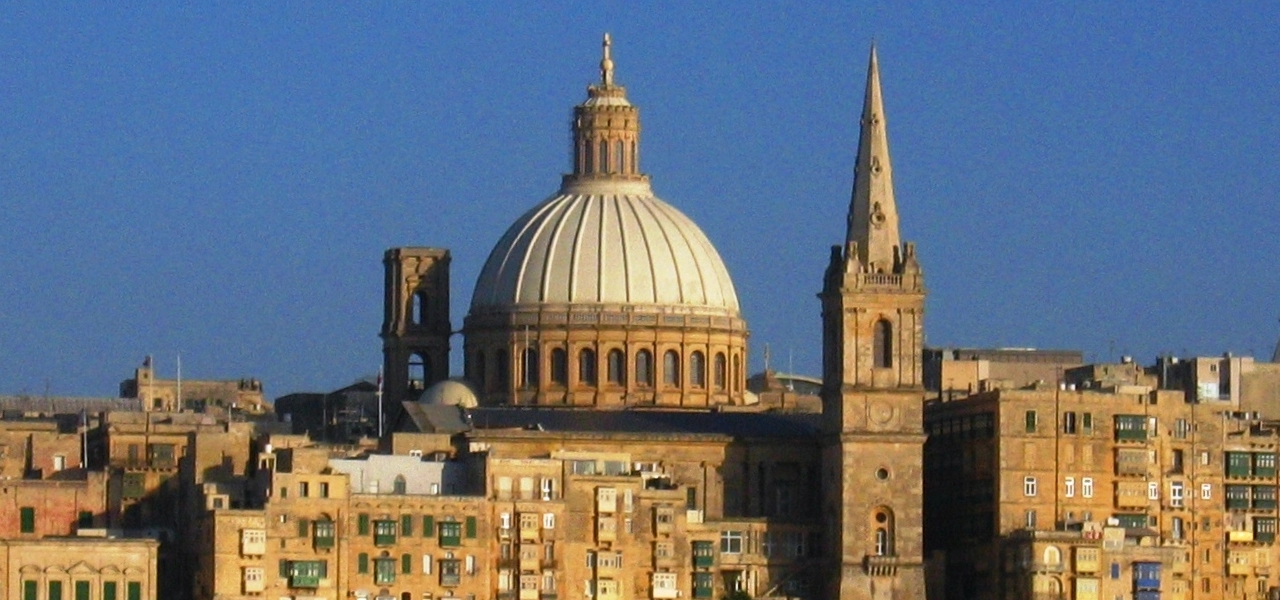
Destination guide · Europe
Malta
Compact Mediterranean gem — honey-colored fortresses, turquoise coves, and 4,000 years of history on three tiny islands you can cross by ferry.
The short answer
- Cost: mid-range ≈ $91–148/day
- Best time: Spring (Apr–Jun) and Autumn (Sep–Oct)
- Vibe: Compact Mediterranean gem
Currency
EUR
1 USD = 0.877 EUR
ECB reference rates via the Frankfurter mirror (providers=ecb), 25 September 2026
Country
Malta
Best time
Spring (Apr–Jun) and Autumn (Sep–Oct)
Verified
September 2026
Money & cards
Currency is the euro (EUR). Cards are widely accepted in shops, hotels, and restaurants. Cash needed for small bakeries (pastizzi), some boat kiosks, and bus tickets (€2.50/single in summer). ATMs widely available; avoid currency exchange kiosks at the airport — they offer poor rates.
SourceTipping
[inferred from local custom] Tipping 5–10% at restaurants is common but not obligatory. Service charge is sometimes included in the bill — check before tipping.
SIM / eSIM
eSIMs for Malta start from ~$3–8 (Airalo, Holafly 2026). Prepaid SIMs from Epic (formerly Vodafone), Melita, and GO available at the airport and city stores.
SourcePower plugs
Plug type G (UK three-pin), 230V 50Hz — same as the UK. Bring a travel adapter if coming from continental Europe or North America.
SourceWhat a day costs
Verified September 2026
Per person, per day, by travel style — local currency EUR, converted at 0.877 EUR/USD. Conversion rate: ECB reference rates via the Frankfurter mirror (providers=ecb), 25 September 2026.
- Hand-verified September 2026 against Radical Storage, Nomadic Matt, Trailfinders, and Indie Traveller.
- Budget €50–70/day (~$58–81 USD) — hostel dorms, pastizzi and supermarket meals, public buses. Mid-range €80–130/day (~$93–151 USD) — private rooms, sit-down meals, few paid attractions. Comfortable €170–310/day (~$197–360 USD).
- Converted at 1 EUR = 1.1615 USD (Trading Economics, Sep 2026).
- Malta Public Transport fares: single bus €2.50 (summer), 7-day unlimited pass €25 (2026).
- Gozo Channel ferry €4.65 pedestrian return; €15.70 with car.
- No tourist tax. VAT 18% included in posted prices. Tipping 5–10% at restaurants but not obligatory.
- English is co-official; no language barrier for English-speaking travelers.
Day by day
- 1
Valletta on foot
- 2
Mdina + Rabat
- 3
Gozo day trip
- 4
Blue Lagoon + Comino
- 5
South coast + Three Cities
Plan Malta with our tools
Every tool runs in your browser against our dated cost dataset — no sign-up.
TL;DR
Malta is Europe’s most budget-friendly Eurozone country — a three-island archipelago where honey-colored fortresses, 4,000-year-old temples, and turquoise swimming coves pack into a space smaller than many US cities. The site’s hand-verified dataset (September 2026) puts mid-range at €80–130/day, flights ~$700 from major hubs. Spring and autumn are ideal; September is the warm-water sweet spot before winter. Schengen zone — 90 days visa-free for US/UK/EU citizens.
Who it’s for
- Budget Eurozone travelers: one of the cheapest countries where you don’t need to convert currency or learn a new language (English is co-official)
- History obsessives: the Knights of St. John, Phoenician traders, the Great Siege of 1565, and 11 prehistoric temples — all on one tiny island
- Divers and swimmers: some of Europe’s clearest water, with the Blue Lagoon, Blue Hole, and dozens of dive sites
- Festival-goers: every village has its festa (feast day) with fireworks, band marches, and street parties — especially in June and September
- Not for: those who want vast wilderness or cheap-everything backpacker vibes — Malta is compact and European-priced, not Southeast Asia-priced
Quick Facts
| Currency | Euro (EUR) — cards widely accepted; cash for small bakeries, boat kiosks, some bus tickets |
| Time zone | CET (UTC+1), CEST (UTC+2) in summer |
| Visa | Schengen zone — 90/180 days visa-free for US/UK/EU citizens (GOV.UK 2026); ETIAS not in operation, no launch date published |
| Entry | Malta International Airport (MLA) — bus X4 to Valletta ~€2; taxi ~€20–25 |
| Transit | Public buses island-wide — single €2.50 (summer), 7-day unlimited pass €25 (Malta Public Transport 2026). Gozo Channel ferry to Gozo €4.65 pedestrian return |
| SIM/eSIM | eSIMs from ~$3–8; prepaid SIMs at airport/city stores (Traveltomtom 2026) |
| Taxes | No tourist tax; VAT 18% in posted prices |
| Peak pricing | [inferred] Jul–Aug |
| Daily mid (verified) | €80–130 (~$93–151) — hand-verified September 2026, breakdown below |
Getting there
Flights into MLA (Malta International Airport). Ryanair and Air Malta operate the most routes from Europe; connections from the US via London, Frankfurt, or Rome. The airport is in the south-central part of the island — bus X4 runs to Valletta every 30 minutes (~€2, 25 min), or taxi ~€20–25. Ride-hailing apps (Bolt, eCabs) work well and avoid the unlicensed taxi touts at arrivals.
Where to stay
- Valletta — the capital; compact, walkable, closest to history. Best for first-timers. Mid-range hotels from ~€100–180/night.
- Sliema / St. Julian’s — the seafront strip; more dining and nightlife, connected to Valletta by ferry (€1.50) and bus. Best for those who want a base with bars and restaurants nearby. Mid-range from ~€90–150/night.
- St. Paul’s Bay / Mellieha — northern residential areas; quieter, closer to the ferry to Gozo and the best beaches (Mellieha Bay). Best for a slower pace. Budget guesthouses from ~€40–80/night.
- Mdina area — the silent city; under 300 residents, zero cars. Best for romantic/photography stays. Fewer options, premium pricing.
Hostel dorms from ~€15–25/night (doubles in summer); private rooms in guesthouses from ~€40–80/night (based on Booking.com listings observed September 2026).
Where to eat
- Pastizzi — Malta’s signature street food: flaky ricotta- or pea-filled pastries from neighborhood pastizzerias. €0.80–1.20 each. Eat two and you’ve had breakfast for under €2.50.
- Ftira — ring-shaped bread stuffed with tuna, capers, onion, and tomato. The national sandwich. €5–8 at traditional bakeries.
- Sunday lunch (pranzu) — roast rabbit (fenek), the national dish, or a three-course meal at a local trattoria. €15–25 for a proper sit-down meal.
- Senglea / Marsaxlokk fish lunch — the fishing village of Marsaxlokk has waterfront restaurants serving lampuka (doria) and spaghetti alle vongole. €25–40 for a seafood lunch with wine.
- Sotto (Valletta) — Roman-style pinsa pizza in a stone cellar. €10–16 for a pizza, consistently rated among the best on the island.
Itinerary sketch (5 days)
Mirrors the site’s itinerary dataset (src/data/itineraries.ts):
Day 1: Valletta on foot — Upper Barrakka Gardens (free; the noonday cannon salute is a daily ritual) → St. John’s Co-Cathedral (€15; Caravaggio’s masterpiece inside) → Valletta Waterfront and the Three Cities ferry crossing → Fort St. Elmo (€10; the 1565 siege fortress) → Dinner in the Valletta backstreets away from the cruise-ship crowds.
Day 2: Mdina + Rabat — Bus to Mdina (the “Silent City”; free to wander the narrow lanes, €5 for the Mdina Experience museum) → Rabat catacombs (€5; early-Christian burial tunnels) → Fontanella Tea Garden for cake with a view → Afternoon at Dingli Cliffs (free; Malta’s highest point, sunset is spectacular) → Bus back to base.
Day 3: Gozo day trip — Early ferry to Gozo (€4.65 return, 25 min) → Victoria Citadel (free to enter the walls; panoramic views across the whole island) → Ggantija Temples (€8; older than the pyramids) → Ramla Bay (free; red-sand beach) → Blue Hole in Dwejra (free; swim or dive) → Return ferry.
Day 4: Blue Lagoon + Comino — Full-day boat tour from Sliema or Bugibba (€25–35; includes stops at Blue Lagoon, Crystal Lagoon, and sea caves). Bring water shoes — the rocks are sharp. Alternatively, take the public bus to Marfa and a small boat to Comino (€10–15 return) for a DIY version. Afternoon: swim, snorkel, and bake in the sun.
Day 5: South coast + Three Cities — Marsaxlokk fish market (Sunday only; otherwise a peaceful fishing harbor) → St. Peter’s Pool (free; natural swimming cliff) → Hagar Qim and Mnajdra temples (€10; 5,000-year-old megaliths aligned to the solstice) → Three Cities (Vittoriosa, Senglea, Cospicua) by ferry from Valletta for a quiet evening walk.
Cost guide (from dataset, hand-verified September 2026)
| Item | Budget | Mid | Comfortable |
|---|---|---|---|
| Daily (per person) | €50–70 (~$58–81) | €80–130 (~$93–151) | €170–310 (~$197–360) |
| Flights (round-trip, major hub) | $700 [dataset baseline] | $700 [dataset baseline] | $700 [dataset baseline] |
Hand-verified against multiple published sources — shown side by side, NOT averaged:
- Radical Storage 2026 daily breakdown: budget €50–117/day, mid-range €165–305/day, luxury €310+/day — our budget bracket is the lower end (solo, hostel, self-catering), our mid bracket maps to a comfortable-but-not-luxury solo stay.
- Nomadic Matt 2026: budget €35–45/day, mid-range €55–70/day — our budget bracket is consistent with their mid-range (our “budget” assumes eating out some meals, not full self-catering).
- Indie Traveller 2026: Malta listed as a top budget destination, backpacker-friendly pricing.
Cross-checked against the ECB EUR/USD reference rate (1.1403, 25-Sep-2026) and Malta Public Transport official fares (2026). Use the Trip Planner with your dates.
Safety
Malta has very low crime rates (US State Department 2026). The UK Foreign Office flags petty theft (pickpocketing on crowded buses, especially the Valletta–St. Julian’s route in summer) and drink spiking in nightlife areas (Bolt or eCabs recommended over walking alone late at night). Canada’s travel advisory notes standard precautions.
Real risks to know:
- Pickpocketing on buses — crowded routes during summer. Keep valuables in front pockets, especially on the 100-series airport buses and Valletta–Sliema runs.
- Drink spiking — keep drinks in sight, especially in Paceville (St. Julian’s nightlife district). Use ride-hailing apps if you’ve been drinking.
- Tourist-targeting scams — fake QR codes on parking meters, overcharging at unlicensed taxis, “friendly” strangers leading to overpriced bars. Use official transport apps and licensed operators.
- Sun and sea — the Mediterranean sun is strong May–September. Wear reef-safe sunscreen; the limestone cliffs can be sharp.
Emergency number: 112.
Good to know (2026)
- English is co-official — you’ll get by everywhere in English. Maltese is the local language (a Semitic root with heavy Italian influence), but signs, menus, and transit are all bilingual.
- Tap water is safe but has a mineral taste. Many locals drink filtered or bottled water.
- Festas (village feasts) — every weekend from May to September, a different village erupts in fireworks, band marches, and street processions. June and September are peak festa months. They’re free, loud, and deeply local — worth planning around.
- The Malta Experience — a 45-minute audiovisual show in Valletta (~€12) that covers the island’s history from prehistory to independence. Tourist-oriented but genuinely informative as a first-day orientation.
- Hop-On Hop-Off buses — a separate network from public transport. Useful if you want a narrated tour, but the regular bus system reaches the same places for a fraction of the price.
- Gozo is worth an overnight — if you have 6+ days, one night on Gozo (in Victoria or a farmhouse in the countryside) lets you escape the day-tripper rhythm and see the island at its quietest.
- ETIAS is not live — the EU has published no launch date, so visa-exempt travelers (US, UK, Canada, etc.) need nothing today; check the official EU site before booking in the Schengen zone. Check etias.com for updates.
Frequently asked questions
- How much does a day in Malta cost?
- From the site's verified dataset (September 2026): budget €50–70, mid-range €80–130, comfortable €170–310 per person per day. Budget gets you a hostel dorm, pastizzi and supermarket meals, and public buses. Mid gets a private room, sit-down meals, and a few paid attractions.
- Do I need a car in Malta?
- Not for Malta island alone — buses cover everywhere and cost €2.50/ride or €25 for a 7-day unlimited pass (Malta Public Transport 2026). A car is useful for exploring Gozo at your own pace, but you can also rent one on Gozo by the day. Driving is on the left (UK legacy), and parking in Valletta is limited.
- What's the best time to visit Malta?
- Spring (April–June) and autumn (September–October) offer warm weather (24–28°C), swimmable sea, and fewer crowds than July–August. September is the sweet spot: summer-warm water, lower hotel prices than August peak, and the festa season winding down. July–August is 30–35°C with packed beaches and 30–50% higher accommodation.
- Can I visit Gozo as a day trip?
- Yes — the Gozo Channel ferry runs every 45 minutes (€4.65 pedestrian return, €15.70 with car). A full day covers the Citadel in Victoria, the Ggantija Temples, Ramla Bay, and the Blue Hole. Overnight lets you see Dingli Cliffs at sunset and avoid the day-tripper crowds.
- Is Malta safe for solo travelers?
- Very — Malta has low crime rates (State Department 2026). Main risks are pickpocketing on crowded buses (Valletta–St. Julian's route), drink spiking in nightlife areas (Bolt instead of walking alone at late hours), and tourist-targeting scams (fake QR codes, overcharging at unlicensed taxis). Standard precautions apply.
Sources & facts
| Best time to visit | Spring (Apr–Jun) and Autumn (Sep–Oct) |
|---|---|
| Prices verified | September 2026 |
| Page last updated | — |
| Sources |
|