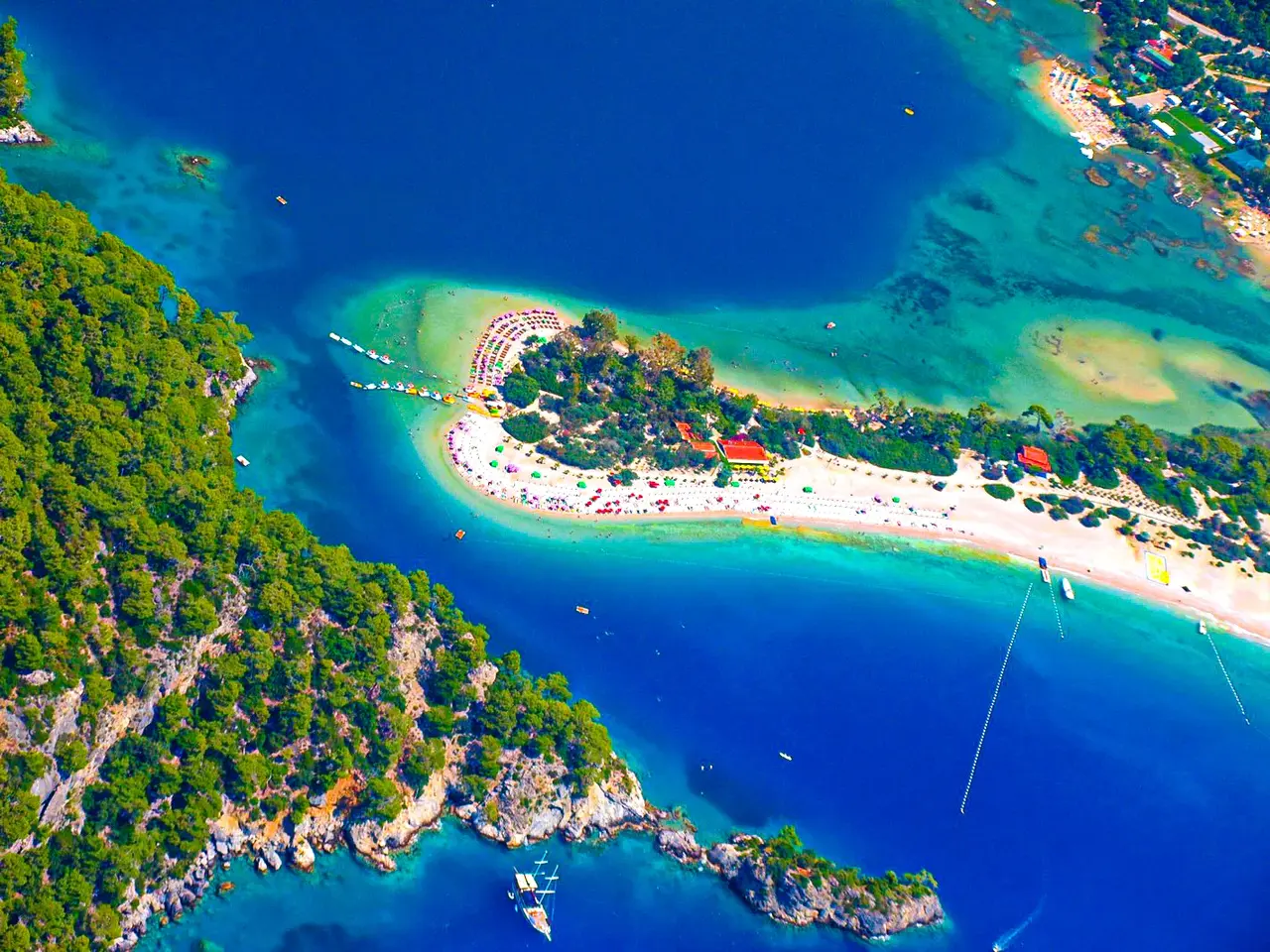
Destination guide · Europe
Antalya Coast
Turquoise Coast on a budget — paragliding over Ölüdeniz, empty-sand Patara beaches, and Antalya's walled old town, after the summer crowds leave.
The short answer
- Cost: mid-range ≈ $41–69/day
- Best time: Autumn (Sep–Oct) and Spring (Apr–May)
- Vibe: Turquoise Coast on a budget
Currency
TRY
1 USD = 48.933 TRY
ECB reference rates via the Frankfurter mirror (providers=ecb), 23 October 2026
Country
Turkey
Best time
Autumn (Sep–Oct) and Spring (Apr–May)
Verified
September 2026
Money & cards
Currency is the Turkish lira (TRY). Cards are widely accepted in Antalya, Ölüdeniz and Fethiye, but carry cash for dolmuş minibuses, small kebab shops, and market stalls. ATMs are everywhere in towns; some charge fees, so withdraw larger amounts.
SourceTipping
[inferred from local custom] Tipping is not obligatory but appreciated — rounding up the bill or leaving 5–10% at sit-down restaurants is standard. Not expected at counter-service kebab shops.
SIM / eSIM
Prepaid tourist SIMs are sold by Turkcell, Vodafone and Türk Telekom at Antalya Airport and city stores; eSIM support varies. A 2026 tourist SIM with ~10GB typically costs 300–500 TRY.
SourcePower plugs
[inferred] Plug type C/F (Europlug/Schuko), 230V 50Hz — standard European two-pin sockets.
SourceWhat a day costs
Verified September 2026
Per person, per day, by travel style — local currency TRY, converted at 48.933 TRY/USD. Conversion rate: ECB reference rates via the Frankfurter mirror (providers=ecb), 23 October 2026.
- Budget 1,200–1,700 TRY/day (~$35–50) per Vooygo (https://vooygo.com/turkey-trip-cost/) and Atlas & Awe (https://atlasandawe.blog/content/articles/turkey/fethiye-budget-guide) — hostel/pension, street food, dolmuş.
- Mid-range 2,000–3,400 TRY/day (~$60–100); comfortable 4,400–8,500 TRY/day (~$130–250) — boutique hotel, restaurant meals, paragliding.
- Accommodation is the swing factor: hostel dorms ~400–600 TRY; budget pensions ~600–1,000 TRY; mid-range boutique ~1,200–2,500 TRY (Vooygo, Atlas & Awe — verified Sep 2026).
- Converted at ~34 TRY/USD (XE, September 2026); the lira has depreciated ~15–20% over 12 months, so USD buys meaningfully more than 2025.
Day by day
- 1
Antalya Old Town
- 2
Turquoise Coast drive
- 3
Ölüdeniz + paragliding
Plan Antalya Coast with our tools
Every tool runs in your browser against our dated cost dataset — no sign-up.
TL;DR
The Antalya Coast — the stretch of Turquoise Coast from Antalya’s old town through Ölüdeniz, Patara and Fethiye — is one of the last places in Europe-Mediterranean where $40/day is still comfortable after the summer crowds leave. September-October is the sweet spot: the sea is swimmable (25–27°C), accommodation has dropped 20–30% from the July–August peak, and the beaches are half-empty. The site’s hand-verified dataset (September 2026) puts mid-range at 2,000–3,400 TRY/day (~$41–$69), flights from the US East Coast ~$500–$700 round-trip in shoulder season. Tandem paragliding over the Blue Lagoon costs ~$100–$135 — one of the world’s iconic jumps. Turkey’s visa is a $20 e-Visa, approved online in minutes.
Who it’s for
- Budget travelers who want Mediterranean island energy at mainland prices ($40/day is comfortable, not survival)
- Adventure seekers: tandem paragliding over Ölüdeniz, canyoning in Köprülü Canyon, and the Lycian Way’s coastal hikes are all here
- Slow/long-stay travelers: shoulder-season Airbnbs in Fethiye/Kaş run $25–$40/night; 90-day e-Visa lets you settle in
- Not for: travelers who want polished, resort-style infrastructure — the charm is slightly rough-edged (dolmuş minibuses, cash markets, cats everywhere)
Quick Facts
| Currency | Turkish lira (TRY) — cards widely accepted in towns; cash for dolmuş, kebab shops, markets |
| Time zone | TRT (UTC+3) |
| Visa | US citizens: $20 e-Visa online via evisa.gov.tr (single-entry, 90 days); sticker on arrival $30 |
| Entry | Antalya International (AYT) — direct flights from major European hubs; from the US via Istanbul (IST) |
| Transit | Dolmuş (shared minibuses) between towns; FlixBus/Kamil Koç for longer hops; scooter rental ~400–600 TRY/day |
| SIM/eSIM | Turkcell, Vodafone, Türk Telekom prepaid tourist SIMs at AYT airport and city stores [inferred] |
| Taxes | No tourist tax; 20% VAT is in posted prices |
| Peak months | [inferred] Jun–Aug |
| Daily mid (verified) | 2,000–3,400 TRY (~$41–$69) — hand-verified September 2026, breakdown below |
Getting there
Flights into Antalya International (AYT). From the US East Coast, one-stop fares via Istanbul run $500–$700 round-trip in September-October (Expedia, Kayak 2026). The airport is 15 km east of Antalya’s old town — tramvay (tram) to the center is ~20 TRY, taxi ~300–400 TRY.
If you’re already in Turkey, Kamil Koç and FlixBus run Istanbul–Antalya coaches overnight (~12 hours, $20–$30). For the coast, the Antalya–Fethiye leg is a scenic 3-hour drive through the mountains — dolmuş ~150–200 TRY.
Where to stay
- Kaleiçi (Antalya Old Town) — boutique guesthouses in restored Ottoman mansions from ~600–1,200 TRY/night
- Ölüdeniz — pensions and apartments ~800–1,500 TRY/night in shoulder season; the Blue Lagoon is a 10-minute dolmuş away
- Fethiye — the best value on the coast; private rooms ~400–800 TRY, boutique hotels ~1,200–2,000 TRY. Hisarönü and Çalış Beach are the budget bases
- Kaş — smaller, cooler, slightly pricier (~1,000–2,500 TRY) — the best base for Patara Beach and the Lycian Way
Where to eat
- Pide salons — the Turkish pizza, from 120–200 TRY with a view
- Kebab & köfte joints — döner dürüm (wrap) ~100–150 TRY; köfte plate ~200–300 TRY
- Balık (fish) restaurants — Fethiye’s fish market: you pick the catch, they grill it — ~400–700 TRY per person with meze and rakı
- Breakfast (kahvaltı) — a full Turkish breakfast spread (cheese, olives, eggs, honey, kaymak, unlimited tea) ~250–400 TRY
- Dolmuş-side gözleme — hand-stuffed flatbreads from 80–150 TRY at village stops
Itinerary sketch (3 days)
Mirrors the site’s itinerary dataset (src/data/itineraries.ts):
Day 1: Antalya Old Town — Kaleiçi’s Ottoman lanes (get lost on purpose) → Hadrian’s Gate → Düden Waterfall (upper park, then lower if time) → Konyaaltı Beach for sunset.
Day 2: Turquoise Coast drive — Bus or drive the D400 coast road: Patara (18 km of empty-sand beach; ~200 TRY entry to ancient ruins) → Kaş for lunch → Fethiye fish market for dinner.
Day 3: Ölüdeniz + paragliding — Dolmuş to Ölüdeniz for the Blue Lagoon view → tandem paragliding off Babadağ (~$100–$135, book the day before) → sunset at Fethiye’s Çalış Beach.
Cost guide (from dataset, hand-verified September 2026)
| Item | Budget | Mid | Comfortable |
|---|---|---|---|
| Daily (per person) | 1,200–1,700 TRY (~$25–$35) | 2,000–3,400 TRY (~$41–$69) | 4,400–8,500 TRY (~$90–$174) |
| Flights (round-trip, US East Coast) | $500–$600 [inferred shoulder] | $600–$700 | $900+ |
Hand-verified against two published sources — shown side by side, NOT averaged:
- Budget $35–55/day (1,200–1,900 TRY) per Vooygo Turkey budget guide 2026; Fethiye under €45/day per Atlas & Awe.
- Indie Traveller brackets Turkey budget $35–55/day, mid $60–100/day.
- Converted at ~34 TRY/USD (XE, September 2026). The lira has depreciated ~15–20% over 12 months, so USD buying meaningfully more than 2025.
Use the Trip Planner with your dates.
Safety
Turkey’s overall US State Department advisory is Level 2 (“Exercise Increased Caution”) — not Level 4. The Level 4 (“Do Not Travel”) zone is the far southeast near the Syrian and Iraqi borders, 700+ km from Antalya. The Antalya–Fethiye coast is Turkey’s most-established tourist corridor and broadly safe for tourists. Real risks: pickpockets in Antalya’s bazaars and on crowded dolmuşes (keep your bag in front), rip-off taxis (use the BiTaksi app, insist on the meter, or agree a fare upfront), sports-paragliding accidents — only book with licensed operators (check for TÜRSAD or T-Shape accreditation), and earthquakes — southwestern Turkey sits on active faults; know your hotel’s evacuation route. Emergency number: 112.
Good to know (2026)
- Paragliding capital — Ölüdeniz is one of the world’s most reliable tandem paragliding sites (thermal conditions, 3000 ft takeoff off Babadağ). Book with a licensed operator; morning flights are smoothest.
- The e-Visa is not optional — apply at evisa.gov.tr before you fly. The $20 single-entry e-Visa covers 90 days. Airlines may check at boarding.
- Dolmuş over taxis — the shared minibuses are 5–10x cheaper than taxis and cover every town on the coast. Wave them down, pay cash, shout “inecek var” when you want off.
- Shoulder-season timing is everything — July-August sees 40°C heat, packed beaches, and doubled accommodation prices. September-October is the same weather with half the people.
- Patara Beach — 18 km of uninterrupted sand, a nesting site for loggerhead turtles (access restricted 8pm–May to protect nests). The ancient ruins behind the dunes are an added bonus.
Frequently asked questions
- How much does a day on the Antalya Coast cost?
- From the site's verified dataset (September 2026): budget 1,200–1,700 TRY, mid-range 2,000–3,400 TRY, comfortable 4,400–8,500 TRY per person per day — roughly $25–$174 depending on style.
- Do I need a visa for Turkey?
- US citizens need an e-Visa for ~$20 (single-entry, 90 days) via evisa.gov.tr. Apply online before travel — approval is usually instant. Sticker visa on arrival is $30, but the e-Visa is cheaper and faster.
- Is the Antalya Coast safe for tourists in 2026?
- The US State Department rates Turkey Level 2 overall ('Exercise Increased Caution') but Level 4 ('Do Not Travel') for the far southeast near the Syrian/Iraqi borders — 700+ km from Antalya. The Antalya-Fethiye coast is the country's most-established tourist corridor. Usual precautions: watch for pickpockets in markets, don't leave valuables unattended on beaches.
- What's the best time to visit?
- Autumn (September–October) is the sweet spot — the summer crowds have left, sea temperature is still ~25–27°C, and accommodation prices drop 20–30% from July–August peaks. Spring (April–May) is the runner-up.
- How do I get around the Turquoise Coast?
- Dolmuş (shared minibuses) are the cheapest option — Fethiye to Ölüdeniz is ~50 TRY. FlixBus and Kamil Koç run intercity coaches (Antalya–Fethiye ~$15–20). Scooter rental in Fethiye/Kaş is ~400–600 TRY/day.
Sources & facts
| Best time to visit | Autumn (Sep–Oct) and Spring (Apr–May) |
|---|---|
| Prices verified | September 2026 |
| Page last updated | — |
| Sources |