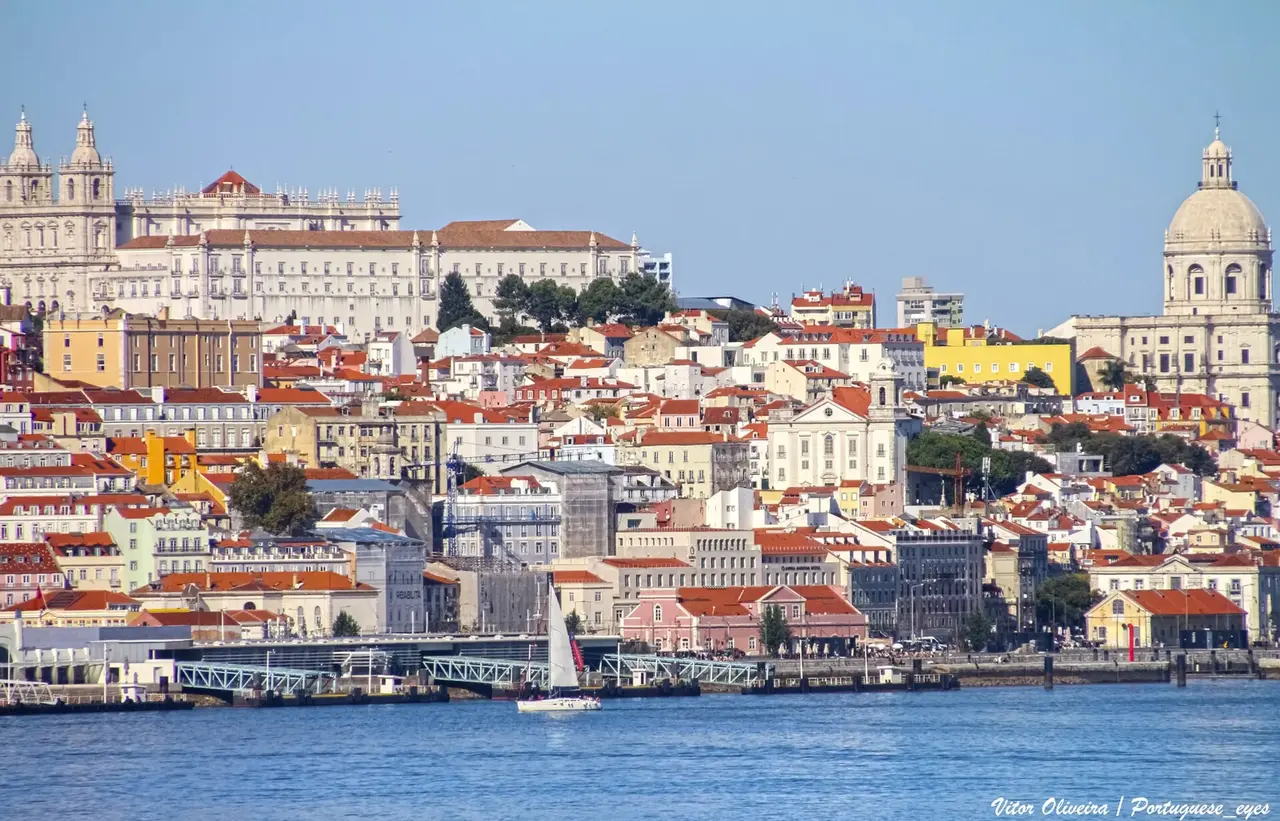
Destination guide · Europe
Lisbon
Seven hills, yellow trams, pastel de nata, and Atlantic light — Lisbon blends faded grandeur with a creative reboot, still cheaper than its Western peers.
The short answer
- Cost: mid-range ≈ $146–191/day
- Best time: Spring (Apr–Jun) and Autumn (Sep–Oct)
- Vibe: Seven hills, yellow trams, pastel de nata, and Atlantic light
Currency
EUR
1 USD = 0.8921 EUR
ECB reference rates via the Frankfurter mirror (providers=ecb), 25 September 2026
Country
Portugal
Best time
Spring (Apr–Jun) and Autumn (Sep–Oct)
Verified
September 2026
Money & cards
Currency is the euro (EUR). Cards are near-universal; MB Way (local QR pay) is common. Contactless works on the metro and trams via a loaded Viva Viagem card.
SourceTipping
[inferred from local custom] Tipping is not obligatory — rounding up the bill or leaving ~5–10% at sit-down restaurants is appreciated. Based on general Portugal travel guidance, not a verified survey.
SIM / eSIM
[inferred] Prepaid tourist SIMs are sold by Vodafone, MEO and NOS — roughly €15 for 30 GB; eSIMs from ~$5. Airport kiosks and phone stores citywide.
What a day costs
Verified September 2026
Per person, per day, by travel style — local currency EUR, converted at 0.8921 EUR/USD. Conversion rate: ECB reference rates via the Frankfurter mirror (providers=ecb), 25 September 2026.
- Hand-verified 25 September 2026 against BudgetYourTrip, Radical Storage, Never Ending Footsteps, LisbonLisboaPortugal, Numbeo, Metropolitano de Lisboa and Câmara Municipal de Lisboa.
- Converted at 0.877 EUR/USD (ECB reference rate, 25-Sep-2026), the same rate the page renders.
- Budget €65–80/day: BudgetYourTrip €73/day (page live 25-Sep-2026) and LisbonLisboaPortugal €65/day (2026) converge. Radical Storage is the low outlier at €45–65 and anchors to 2025 prices.
- Mid €130–170/day: three sources converge — BudgetYourTrip €167/day, Radical Storage €100–150, LisbonLisboaPortugal €130 excluding accommodation. Never Ending Footsteps gives a €166 all-Portugal daily average (updated 29-Jun-2026).
- Comfortable €260–400/day: BudgetYourTrip €389/day against Radical Storage €250–400+. The two overlap only at the top, so the floor is taken from Radical Storage rather than averaged.
- Accommodation tiers, Sept 2026: hostel dorm €20–30 typical (€10–36 across ~30 properties, Hostelworld 25-Sep-2026); budget private €50–100 (Never Ending Footsteps, 29-Jun-2026); mid-range 3-star €80–160 (Radical Storage 2026); 4-star €170–350 (same).
- Tourist tax is €4 per guest per night, capped at 7 nights, age 13+, and applies to hostels and local accommodation as well as hotels (Câmara Municipal de Lisboa). OTA listings usually show it as a separate line at checkout.
- Transit: Carris/Metro ticket €1.90, 24h pass €7.25 (Metropolitano de Lisboa, 2026). Earlier notes in this file quoted €6.80/€10.80, which were stale.
- Attractions corrected September 2026: Castelo de São Jorge €17; Mosteiro dos Jerónimos €18; Torre de Belém €15 (reopened 26 May 2026 with timed entry, capped at 60 visitors per 30 min and 900 a day); Palácio da Pena €20 Essential; Quinta da Regaleira €20.
- Portugal IVA: 6% on hotel accommodation and passenger transport, 13% on restaurant meals, 23% standard (PwC Worldwide Tax Summaries, 2026). EU consumer prices are VAT-inclusive.
- Caveat: BudgetYourTrip states its categories are averaged independently and the daily total is NOT a sum of its components — do not add its rows together.
Day by day
- 1
Baixa → Chiado → Bairro Alto
- 2
Alfama deep-dive
- Evening fado in a tasca — Casa de Linhares or Mesa de Frades — book.
- 3
Belém + riverside
- Tram 15 to Belém — Practical transit, unlike tram 28.
- 4
Sintra day trip
- Train from Rossio — ~40 min to Sintra.
- 5
Modern Lisbon
Plan Lisbon with our tools
Every tool runs in your browser against our dated cost dataset — no sign-up.
TL;DR
Lisbon is one of Western Europe’s better-value capitals — mid-range ~$140/day [inferred], flights ~$600 from major hubs. The hills are real, the trams are iconic, and the pastel de nata is non-negotiable. Summer (Jul–Aug) is hot, crowded, and pricey; spring and autumn hit the sweet spot. The digital nomad scene is massive — coworking, visas, community all sorted.
Who it’s for
- Slow travelers who want walkable neighborhoods, great coffee, and day-trip variety
- Remote workers: huge nomad infrastructure, D7/D8 visa paths, English widely spoken
- Food people: petiscos (tapas), seafood, natural wine, and pastries at every corner
- Not for: travelers who need flat terrain, AC everywhere, or late-night metro (closes ~1 AM)
Quick Facts
| Currency | Costs shown in USD (rough estimate) · local currency is EUR (€); cards near-universal, MB Way (local QR pay) common |
| Time zone | WET/WEST (UTC+0/+1) |
| Visa | Schengen 90/180; D7 (passive income) / D8 (digital nomad) visas for stays >90 days |
| Entry | Lisbon (LIS) — metro red line to center in 20 min (€1.90 single), Aerobus €4, Uber ~€10–15 |
| Transit | Carris/Metro ticket €1.90 (€7.25 for a 24h pass) loaded onto an occasional-user card. Trams 15/28 = scenic but crowded; metro is faster |
| SIM/eSIM | Vodafone/MEO/NOS ~€15/30 GB; eSIM from $5 |
| Peak months | Jun–Sep — book 2–3 months ahead for Aug |
| Daily mid (est.) | $140 [inferred] — breakdown below |
Getting there
Lisbon Airport (LIS) is 7 km from center. Metro (Red Line): €1.90, 20 min to Baixa/Chiado — best value. Aerobus: €4, 30 min to Cais do Sodré. Uber/Bolt/FreeNow: €10–15, 15–25 min. Train to Sintra/Cascais: from Rossio or Cais do Sodré stations (CP regional, ~€2.50–3.50).
Where to stay
Nightly rates, September 2026. The tier ranges are sourced; the neighbourhood column is orientation, not a quoted rate.
| Tier | Where to look | EUR/night | Source |
|---|---|---|---|
| Hostel dorm | Anywhere — Baixa, Alfama, Mouraria | €20–30 typical; €10–36 across ~30 properties | Hostelworld Lisbon list (25-Sep-2026); Never Ending Footsteps (29-Jun-2026) |
| Budget private | Mouraria, Arroios, Anjos | €50–100 | Never Ending Footsteps (29-Jun-2026) |
| Mid-range 3★ | Baixa/Chiado €90–150 · Alfama €85–140 · Belém €80–130 | €80–160 | Radical Storage (2026) |
| 4★ | Baixa €180–350 · Alfama €170–300 | €170–350 | Radical Storage (2026) |
September is genuinely a shoulder month, not peak. Kayak data behind BudgetYourTrip puts the average room at $124 off-season vs $231 in peak summer — an 86% premium — and dorm beds at €15–25 off-season against €25–40 in peak months (Radical Storage, 2026). That is why this guide’s peak months are July–August, not June–September.
Neighbourhoods, for orientation: Baixa/Chiado is flat, central and touristy; Alfama is a maze of steep alleys with the castle above it; Mouraria is the cheapest genuinely interesting base; Príncipe Real is the upscale pocket; Santos and Cais do Sodré hold the nightlife. Stay on the flat side of the hill if you have mobility concerns — the hills plus calçada cobblestones are the real hazard, and the 28 tram will not save you.
Pro tip: Avoid the steepest Alfama alleys if mobility is an issue — the trams (28/12) help but get packed.
Where to eat
- Pastel de nata: Pastéis de Belém (original, line), Manteigaria (multiple, no line), Fabrica da Nata (solid chain)
- Petiscos/tapas: Taberna da Rua das Flores (book ahead), Petiscaria Ideal, O Trigueirinho (Alfama)
- Seafood: Cervejaria Ramiro (queue, legendary percebes), Mar do Inferno (Cascais, day trip)
- Natural wine: Foxtrot, Anona, Travessa — small plates, great lists
- Markets: Time Out Market (touristy but reliable), Mercado de Campo de Ourique (local), Mercado 31 de Janeiro
- Cheap eats: Bifana (pork sandwich) ~€3, prego (steak sandwich) ~€4, prato do dia (lunch set) €8–12
- Coffee/specialty: The Mill (Santos), Copenhagen Coffee Lab (Chiado), Wish Slow Coffee House (Príncipe Real)
- Bacalhau: Casa da Mouraria (Alfama), A Padaria Portuguesa (chain, solid), Zé dos Cornos (Graça)
Itinerary sketch (7 days)
Day 1: Baixa → Chiado → Bairro Alto — Rossio → Rua Augusta arch → Santa Justa Lift (or walk up) → Carmo Convent ruins → Chiado cafés (A Brasileira) → Bairro Alto for sunset drinks.
Day 2: Alfama deep-dive — Castelo de São Jorge (€17, book) → Miradouro da Graça → Sé Cathedral → Fado Museum → evening fado in a tasca (Casa de Linhares, Mesa de Frades — book).
Day 3: Belém — Tram 15 to Belém → Jerónimos Monastery (€18) → Pastéis de Belém → Belém Tower (€15, timed entry — capped at 60 visitors per 30 min, 900 a day since the 26 May 2026 reopening) → MAAT (museum) → river walk back or train.
Day 4: Sintra day trip — Train from Rossio (40 min) → Palácio da Pena (€20 with the Essential timed slot, book early) → Quinta da Regaleira (€20) → historic center → train back. Or Cascais (train from Cais do Sodré, 40 min) for beach + Boca do Inferno.
Day 5: Modern Lisbon — LX Factory (creative hub, lunch) → MAAT or Gulbenkian Museum → Príncipe Real garden → Miradouro de São Pedro de Alcântara sunset.
Day 6: Neighborhood hop — Mouraria (multicultural food) → Graça (viewpoints) → São Vicente de Fora → Feira da Ladra flea market (Tue/Sat) → Anjos for dinner.
Day 7: Buffer / day trip — Óbidos (medieval walled town, 1h bus) or Évora (Roman temple, bone chapel, 1.5h train) or Arrábida (beaches, need car).
Cost guide (from dataset, hand-verified September 2026)
| Item | Budget | Mid | Comfortable |
|---|---|---|---|
| Daily (per person) | €65–80 (~$74–91) | €130–170 (~$148–194) | €260–400 (~$296–456) |
| Flights (round-trip, major US hub) | $600 [dataset baseline] | $600 [dataset baseline] | $600 [dataset baseline] |
| 7-day total (1 person) | ~$1,119–1,239 | ~$1,638–1,957 | ~$2,675–3,793 |
Converted at 1 USD = 0.877 EUR (ECB reference rate, 25-Sep-2026).
Two or more independent dated sources per band, side by side rather than averaged:
- Budget €65–80 — BudgetYourTrip puts a budget traveller at €73/day (page live 25-Sep-2026); LisbonLisboaPortugal lands at €65/day (2026). Radical Storage is the low outlier at €45–65, and its own text is anchored to 2025 prices.
- Mid €130–170 — three sources converge: BudgetYourTrip €167/day, Radical Storage €100–150, LisbonLisboaPortugal €130 excluding accommodation. Never Ending Footsteps gives a €166 all-Portugal daily average (updated 29-Jun-2026).
- Comfortable €260–400 — BudgetYourTrip €389/day, Radical Storage €250–400+. These overlap only at the top, so the floor is set from Radical Storage rather than averaged.
BudgetYourTrip’s own note says its categories are averaged independently and the daily total is not a sum of its components — the rows above are not additive.
Numbeo’s €25/day (24-Sep-2026) is a resident cost-of-living figure, not a travel budget; it is not comparable to the bands above. Use the Trip Planner with your dates.
Safety
Lisbon is very safe — violent crime rare. Real risks: pickpockets on tram 28, metro, and viewpoints (wear crossbody, front pocket). Scams: fake petitions, “found” gold ring, overpriced tuk-tuks. Hills + cobblestones = falls — wear grip shoes. Ocean currents at Costa da Caparica / Guincho — respect flags. Emergency: 112. Tourist police at Palácio Foz (Restauradores).
Good to know (2026)
- Tourist tax — €4/night per guest aged 13+, capped at 7 nights per stay (Câmara Municipal de Lisboa). It applies to hostels and local accommodation as well as hotels, and OTA listings usually show it as a separate line at checkout rather than folding it into the headline rate.
- Housing crisis — rents doubled 2015–2024; AL (local lodging) licenses frozen in center. Long-term stays: look Arroios, Marvila, Amadora; expect €800–1,200 for 1BR.
- Digital nomad visa (D8) — income ≥€3,680/mo (2026 official threshold, ~4× Portugal’s minimum wage; visa agency summary of the 2026 threshold — confirm against AIMA before relying on it), valid 1 year, renewable. NHR tax regime ended 2023; new “NHR 2.0” for specific sectors only — check current rules.
- Tram 28 is a tourist ride, not transit — use metro/bus for actual movement. Tram 15 to Belém is practical.
- Sunday/Monday closures — many small restaurants/tascas close one or both days. Plan ahead.
- Water is drinkable — tap is fine; refill bottle. Public fountains (chafarizes) in squares.
- English is widespread — but learning obrigado/a, por favor, a conta por favor goes far.
- Viva Viagem card — €0.50 reusable, load “zapping” (pay-per-ride) or 24h/48h passes. Works on metro, trams, buses, ferries, CP trains (Sintra/Cascais). Not on private buses or Uber.
- Airport metro tip — Red line goes straight to Baixa/Chiado (green/blue line transfers). Don’t take Aerobus unless you have heavy luggage and stay near Cais do Sodré.
- Time Out Market — overpriced tourist trap for food; go for drinks at the rooftop bar instead. Real local markets: Mercado de Campo de Ourique, Mercado 31 de Janeiro.
Frequently asked questions
- Is Lisbon still cheap?
- Cheaper than Paris/London/Amsterdam, but the gap has narrowed. Mid-range runs ~€130–150/day [inferred]; budget (hostel, self-cater, walk) ~€70–90/day [inferred]. The dataset mid band ($140) assumes mixed dining and private rooms — staying in Arroios/Anjos and eating at tascas does it for less. Summer prices are a different tier.
- When is the best time to visit Lisbon?
- April–June and September–October — warm (18–25°C), light crowds, jacarandas in May, ocean swimmable by September. July–August is hot, packed, and expensive. November–March is mild, rainy, and cheapest.
- Do I need a car in Lisbon?
- No — parking is a nightmare and metro + bus + Uber cover everything. Rent only for Arrábida/Setúbal beaches, an Alentejo road trip, or Serra da Estrela. For Sintra/Cascais the train is faster and scenic.
- How many days for Lisbon?
- 3–4 days covers the city core plus Belém; 5–7 adds Sintra, Cascais, and breathing room. First-timers: 5 is the sweet spot — 3 city, 1 Sintra, 1 buffer.
- Can I drink the tap water in Lisbon?
- Yes — tap water is safe, chlorinated, and tastes fine. Refill at public fountains (chafarizes); bottled water is €0.50–1.00 at supermarkets if you prefer.