Destination guide · Europe
Iceland
Nordic island where glaciers, waterfalls, and geothermal lagoons pack into a space smaller than Kentucky, and a mid-range day costs $320-520 with visa-free entry for US passport holders and the northern lights in season from September.
The short answer
- Cost: mid-range ≈ $320–520/day
- Best time: September-April for northern lights; June-August for midnight sun and highland roads; October is a sweet spot with fewer crowds and lower prices
- Vibe: Nordic island where glaciers, waterfalls, and geothermal lagoons pack into a space smaller than Kentucky, and a mid-range day costs $320-520 with visa-free entry for US passport holders and the northern lights in season from September
Currency
ISK
1 USD = 122.57 ISK
ECB reference rates via the Frankfurter mirror (providers=ecb), 25 September 2026
Country
Iceland
Best time
September-April for northern lights; June-August for midnight sun and highland roads; October is a sweet spot with fewer crowds and lower prices
Verified
October 2026
Money & cards
Currency is the Icelandic króna (ISK, kr). Cards are accepted virtually everywhere, including small shops, food trucks, and even public toilets. Cash is rarely needed. ATMs are available in Reykjavik and major towns. US dollars are not accepted.
SourceTipping
[inferred from local custom] Tipping is not expected or customary in Iceland. Service charges are included in prices. Rounding up a restaurant bill is appreciated but not required.
SIM / eSIM
eSIMs for Iceland start from ~$3-8 (Airalo, Holafly 2026). Prepaid SIMs from Síminn, Vodafone, and Nova available at the airport and city stores. 4G/5G is reliable in Reykjavik and along the Ring Road; coverage is sparse in the highlands and Westfjords.
SourcePower plugs
Plug type C and F (two-pin round), 230V 50Hz. Same as most of Europe. Bring a universal adapter if coming from the UK or US.
SourceWhat a day costs
Verified October 2026
Per person, per day, by travel style — local currency ISK, converted at 122.57 ISK/USD. Conversion rate: ECB reference rates via the Frankfurter mirror (providers=ecb), 25 September 2026.
- VISA-FREE FOR 90 DAYS (SCHENGEN): US passport holders can enter Iceland without a visa for up to 90 days within any 180-day period. Passport must be valid 3 months beyond planned departure. ETIAS NOT required until 2027. EES (biometric registration) operational since April 2026. FX: converted at 122.57 ISK/USD (Frankfurter/ECB, 07-Oct-2026; open.er-api, 07-Oct-2026). Two independent sources agree within 0.7%. LEVEL 1 ADVISORY, ISSUED 5 MAY 2026: lowest rating available. Iceland is one of the safest countries in the world. Petty crime (pickpocketing, purse snatching) occurs in tourist areas but is rare. Real risks are natural: weather, roads, sneaker waves, glaciers, volcanic activity. OCTOBER IS A SWEET SPOT: prices 20-30% lower than peak summer, fewer crowds, northern lights in season, ice cave tours begin operating. Weather is volatile — build flexibility into your itinerary. ACCOMMODATION IS THE BIGGEST SWING FACTOR: hostel dorms $25-60/night, budget guesthouses $70-150, mid-range hotels $150-320, luxury $280-800+. October is 20-30% cheaper than peak summer.
- FOOD IS EXPENSIVE: self-catering from supermarkets (Bónus, Krónan) is the budget strategy. Hot dogs $5-7, skyr $2-3, restaurant dinner $35-60. Daily food budget: budget $40-60, mid $70-100, luxury $150+. ATTRACTION COSTS: Blue Lagoon $98-151, Sky Lagoon $70-130, Perlan Museum $57-60, FlyOver Iceland $43-51, Thingvellir/Geysir/Gullfoss free, Kerið Crater ~$5, Myvatn Nature Baths $35-55. TRANSPORT: rental car $40-80/day economy, $90-155/day SUV. Ring Road (Route 1) is 1,332 km and circles the island. Highland roads (F-roads) require 4x4 and are summer-only. New kilometer-based road tax effective Jan 1, 2026: ISK 6.95/km (~$0.05/km). NO TOURIST TAX: Iceland does not charge a tourist tax. VAT 24% is included in posted prices.
Day by day
- 1
Reykjavik arrival
- 2
Golden Circle
- 3
South Coast
- 4
Vatnajokull and Jokulsarlon
- 5
Snaefellsnes Peninsula
- 6
Reykjavik and lagoons
- 7
Departure
Plan Iceland with our tools
Every tool runs in your browser against our dated cost dataset — no sign-up.
TL;DR
Iceland is the Nordic island where a mid-range day sits around $320-520/day (39,200-63,700 ISK) — the site’s hand-verified October 2026 dataset puts budget at $145-240/day, mid at $320-520/day, comfortable at $960-1,200/day. Glaciers, waterfalls, black sand beaches, and geothermal lagoons all sit within a day’s drive of Reykjavik. The 2026 hook: October is a sweet spot — 20-30% cheaper than summer, fewer crowds, the northern lights are in season, and ice cave tours begin operating. US passport holders get 90 days visa-free under Schengen rules, and ETIAS is not required until 2027.
Who it’s for
- Budget backpackers: hostel dorms from $25-60/night, self-catering from supermarkets, and a rental car split between four. Iceland is expensive, but free natural attractions (waterfalls, beaches, lava fields) keep costs down.
- Mid-range travelers: mid-range hotels, a mix of dining, and a rental car. The Golden Circle and South Coast are doable in a week at $320-520/day.
- Luxury seekers: design hotels in Reykjavik, fine dining, private 4x4 with driver-guide, and premium experiences (helicopter tours, private glacier hikes) from $960-1,200/day.
- Northern lights chasers: September-April is aurora season. October offers longer nights than September and still-manageable weather. Moon-free nights Oct 8-17, 2026 are optimal.
- Road trippers: the Ring Road (Route 1) is 1,332 km and circles the entire island. 7-10 days is the minimum for a full loop; 5-7 days covers the highlights.
- Not for: those who want a predictable beach holiday — October weather is volatile, with rain, wind, and possible snow. The island’s charm lies in its unpredictability.
Quick Facts
| Currency | Icelandic króna (ISK, kr). 1 USD = 122.57 ISK (Frankfurter/ECB, 07-Oct-2026). Cards accepted virtually everywhere; cash rarely needed. |
| Time zone | GMT (UTC+0) — no daylight saving. Iceland is 4 hours ahead of Washington, D.C. during Eastern Standard Time. |
| Entry (visa) | Visa-free for 90 days within any 180-day period (Schengen rules). US passport holders. Passport must be valid 3 months beyond planned departure. ETIAS NOT required until 2027. EES (biometric registration) operational since April 2026. |
| Airport | Keflavik International (KEF), 45 min southwest of Reykjavik. FlyBus and Airport Express connect to Reykjavik; rental car pickups at the terminal. |
| Transit | Rental car is the best way to see Iceland. Ring Road (Route 1) is paved and well-maintained. Highland roads (F-roads) require a 4x4 and are only open in summer. Domestic flights connect Reykjavik to Akureyri, Isafjordur, and Egilsstaðir. |
| SIM/eSIM | eSIMs from ~$3-8; Síminn, Vodafone, Nova prepaid at airport. 4G/5G reliable in Reykjavik and along Ring Road; sparse in highlands. |
| Tourist tax | No tourist tax. VAT 24% is included in posted prices. |
| Peak months | September-April (northern lights season). June-August (midnight sun, highland roads). October is a sweet spot. |
| Daily mid (hand-verified) | $320-520 (39,200-63,700 ISK) — breakdown below |
Getting there
Keflavik International Airport (KEF) is the main gateway, 45 min southwest of Reykjavik. Options to the city:
- FlyBus / Airport Express: ~$25-30, 45-60 min to Reykjavik Bus Station. Runs on a schedule tied to flight arrivals.
- Rental car: Pickup at the terminal. A compact car costs $40-80/day; an SUV or 4x4 costs $90-155/day. Book ahead for October — shoulder season but still popular.
- Taxi: ~$150-200, 45 min. Expensive but convenient for late arrivals.
From US East Coast: round-trip flights ~$450-650 (budget) / $700-1,000 (mid-range). From West Coast: ~$550-850 / $900-1,300. From Europe: ~$300-600. Book 2-3 months ahead for summer; October is shoulder season and cheaper.
Icelandair Stopover: Fly transatlantic with Icelandair and add a free stopover in Iceland for up to 7 days at no additional airfare. This is one of the best deals in travel — two destinations for the price of one. (Icelandair)
Where to stay
| Area | Budget | Mid-range | Notes |
|---|---|---|---|
| Reykjavik | Hostel dorm $25-60 / guesthouse $70-150 | Mid-range hotel $150-320 | Best base for Golden Circle and day trips. Book ahead for October. |
| Vik | Guesthouse $80-150 | Hotel $180-350 | South Coast hub. Good for Seljalandsfoss, Skogafoss, Reynisfjara. |
| Höfn | Guesthouse $80-140 | Hotel $160-300 | Gateway to Vatnajökull and Jökulsárlón. |
| Akureyri | Hostel $30-70 / guesthouse $70-130 | Hotel $140-280 | North Iceland capital. Good for Myvatn and whale watching. |
| Isafjordur | Guesthouse $70-120 | Hotel $130-250 | Westfjords hub. Remote, dramatic scenery. |
Accommodation is the swing factor: hostel dorms $25-60/night, budget guesthouses $70-150, mid-range hotels $150-320, luxury $280-800+. October is 20-30% cheaper than peak summer. (Radical Storage 2026, Hertz Iceland Feb 2026)
Where to eat
| Meal | Budget | Mid-range |
|---|---|---|
| Breakfast | Supermarket pastry + coffee $5-10 | Hotel breakfast or cafe $15-25 |
| Lunch | Hot dog or soup $8-15 | Restaurant lunch $20-35 |
| Dinner | Supermarket self-catering $15-20 | Restaurant dinner $35-60 |
| Drinks | Beer from supermarket $3-5 | Cocktail at a bar $12-20 |
The hybrid strategy — self-catering from supermarkets (Bónus, Krónan) for breakfast and lunch, then a restaurant dinner — keeps food spend around $40-60/day even at mid-range. Icelandic hot dogs (pylsur) from Bæjarins Beztu in Reykjavik are a must: ~$5-7 and filling. Skyr (Icelandic yogurt) is a cheap, high-protein snack: ~$2-3. (Radical Storage, Guide to Iceland)
Itinerary sketch (7 days / 6 nights)
Day 1: Reykjavik arrival — Land at KEF, take FlyBus or rental car to Reykjavik. Walk the old town, Hallgrímskirkja church, and the Harpa concert hall. Dinner at a local restaurant (Icelandic lamb or seafood). Overnight in Reykjavik.
Day 2: Golden Circle — Drive the Golden Circle loop: Thingvellir National Park (free, parking $8), Geysir Geothermal Area (free), Gullfoss Waterfall (free). Optional: Kerið Crater ($5). Evening: northern lights hunt if skies are clear. Overnight in Reykjavik or Selfoss.
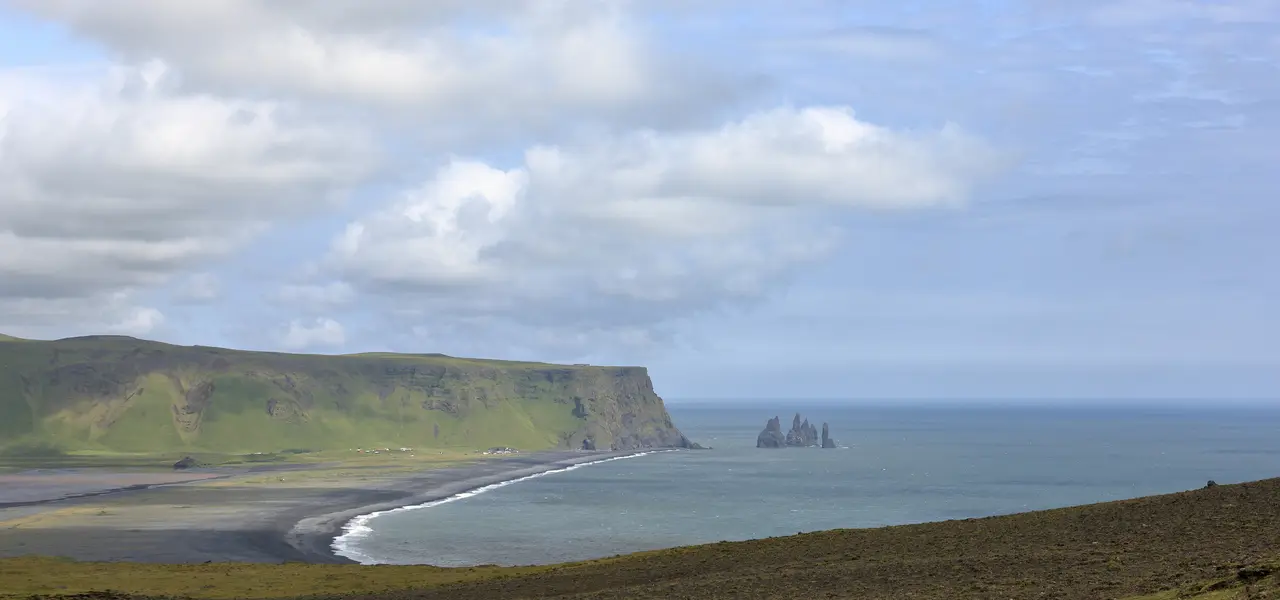
Day 3: South Coast — Drive the South Coast: Seljalandsfoss (free, walk behind the waterfall), Skogafoss (free, climb the stairs for the view), Reynisfjara Black Sand Beach (free, respect the sneaker waves). Overnight in Vik.
Day 4: Vatnajökull and Jökulsárlón — Continue east: Skaftafell (free, hike to Svartifoss), Jökulsárlón Glacier Lagoon (free, boat tour ~$50-80), Diamond Beach (free). Overnight in Höfn or back to Vik.
Day 5: Snæfellsnes Peninsula — Drive to Snæfellsnes: Kirkjufell Mountain (free), Búðakirkja Black Church (free), Arnarstapi (free), Djúpalónssandur Beach (free). Overnight in Stykkishólmur or back to Reykjavik.
Day 6: Reykjavik and lagoons — Morning: Perlan Museum ($57-60) or FlyOver Iceland ($43-51). Afternoon: Blue Lagoon ($98-151) or Sky Lagoon ($70-130). Evening: northern lights tour ($65-150) if you haven’t seen them yet. Overnight in Reykjavik.
Day 7: Departure — Last-minute shopping in Reykjavik (wool sweaters, skyr, chocolate). Drive to KEF for departure.
Plan B (weather): If the weather turns, swap the outdoor days for Reykjavik museums (National Museum ~$20, Saga Museum ~$25) or a food tour ($80-120). The weather in October is volatile — build flexibility into your itinerary.
Cost guide (from dataset, hand-verified October 2026)
| Item | Budget | Mid | Comfortable |
|---|---|---|---|
| Daily (per person) | $145-240 (17,800-29,400 ISK) | $320-520 (39,200-63,700 ISK) | $960-1,200 (117,700-147,100 ISK) |
| Flights (round-trip, US East Coast) | $450-650 [inferred baseline] | $450-650 | $450-650 |
| Accommodation (per night) | $25-60 dorm / $70-150 guesthouse | $150-320 mid-range hotel | $280-800+ luxury hotel |
| Transit (daily) | $40-80 economy car + fuel | $90-155 SUV + fuel | $320+ large 4x4 + fuel |
| Attractions (daily) | $0-10 (free nature sites) | $40-120 (tours, some paid) | $240+ (premium experiences) |
| Food (daily) | $40-60 (self-catering + 1 restaurant) | $70-100 (mix of dining) | $150+ (fine dining) |
All bands cross-checked against two sources each:
- Radical Storage “How Much Is a Trip to Iceland?” (2026 guide): budget $145-240/day, mid-range $320-520/day, luxury $960-1,200+/day. Hostel dorms $25-60/night, mid-range hotels $150-320/night.
- Hertz Iceland “Iceland Travel Budget” (Feb 2, 2026): budget $120-220/day, mid-range $220-500/day, luxury $500+/day. Car rental $40-80/day economy, $90-155/day SUV.
Currency: 1 USD = 122.57 ISK (Frankfurter/ECB, 07-Oct-2026; open.er-api, 07-Oct-2026). Converted figures are [inferred] round-trip sanity; use the Trip Planner with your dates.
Safety
Iceland is one of the safest countries in the world. The US State Department advisory is Level 1 (Exercise normal precautions), issued 5 May 2026 — the lowest rating available. Violent crime against tourists is extremely rare. Petty theft (pickpocketing, purse snatching) occurs in tourist areas (Reykjavik city center, Golden Circle sites, ATMs/supermarkets) but is uncommon.
- Weather: Iceland’s weather is volatile and dangerous. Quickly changing conditions, high winds, and sudden snowstorms can occur even in October. Check vedur.is (weather) and road.is (road conditions) before driving. Do not drive in severe weather warnings.
- Roads: The Ring Road is paved and well-maintained, but single-lane bridges, blind hills, and sheep on the road are common. Highland roads (F-roads) require a 4x4 and are only open in summer. Do not stop on the road for photos — use designated pullouts.
- Ocean safety: Sneaker waves on black sand beaches (Reynisfjara, Djúpalónssandur) kill and injure tourists every year. Never turn your back on the ocean. Stay well back from the waterline. Do not swim in the ocean — the water is cold and currents are dangerous.
- Glaciers: Do not walk on a glacier without a certified guide. Ice caves are only accessible with a tour operator. Check safetravel.is for guided tours and safety information.
- Volcanic activity: Iceland is one of the most volcanically active places on Earth. The Reykjanes Peninsula has seen recent eruptions. Follow local authorities’ instructions and avoid closed areas. Check safetravel.is for current alerts.
- Emergency: 112 (police, fire, ambulance). Tourist Police in Reykjavik: +354 444 1000.
Good to know (2026)
- October is a sweet spot. Prices are 20-30% lower than peak summer, crowds are thinner, the northern lights are in season, and ice cave tours begin operating. The trade-off is volatile weather and limited daylight (11 hours on Oct 1, 8 hours by Oct 31). (Guide to Iceland)
- The northern lights are not guaranteed. They require dark skies, clear weather, and solar activity. October offers longer nights than September, but cloud cover can ruin the view. Book a northern lights tour for your first night — if it’s cancelled, you can rebook for the next night. Moon-free nights Oct 8-17, 2026 are optimal. (Guide to Iceland)
- ETIAS is not required yet. The EU’s new travel authorization has been delayed to 2027. US passport holders still enter visa-free for 90 days under Schengen rules. The Entry/Exit System (EES) is fully operational since April 2026, so expect biometric registration (fingerprints + photo) at the border. (ETIAS.com)
- The Icelandair Stopover is a steal. Fly transatlantic with Icelandair and add a free stopover in Iceland for up to 7 days at no additional airfare. This is one of the best deals in travel — two destinations for the price of one. (Icelandair)
- New in 2026: Laugarás Lagoon (opened Oct 2025, between Geysir and Kerið, tickets ~$87-200), Sky Lagoon Skjól expansion (opened Aug 22, 2026, new sauna and bar), World of Icelandic Music exhibition at Harpa (opened May 2026). (Visit Iceland)
- The road tax changed in 2026. A new kilometer-based road tax replaced some fuel taxes on Jan 1, 2026: ISK 6.95/km (~$0.05/km) plus admin fees. This is included in your rental car rate — confirm with the rental company. (Hertz Iceland)
- Tap water is safe and free. Iceland’s tap water is among the cleanest in the world. Bring a reusable bottle and fill up at any tap. Do not buy bottled water.
- Supermarkets are your friend. Bónus and Krónan are the cheapest supermarkets. Self-catering from supermarkets can cut your food budget in half. Hot dogs, skyr, and bread are cheap and filling.
- The Blue Lagoon is not the only lagoon. Sky Lagoon ($70-130) is closer to Reykjavik and offers ocean views. Laugarás Lagoon ($87-200) is the newest and most local. Myvatn Nature Baths ($35-55) are in the north. Choose based on your itinerary, not just the famous name.
Frequently asked questions
- How much does a day in Iceland cost?
- From the site's hand-verified dataset (October 2026): budget $145-240/day (17,800-29,400 ISK), mid-range $320-520/day (39,200-63,700 ISK), comfortable $960-1,200/day (117,700-147,100 ISK) per person. Budget gets you a hostel dorm, self-catering, and a rental car split between four. Mid gets a mid-range hotel, a mix of dining, and a rental car. Comfortable gets a luxury hotel, fine dining, and a private 4x4 with driver-guide.
- Do I need a visa for Iceland?
- US passport holders do not need a visa for stays up to 90 days within any 180-day period (Schengen rules). Your passport must be valid for at least 3 months beyond your planned departure from the Schengen Area. ETIAS is NOT yet required - the launch has been delayed to 2027. The Entry/Exit System (EES) is fully operational since April 2026, so expect biometric registration (fingerprints + photo) at the border.
- Is Iceland safe for tourists?
- The US State Department advisory is Level 1 (Exercise normal precautions), issued 5 May 2026 - the lowest rating available. Iceland is one of the safest countries in the world. Petty crime (pickpocketing, purse snatching) occurs in tourist areas but is rare. The real risks are natural: quickly changing weather, dangerous roads, sneaker waves on black sand beaches, and volcanic activity. Check road.is and vedur.is before driving.
- What is the best time to visit Iceland?
- September-April is northern lights season, with October being a strong early-season choice (longer nights than September, still manageable weather). June-August offers midnight sun and access to highland roads, but peak-season prices and crowds. October is a sweet spot: 20-30% cheaper than summer, fewer crowds, northern lights, and ice cave tours begin operating.
- Is Iceland expensive?
- Iceland is one of the most expensive destinations in Europe, but prices have been cooling. A solid mid-range day with a mid-range hotel, rental car, and a mix of dining runs $320-520. The main cost drivers are accommodation, car rental, and tours. Many natural attractions (waterfalls, black sand beaches, lava fields) are free. The Blue Lagoon ($98-151) and Sky Lagoon ($70-130) are the big-ticket items.
Sources & facts
| Best time to visit | September-April for northern lights; June-August for midnight sun and highland roads; October is a sweet spot with fewer crowds and lower prices |
|---|---|
| Prices verified | October 2026 |
| Page last updated | — |
| Sources |
|