Destination guide · Europe
Croatia
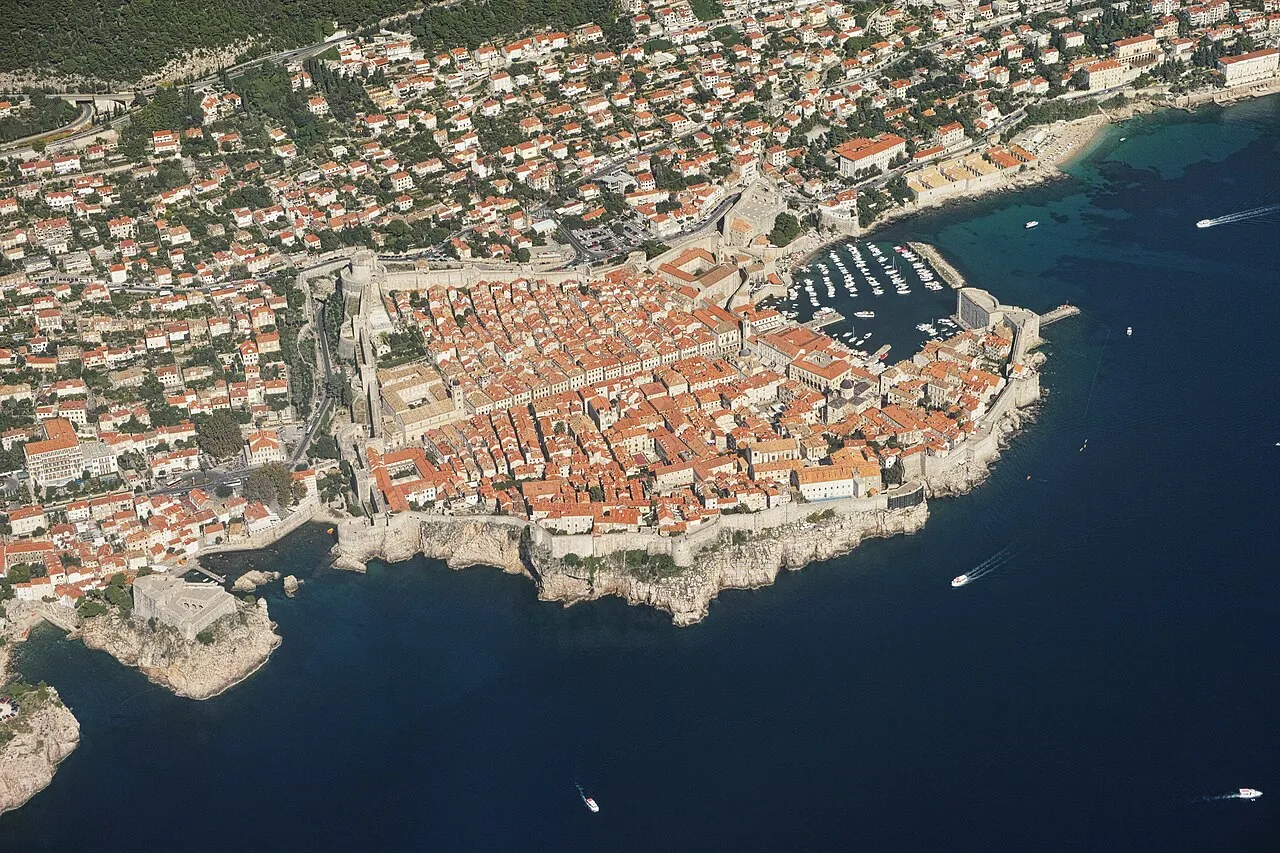
Croatia's Adriatic coast — walled Dubrovnik, Roman Split, and island ferries — runs on the euro and sits in the Schengen zone. September shoulder season is the sweet spot: 30–50% cheaper than August peak, warm enough to swim, and the crowds are gone. A backpacker gets by on ~€55–75/day, a comfortable mid-range trip runs ~€110–160/day.
The short answer
- Cost: mid-range ≈ $125–182/day
- Best time: September–October is the shoulder sweet spot — 20–30°C, warm water, 30–50% below July–August prices. May–June is the other shoulder window; July–August is peak (hot, crowded, +50–70% on coastal accommodation).
- Vibe: Croatia's Adriatic coast
Currency
EUR
1 USD = 0.877 EUR
ECB reference rates via the Frankfurter mirror (providers=ecb), 25 September 2026
Country
Croatia
Best time
September–October is the shoulder sweet spot — 20–30°C, warm water, 30–50% below July–August prices. May–June is the other shoulder window; July–August is peak (hot, crowded, +50–70% on coastal accommodation).
Verified
September 2026
Money & cards
Croatia adopted the euro on 1 January 2023 — no currency hassle for Eurozone visitors, and the reference is transparent for everyone else (ECB rate 0.877 EUR/USD, 25-Sep-2026). Cards widely accepted in cities, hotels, and larger restaurants. Cash needed in small konobas, on islands, ferry kiosks, and markets. Use bank ATMs (Erste, Splitska Banka, Privredna Banka) — avoid standalone yellow Euronet machines (poor rates, high fees).
SourceTipping
[inferred from general European custom] Tipping ~5–10% at restaurants (service usually included in the bill; rounding up is common). Small change for coffee, drinks, and tour guides. Not obligatory but appreciated.
SIM / eSIM
[inferred] T-Mobile, A1, and Telekom dominate; tourist SIMs available at shops (~€10–15 for a few GB). eSIM (Airalo) works on newer phones. Coverage is strong in cities and along the coast, patchy inland and on smaller islands.
Power plugs
Plug types C and F — standard European two-pin, 230V 50Hz. US devices need a plug adapter (and possibly a voltage converter for non-dual-voltage appliances).
SourceWhat a day costs
Verified September 2026
Per person, per day, by travel style — local currency EUR, converted at 0.877 EUR/USD. Conversion rate: ECB reference rates via the Frankfurter mirror (providers=ecb), 25 September 2026.
- Hand-verified September 2026 against Croatiaguidebook, Croatia Spirit, and Never Ending Footsteps budget breakdowns.
- Budget €55–75/day (~$63–86 USD) — hostel dorms, konoba meals, foot-passenger ferries. Mid-range €110–160/day (~$126–184 USD) — private rooms/apartments, two restaurant meals, some activities. Comfortable €200–300/day (~$230–345 USD) — 3–4★ hotels, wine, private tours.
- Converted at ~0.92 EUR/USD (Trading Economics, Sep 2026); the euro has strengthened ~3% over 12 months.
- Croatia adopted the euro on 1 January 2023 and joined Schengen the same day.
- Accommodation is the swing factor — and the season is the swing factor for accommodation: hostel dorms €20–35 shoulder vs €35–50 peak; budget rooms €50–90 vs €70–120; mid-range €110–160 vs €180–270+.
- Dubrovnik and Hvar run 20–30% above Split/Zadar for identical accommodation class. Istria and Zagreb are the value anchors.
- Standard 2026 activity costs: Dubrovnik City Walls ~€35, Plitvice Lakes entry €35–40 peak / €10–15 low, Krka €10–30, Blue Cave + 5 islands group tour €50–80.
- Use bank ATMs (Erste, Splitska Banka) — avoid Euronet yellow ATMs (poor rates + high fees). Cards widely accepted in cities; cash needed on small islands and at konobas.
Day by day
- 1
Split — Diocletian's Palace
- 2
Split — Marjan + afternoon markets
- 3
Day trip to Plitvice Lakes
- 4
Ferry to Hvar + old town
- 5
Return to Split or push to Dubrovnik
- Morning swim, lunch on Hvar — Last coastal meal before heading south.
- 6
Dubrovnik — city walls + Srđ
- 7
Dubrovnik — Lokrum + fly out
Plan Croatia with our tools
Every tool runs in your browser against our dated cost dataset — no sign-up.
TL;DR
Croatia delivers walled Adriatic cities, Roman ruins, and a thousand islands — on the euro, in Schengen, with a Level 1 safety profile. September shoulder is the play: a backpacker gets by on ~€55–75/day, a comfortable mid-range trip runs ~€110–160/day, and the same itinerary would cost 30–50% more in August. The catch is the coast’s price tiers — Dubrovnik and Hvar run hot (mid-range €200+ in peak), while Zagreb, Zadar, and Istria stay reasonable.
Who it’s for
- First-time Europe travelers who want safety, scenery, and ease of travel (Level 1 advisory, euro, good ferry network)
- Island-hoppers and coastal road-trippers — the Dalmatian coast is tailor-made for it
- History and culture lovers — Diocletian’s Palace, Plitvice Lakes, walled cities
- Budget travelers willing to stay inland or in Istria to keep costs down
- Not for: travelers seeking dirt-cheap Southeast Asia pricing, or those who hate peak-season crowds (August Dubrovnik is shoulder-to-shoulder)
Quick Facts
| Currency | Euro (€) — adopted January 2023 |
| Time zone | CET (UTC+1), CEST (UTC+2 in summer) |
| Visa | Visa-free for most (US/UK/EU/CA/AU) up to 90/180 days [inferred: confirm your passport] |
| Entry | Fly into Zagreb (ZAG), Split (SPU), or Dubrovnik (DBV); Schengen since 2023 |
| Transit | Ferries + catamarans along the coast; buses inland; car for Istria/north |
| SIM/eSIM | T-Mobile/A1/Telekom prepaid; eSIM works [inferred] |
| Peak pricing | July–August: coastal accommodation +50–70% over shoulder |
| Daily mid | ~€110–160/day — dataset mid band, breakdown below |
Getting there
Fly into Split (SPU) or Dubrovnik (DBV) for direct seasonal routes from European hubs, or Zagreb (ZAG) for year-round connections. A round-trip major-hub flight runs ~$500 (dataset baseline; Skyscanner shows deals from ~$380 round-trip in September 2026). Low-cost carriers (Ryanair, Wizz Air, easyJet) connect Zagreb and coastal cities to the rest of Europe for €30–80 if you book ahead. The coast is linked by Jadrolinija ferries — Split to Dubrovnik by sea is €25–35 foot passenger; the same route by bus is €10–16 (3.5–4h).
Where to stay
- Split (Diocletian’s Palace / Bačvice) — the walkable base; hostel dorms €20–35, budget rooms €50–90, mid-range €110–150+
- Dubrovnik (Old Town / Lapad / Ploče) — the showpiece; hostel dorms €25–50, budget €60–110, mid-range €150–220+
- Hvar Town — the party island; prices mirror Dubrovnik peak (€30–50 dorm, €70–140 budget)
- Zadar (Old Town) — the value base; dorms €18–30, budget €45–80, mid-range €90–130
- Zagreb (Center / Upper Town) — the inland anchor; dorms €15–25, budget €40–75, mid-range €80–120
- Foot-passenger ferries between all Dalmatian stops; Split–Hvar €6 foot vs €25+ car [inferred: book ahead in peak season]
Where to eat
- Konoba daily menu (marenda) — soup, main, drink for €8–18, the local lunch deal at any family-run spot
- Burek — the Balkan staple (cheese/meat spiral pastry), €1.50–3 at any bakery
- Grilled fish/seafood — €15–28 at a mid-range konoba on the coast
- Pizza — €9–14, reliable and good
- Wine — local bottle at a restaurant €12–25; by the glass €3–7. The Pelješac and Istria regions are the value play
- Quality signal: eat where the menu is in Croatian and the lunch crowd is local — the tourist promenade restaurants charge 2–3x for the same plate [inferred]
Itinerary sketch (7 days — shoulder season)
Days 1–2: Split — Arrive, explore Diocletian’s Palace (free to walk through), Meštrović Gallery, the Riva waterfront at sunset. Day trip to Trogir (30 min by bus, €3) or Klis Fortress for the view.
Day 3: Day trip to Plitvice Lakes — The UNESCO park is 3–4h from Split by bus/tour. Entry €35–40 peak, €10–15 shoulder. Boats and boardwalks between 16 terraced lakes. Return to Split for the night.
Days 4–5: Ferry to Hvar — Jadrolinija catamaran Split–Hvar Town (€6 foot passenger, 1h). Walk the old town, hike to Fortica fortress, ferry to Pakleni Islands for swimming. Return to Split or push on to Dubrovnik.
Day 6: Split to Dubrovnik — Bus (€10–16, 3.5–4h) or coastal ferry with a stop at Korčula/Mljet. Arrive, walk the Stradun, dine outside the old town prices.
Day 7: Dubrovnik — City Walls (€35), cable car or hike Mount Srđ for the view, afternoon swim at Banje Beach. Fly out from DBV or overnight ferry to Italy/Bari.
All transport costs from September 2026 published sources: Split–Hvar foot passenger €6 (Jadrolinija), Plitvice entry €35–40 (peak) / €10–15 (low season), Dubrovnik Walls ~€35, Split–Dubrovnik bus €10–16.
Cost guide (from dataset, hand-verified Sep 2026)
| Item | Budget | Mid | Comfortable |
|---|---|---|---|
| Daily (per person) | €55–75 (~$63–86) | €110–160 (~$126–184) | €200–300+ (~$230–345+) |
| Flights (round-trip, major hub) | $500 [dataset baseline] | $500 [dataset baseline] | $500 [dataset baseline] |
Sourcing notes:
- Daily bands compiled from Croatiaguidebook September 2026 (backpacker €55–75/day, mid €110–160/day, comfort €200+/day), cross-checked against Croatia Spirit September 2026 (backpacker €45–65/day, mid €85–150/day, comfort €250+/day) and Never Ending Footsteps 2026 (average €133.50/day mid-range solo). The two sources agree within range; not averaged, the wider band shown.
- September 2026 menu prices read from Konoba Varoš, Split: coffee €2.20, draught beer €5.50, main €10–25. Hotel Adriana Split 3★ published tariff: €155 October weekday vs €225 July.
- Standard 2026 activity costs: Dubrovnik City Walls ~€35, Plitvice Lakes entry €35–40 peak / €10–15 low, Krka National Park €10–30, Blue Cave + 5 islands group tour €50–80, sea kayaking half-day €35–60, Diocletian’s Palace cellars ~€12, Museum of Broken Relationships Zagreb ~€6.
- Honest caveat: the headline “€55/day” is backpacker with hostel dorms and konoba meals. Dubrovnik and Hvar in August push even budget days past €100 — the shoulder season savings are real and the biggest single cost lever.
Use the Trip Planner with your dates.
Safety
Croatia is a Level 1: Exercise Normal Precautions advisory from the US State Department (May 18, 2026) — the lowest risk tier. It’s one of the safest countries in Europe for tourists.
- Petty theft: the main risk — pickpocketing on crowded ferries, buses, and in Dubrovnik/Split old towns. Keep bags in front of you, use hotel safes, and don’t leave phones on café tables.
- Scams: avoid unlicensed taxi operators at airports and bus stations — use Uber (works in Zagreb, Split, Dubrovnik) or official taxi ranks. Tourist-trap restaurants on the main promenades charge 2–3x more for the same food; eat one street back.
- Road safety: coastal roads are narrow and winding in places; if you rent a car, take it slow and watch for scooters.
- Health: no special vaccinations required. Tap water is safe to drink throughout Croatia — bring a bottle and fill up.
Emergency: 112 (general), 192 (police), 194 (ambulance).
Good to know (2026)
- September is the move — water is still warm enough to swim, crowds have thinned, and accommodation is 30–50% cheaper than August. The best value window of the year.
- The euro means transparent pricing — no currency spread, and you can compare directly with the rest of the Eurozone. Prices are higher than Albania or Bosnia, lower than Italy or France.
- Ferries beat cars on every axis — foot passenger is cheaper, faster, and you don’t need to park on the islands. Rent a car only for Istria or the north.
- Croatia is cheap only in context — Eurostat 2024 puts Croatian restaurants and hotels at 95% of the EU average (higher than Greece, lower than Italy), but everyday consumer prices at 73%. The Croatia you buy on holiday is a normal EU price level, not a budget destination.
- The coast is the product — if you want to save money, spend more time in Zagreb, Zadar, or Istria and less in Dubrovnik/Hvar. A Split–Zadar–Istria loop is a genuine mid-range trip; a Dubrovnik–Hvar–Korčula loop is a luxury one.
Frequently asked questions
- How much does a day in Croatia cost?
- Backpacker ≈ €55–75/day (~$63–86); mid-range ≈ €110–160/day (~$126–184); comfortable ≈ €200+/day (~$230+) before flights. All from September 2026 shoulder season prices — July–August adds 50–70% to accommodation alone. The big variable is accommodation: hostel dorms €20–35, budget private rooms €50–90, mid-range apartments €110–200+.
- Do I need a visa for Croatia?
- Croatia is a Schengen member since January 2023. US, UK, EU, Canada, and Australia citizens do not need a visa for tourist stays up to 90 days within a 180-day period. Just a valid passport (3+ months validity beyond departure). ETIAS authorization is delayed until 2027 — no application needed in 2026. [inferred: confirm your passport's current allowance before booking.]
- When is the best time to visit Croatia?
- September–October is the shoulder sweet spot — still warm enough to swim (20–24°C), crowds thinned out, and accommodation 30–50% cheaper than August. May–June is the second shoulder window. July–August is peak: hot (30°C+), packed (Dubrovnik old town is shoulder-to-shoulder), and coastal accommodation can be 50–70% more than shoulder.
- Is Croatia safe for tourists?
- Croatia is a Level 1 advisory from the US State Department (May 2026) — exercise normal precautions. It's one of the safest countries in Europe for tourists. Petty theft (pickpocketing, bag snatching) is the main risk in Dubrovnik, Split, and on ferries. Violent crime against tourists is rare. [inferred: standard precautions — watch bags on crowded ferries, use hotel safes, avoid isolated areas at night.]
- How do I get around Croatia?
- The coast is linked by ferry and catamaran (Jadrolinija and Krilo). Foot passengers pay far less than cars — Split–Hvar €6 foot vs €25+ with a car. Buses connect all major cities (Zagreb–Split €15–22, Split–Dubrovnik €10–16). Trains are limited on the coast — buses are the workhorse. Rent a car for Istria or the north; skip it for island-hopping. [inferred: book ferry tickets in advance in peak season.]
Sources & facts
| Best time to visit | September–October is the shoulder sweet spot — 20–30°C, warm water, 30–50% below July–August prices. May–June is the other shoulder window; July–August is peak (hot, crowded, +50–70% on coastal accommodation). |
|---|---|
| Prices verified | September 2026 |
| Page last updated | — |
| Sources |
|