Destination guide · Europe
Ljubljana
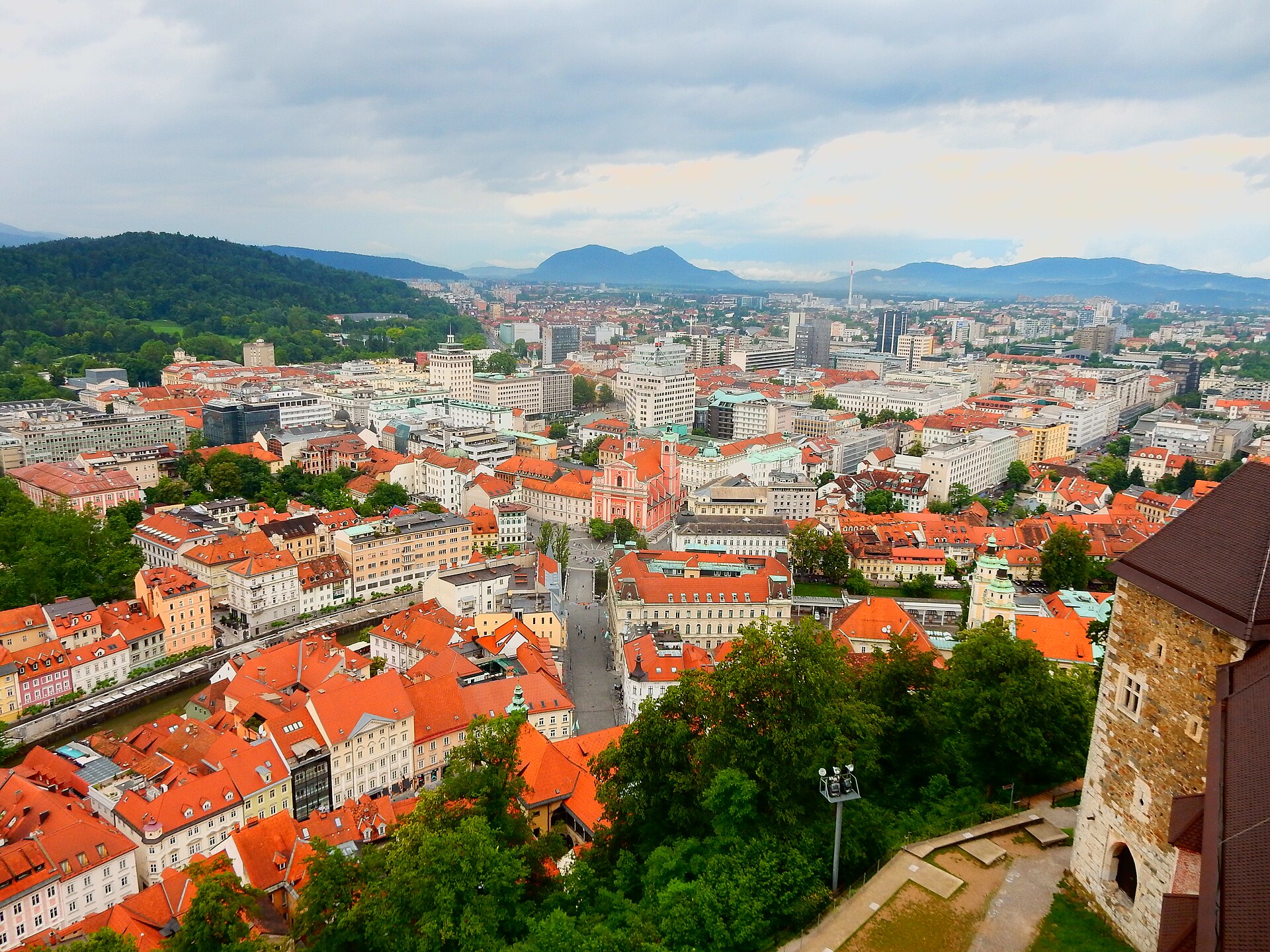
A walkable baroque capital on the Ljubljanica river — castle hill, dragon bridges, café terraces, and a green, car-free centre, with Lake Bled an hour away.
The short answer
- Cost: see full cost breakdown below
- Best time: Spring (Apr–Jun) and Autumn (Sep–Oct)
- Vibe: A walkable baroque capital on the Ljubljanica river
Currency
See sources
Country
Slovenia
Best time
Spring (Apr–Jun) and Autumn (Sep–Oct)
Verified
October 2026
Money & cards
Currency is the euro (EUR). Cards are widely accepted; cash still useful at markets and small gostilnas. ATMs plentiful in the centre.
SourceTipping
[inferred from local custom] Tipping is not obligatory — rounding up the bill or leaving ~5–10% at sit-down restaurants is appreciated. Based on general Slovenia travel guidance, not a verified survey.
SIM / eSIM
[inferred] Prepaid tourist SIMs from Telekom Slovenije, A1 and Telemach — roughly €10–15 for 10–20 GB; eSIMs from ~$5. Airport and city stores.
Plan Ljubljana with our tools
Every tool runs in your browser against our dated cost dataset — no sign-up.
TL;DR
Ljubljana is one of Europe’s most pleasant small capitals — a car-free baroque centre, a castle on a hill, dragon bridges, and café terraces along the Ljubljanica, all walkable in 20 minutes. Mid-range ~€100–150/day [inferred], budget possible at €50–70/day. Level 1 US advisory (safest tier). Best in spring and autumn; Lake Bled is an easy day trip. Green, clean, and still under-touristed compared to Prague or Vienna.
Who it’s for
- Slow travelers who want a walkable, green, low-stress European capital
- Couples and solo travelers after café culture, markets and riverside walks
- Hikers and outdoors people using it as a base for the Julian Alps, Lake Bled and Triglav
- Not for: nightlife seekers (quiet after midnight), shoppers wanting big-brand retail, or travelers needing a major hub airport
Quick Facts
| Currency | Costs shown in EUR (€); cards widely accepted, cash useful at markets; local currency is EUR |
| Time zone | CET/CEST (UTC+1/+2) |
| Visa | Schengen 90/180; Slovenia is in the Schengen area |
| Entry | Ljubljana Jože Pučnik Airport (LJU) — bus to centre ~€4.10, 45–55 min; taxi/Uber ~€25–35, 25 min |
| Transit | Urbana card (€2 deposit) — bus rides €1.30, 90-min transfer window; centre walkable, bikes (BicikeLJ) cheap |
| SIM/eSIM | Telekom Slovenije/A1/Telemach ~€10–15/10–20 GB; eSIM from $5 |
| Peak months | Jun–Sep — book 1–2 months ahead for Jul–Aug; Dec for Christmas markets |
| Daily mid (est.) | €100–150 [inferred] — breakdown below |
Getting there
Ljubljana Jože Pučnik Airport (LJU) is 25 km north of the centre. Bus (Arriva/Alpetour): ~€4.10, 45–55 min to the main bus station. Taxi/Uber/Bolt: €25–35, 25 min. Shuttle services run €9–12 per person. Train: Ljubljana is a rail hub — direct trains to Vienna, Zagreb, Venice (seasonal), Budapest and Munich; the station is a 10-min walk from the old town. From Lake Bled: bus every 30 min, ~€6–7, 1h15.
Where to stay
Nightly rates, October 2026. The tier ranges are sourced; the neighbourhood column is orientation, not a quoted rate.
| Tier | Where to look | EUR/night | Source |
|---|---|---|---|
| Hostel dorm | Centre, near the river | €20–35 | MachuPicchu.org (2026); Atlas Guide (2026) |
| Budget private | Centre, Šiška (north) | €50–90 | Atlas Guide (2026) |
| Mid-range 3★ | Old town, riverfront | €90–160 | e-Slovénie (2026) |
| 4★ | Centre, castle hill area | €160–260 | MachuPicchu.org (2026) |
Neighbourhoods, for orientation: The Old Town (between the castle hill and the river) is the heart — pedestrian, cafés, the market. Krakovo is a quiet, leafy pocket south of the centre with great restaurants. Metelkova is the alternative/arts quarter (hostels, nightlife). Šiška is residential and cheaper, 15 min by bus. Stay in the centre if you can — everything is walkable and the car-free zone makes it genuinely pleasant.
Pro tip: Ljubljana’s tourist tax is €3.13/person/night (€2.50 tax + €0.63 promotion surcharge), collected via accommodation; under-7s exempt, 7–18 pay half (€1.57).
Where to eat
- Gostilna (traditional): Gostilna Sokol (old town, hearty Slovenian), Gostilna Na Gradu (castle, modern Slovenian), Julija (Italian-Slovenian, popular)
- Market lunch: Central Market (Plečnik’s colonnade) — fresh produce, cheese, honey, and the covered market downstairs; Open Kitchen (Odprta kuhna) street-food market, Fridays Apr–Oct
- Cheap eats: Burek (meat/cheese pastry) ~€2.50–3.50, čevapčiči ~€6–8, prato dneva (daily lunch) €8–12
- Seafood: Ribca (by the market, fish sandwiches), Fany & Mary (Mediterranean)
- Coffee/specialty: Stow, Črno Zrno, TOZD, Kavarna Moderna
- Dessert: Prekmurska gibanica (layered cake), kremšnita (Bled cream cake) ~€3–4, gelato at Cacao or Vigo
- Beer: Union and Laško are the locals; craft scene at Pivovarna Pelicon, Loo-Blah-Nah; pint ~€3.50–5
Itinerary sketch (3 days)
Day 1: Old town + castle — Prešeren Square → Triple Bridge → Dragon Bridge → Central Market → funicular up to Ljubljana Castle (€19 with funicular) → riverside walk → dinner in the old town.
Day 2: Museums + Metelkova — National Gallery or Museum of Modern Art → Tivoli Park (Plečnik’s promenade) → Metelkova (street art, alternative culture) → evening along the river cafés.
Day 3: Lake Bled day trip — Bus to Bled (1h15) → pletna boat to the island church (€15) → Bled Castle (€15) → Vintgar Gorge (timed entry, €10) → cream cake at Park Hotel → return.
Cost guide (from dataset, hand-verified October 2026)
| Item | Budget | Mid | Comfortable |
|---|---|---|---|
| Daily (per person) | €50–70 | €100–150 | €200–320 |
| Flights (round-trip, major US hub) | $700 [est.] | $700 [est.] | $700 [est.] |
| 7-day total (1 person) | ~$1,050–1,250 | ~$1,400–1,850 | ~$2,200–3,000 |
Converted at 1 USD = 0.92 EUR (approximate, October 2026).
Two or more independent dated sources per band:
- Budget €50–70 — Atlas Guide puts budget travellers at €50–70/day (2026); e-Slovénie at €50–70 backpacker (2026); MachuPicchu.org at €48–83/day. Convergence around €50–70 for hostel + market food + free sights.
- Mid €100–150 — Atlas Guide mid €100–150; e-Slovénie comfort €100–140; MachuPicchu.org mid €125–190. Three sources overlap at €100–150 for 3★ hotel + restaurant meals + paid sights.
- Comfortable €200–320 — MachuPicchu.org luxury €290–435; e-Slovénie has no luxury tier but comfort tops at €140; set floor from MachuPicchu’s mid-upper band. Treat as inferred.
Ljubljana’s tourist tax (€3.13/night) is usually added at checkout, not in the headline rate — budget for it separately.
Safety
Slovenia is Level 1 (Exercise normal precautions) per the US State Department (issued 15 May 2026) — the safest tier. Ljubljana is a low-threat city for crime. Real risks: petty theft (pickpocketing in tourist areas, the market, transport hubs) — use a crossbody bag. Julian Alps hiking — check weather, dress for rapid changes, never hike alone; mountain rescue is efficient but remote. Cycling — bike lanes are good but trams and pedestrians share space; ring your bell. Emergency: 112. Tap water is safe and excellent.
Good to know (2026)
- Tourist tax — €3.13/person/night (€2.50 + €0.63 promotion surcharge), collected via accommodation; half rate (€1.57) for ages 7–18, free under 7.
- Ljubljana Card — 24h €41 / 48h €49 / 72h €54; covers castle+funnicular, river cruise, museums, buses and a guided walk. Pays off if you do castle + cruise + 2 museums; the 24h card is poor value (castle+cruise alone ≈€34 vs €41 card).
- Open Kitchen — every Friday (Apr–Oct) the Pogačarjev trg square becomes a street-food market; the best cheap lunch in town.
- Metelkova — autonomous cultural centre in a former army barracks; street art, bars, clubs; safe but gritty at night.
- Day trips — Lake Bled (1h15 bus), Lake Bohinj + Vogel cable car, Postojna Cave + Predjama Castle, Škocjan Caves (UNESCO), Piran (Adriatic coast, 2h).
- English is widespread — but hvala (thank you) and prosim (please) go far.
- Sundays — many shops and some restaurants close; plan grocery runs for Saturday.
- Ljubljana is green — European Green Capital 2016; the centre has been car-free since 2007, with free electric Kavalir carts for those who need them. path”> /home/techgeek/Documents/hermes/src/content/guides/ljubljana.md
Frequently asked questions
- Is Ljubljana worth visiting, or is it just a stopover for Lake Bled?
- Worth 2–3 nights on its own — the car-free old town, castle hill, river cafés and market are a real destination, not a transit point. Bled is an easy day trip, but Ljubljana has its own pace and is far cheaper to base in.
- When is the best time to visit Ljubljana?
- April–June and September–October — mild (15–25°C), light crowds, outdoor café season. July–August is warm and busier but still manageable; December brings Christmas markets and lights. January–March is cold, quiet and cheapest.
- Do I need a car in Ljubljana?
- No — the centre is walkable and buses cover the rest (Urbana card). Rent a car only for Lake Bled/Bohinj, the Soča Valley or the coast; trains and buses reach Bled in ~1h15. Parking in the centre is restricted and expensive.
- How many days for Ljubljana?
- 2 days covers the city (castle, river, market, museums); 3 adds a Bled day trip; 4–5 lets you add Bohinj or the coast. First-timers: 3 is the sweet spot.
- Can I drink the tap water in Ljubljana?
- Yes — tap water is safe and excellent (Ljubljana's source is karst springs). Refill freely; bottled water is €0.80–1.50 at supermarkets.