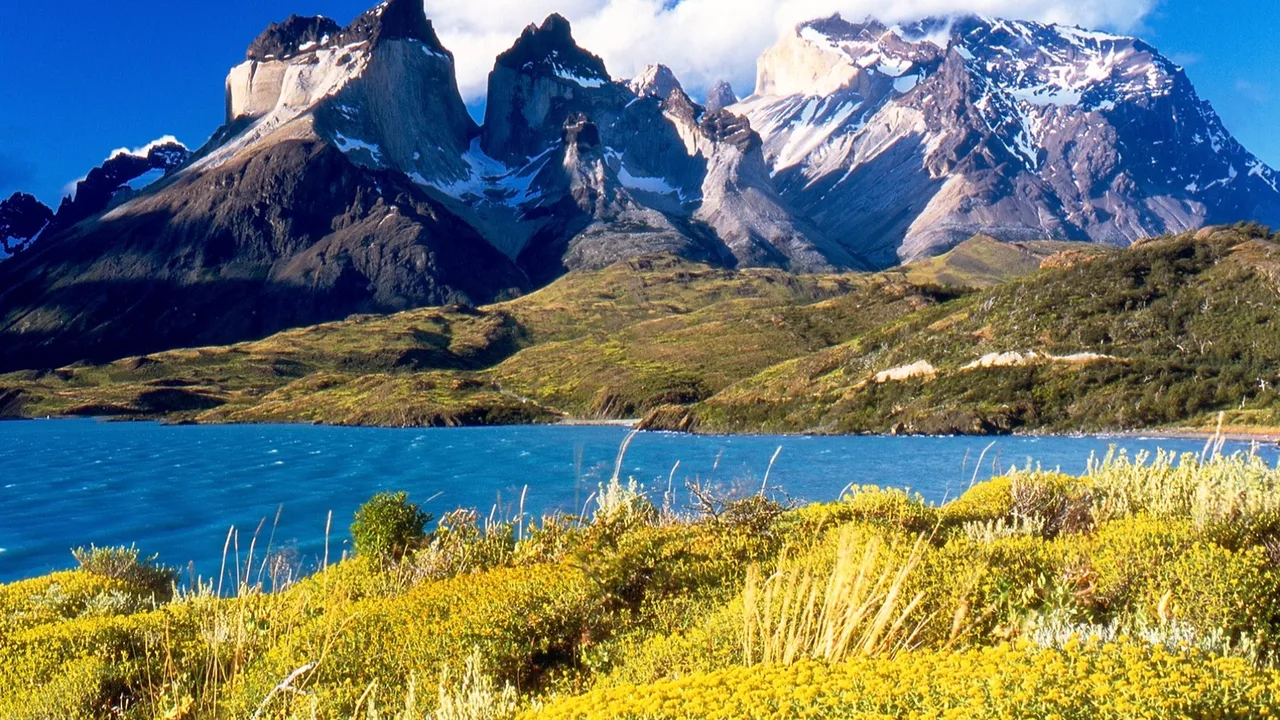
Destination guide · South America
Torres del Paine
Patagonia trekking park where the entrance fee is only the start — foreign adults pay CLP 32,400 (US$33) a day but CLP 48,500 (US$50) covers the whole trip, and the real money is the refugio/camping gauntlet that sells out 6+ months out. The O circuit is closed through 31 October 2026, and the entry fee never varies by season — only the opening hours do.
The short answer
- Cost: see full cost breakdown below
- Best time: November-February (high season, long daylight, most stable weather); October and March are the shoulder; May-September is winter with 08:00-18:30 hours and the O circuit closed
- Vibe: Patagonia trekking park where the entrance fee is only the start
Currency
See sources
Country
Chile
Best time
November-February (high season, long daylight, most stable weather); October and March are the shoulder; May-September is winter with 08:00-18:30 hours and the O circuit closed
Verified
October 2026
Money & cards
Currency is the Chilean peso (CLP/$). Note the local convention: a period is the THOUSANDS separator and a comma the decimal — CLP 48.500 is forty-eight thousand five hundred, not forty-eight and a half. Carry a decent stack of cash: the Laguna Amarga / Welcome Center shuttle and some refugio shops are cash-only even where cards work almost everywhere else (r/Patagonia, 9 Jan 2026: 'We did need 4.500 in cash for the shuttle'). Cards and Apple Pay worked for almost everything on the trail. ATMs exist at Puerto Natales and Torres del Paine village but not inside the park.
SourceTipping
[inferred from local custom] Chile does not have a US-style tipping culture; 10% propina is customary but not obligatory in restaurants and often added for large groups. Tour guides and drivers appreciate a modest tip. Nothing is expected at refugios.
SIM / eSIM
[inferred — not verified at first party this session] Mobile coverage inside the park is sparse and concentrated near the refugios and Puerto Natales. Refugios sell Wi-Fi access by the hour (Vertice included 30 minutes with bookings; one trekker paid US$18.89 for eight hours, r/Patagonia 9 Jan 2026). Assume the mountain is offline.
Power plugs
Plug type C/F (two round pins, the European style), 220V 50Hz. A US/UK/Japan traveller needs an adapter. Refugios have limited charging sockets and no guarantee of outlets at every tent platform.
SourceDay by day
- 1
In to Base Torres
- 2
Frances valley
- 3
Grey glacier
- 4
Out via Pehoe
Plan Torres del Paine with our tools
Every tool runs in your browser against our dated cost dataset — no sign-up.
TL;DR
Torres del Paine is the trip where the park entrance fee is the least of it. Foreign adults pay CLP 32,400 (US$33) a day — or CLP 48,500 (US$50) once for the whole stay, so every trekker should buy the multi-day ticket (three daily tickets cost CLP 97,200, more than double). The fee never changes with the season; what changes is the opening hours (07:00-21:00 October-April, 08:00-18:30 May-September) and, as of 2026, the O circuit is closed through 31 October 2026. The real budget is lodging: camping on the Las Torres side ran US$90 per person per night in 2025, up 38% in a year, and peak-season beds sell out 6+ months ahead through two separate concessionaires with staggered booking windows. Get the entrance ticket at Pases Parques (CONAF’s official vendor), get the campsite or refugio months early, and know that the W is a 4-5 day trek and the O is closed this season.
Who it’s for
- Trekkers who plan ahead. This park rewards people who book 6-12 months out and punishes improvisers — peak-season campsites are gone before most people start looking, and without a reservation you cannot enter for a multi-day trek at all.
- Mountain people with a week. The W is 4-5 days and the granite towers, the Francés valley and the Grey glacier are worth the hype; the full O is 7-10 days and closed this season anyway.
- Food-and-own-gear trekkers. The budget play is carrying your own tent and food — refugio meals and rented gear are where the money goes (r/Patagonia, 9 Jan 2026).
- Day-trippers and the time-poor. You can see a lot of the park on day hikes from Puerto Natales, Cerro Castillo or Camping Pehoé without any camping reservation at all — a single-day ticket is CLP 32,400 and the park is open to 21:00 in high season.
- Not for: anyone expecting Patagonian backpacker prices (this is one of the priciest parks in South America), anyone who cannot commit to booking months ahead, or anyone hoping to do the O circuit before November 2026.
Quick Facts
| Currency | Chilean peso (CLP/$). 1 USD = 979.008503 CLP (open.er-api v6, 12 Oct 2026 00:02 UTC; same provider’s v4 endpoint read 979.01 the same day — a single-provider two-endpoint check; CLP is not an ECB currency, so there is no ECB cross-route). Convention: CLP 48.500 = 48,500 pesos. |
| Time zone | Chile Standard Time (UTC-3 in summer, UTC-4 in winter), no daylight saving in the far south. Same side of the date line as the rest of Chile. |
| Entry (visa) | Visa-free 90 days for British citizens and most Western passports (UK FCDO, retrieved 12 Oct 2026). You get a paper ‘tarjeta de turismo’ (A5 white form) — keep it, you hand it back on exit and a lost one needs a PDI office or online duplicate. Passport must be valid beyond your departure date. Park entry is separate and mandatory — buy at Pases Parques. |
| Airport | Punta Arenas (PUQ) is the gateway, ~4-5 hours by road to the park. Puerto Natales (~2 hours from the park) is the standard base. Santiago is the international hub. |
| Park entry fee (foreign adult) | CLP 32,400/day (US$33.09) or CLP 48,500 multi-day (US$49.54) — the multi-day ticket covers the whole stay. Youth 13-17: CLP 16,600/day, CLP 48,500 multi-day. Under 12: free. Nationals: CLP 9,400/day, CLP 14,200 multi-day; nationals 60+/disabled free. Foreign seniors/disabled pay FULL price. No seasonal variation. |
| Park hours | High season (Oct-Apr): 07:00-21:00, last entry 21:00. Winter (May-Sep): 08:00-18:30, last entry 18:30. Hours can change with weather. |
| Booking | Tickets online in advance at Pases Parques (max 10 per type). Camping/refugio through Las Torres and Vértice — book 6+ months out for Jan-Feb; watch for cancellations near the 70-day mark. |
| Refugio/camping | Concessioned, charged SEPARATELY from the entry fee. Vehicle-access lodging at Pehoé and Lago Grey; trail refugios at Paine Grande, Grey, Los Perros, Dickson. Camping ~US$90/person/night on the Las Torres side in 2025. |
| Circuits | W: 4-5 days (Base Torres, Francés, Grey). O: 7-10 days, CLOSED May-Oct 2026. Half-day day-trips from the lodges. |
| The 2026 catch | The O circuit (Macizo Paine) is closed from May through at least 31 October 2026, reopening subject to weather/safety review — stated on both CONAF and Pases Parques. |
Getting there
The park is remote and that is part of the bill. Fly into Punta Arenas (PUQ) — the regional airport — or Santiago for international connections. From Punta Arenas it is roughly 4-5 hours by road; from Puerto Natales about 2 hours. Buses run Punta Arenas → Puerto Natales → the park several times a day in season, and the round-trip bus from Puerto Natales to the park ran about US$75 in late 2024 (r/Patagonia, 21 Nov 2026 cost breakdown).
Inside the park, movement is by shuttle and boat, not thumb. A catamaran crosses Lago Pehoé between Pudeto and Pehoé (book ahead in season), and the Laguna Amarga → Welcome Center shuttle is a short hop you pay for — and it is cash-only (r/Patagonia, 9 Jan 2026: ‘We did need 4.500 in cash for the shuttle’). Cerro Castillo, an hour away by road, is the budget base: one trekker’s 2026 trip report put an Airbnb there as ‘a cheaper option than staying in the park and better than driving every day from Puerto natales which is 2 hours away’ (r/Patagonia, 24 Feb 2026).
Land border: the Chile-Argentina crossings high in the Andes — including the main Los Libertadores route Santiago-Mendoza — can close temporarily in June-September winter weather (UK FCDO). El Calafate on the Argentine side is a common pairing with Torres del Paine; the community’s verdict on crossing for the park is split (‘Chaltén is much nicer, cheaper and tourist friendly!’, r/Patagonia 18 Mar 2024, against ‘DO NOT skip TdP’, 28 Nov 2025).
Where to stay
| Base | Cost | Notes |
|---|---|---|
| In-park refugio (Vertice/Las Torres) | ~US$90+/person/night camping; more for refugio beds with full board | The trail-side option; mandatory booking chain on the O (cannot skip Grey, Perros, Dickson). Wi-Fi sold by the hour (30 min included with some Vertice bookings). |
| In-park camping, own tent | Camping pitch fee (concessionaire) + you carry everything | Cheapest in-park option with your own gear; tent platforms with wind blockers at Paine Grande (r/camping, 27 Dec 2023). |
| Puerto Natales | Budget-mid; 2 hrs from park | The classic base — buses, restaurants, ATMs, booking offices for both concessionaires. |
| Cerro Castillo | Airbnb budget option; 1 hr from park | The 2026 budget pick — closer than Puerto Natales, cheaper than in-park. |
| Park lodges (Pehoé, Lago Grey, Explora) | Mid-luxury; vehicle access | Full-service, expensive, but no tent required. |
| Punta Arenas | City prices; 4-5 hrs from park | Only for arrival/departure nights. |
The accommodation line is the whole trip. Camping at US$90 a head a night (up from US$65 the year before, r/Patagonia 2 May 2025), refugio beds higher, and a self-guided 5-day camping W at about US$850 in 2018 (r/solotravel). One trekker’s summary: ‘You’re not paying for the level of service. You’re paying for supply and demand’ (r/Patagonia, 2 May 2025, 41 upvotes).
Where to eat
| Meal | Cost | Notes |
|---|---|---|
| Refugio full board | Included in premium camping/refugio rates | The easy option; the big line item if you let it be. |
| Refugio mini-market + self-cater | Market prices | Grey and Paine have mini-markets with noodles, snacks, burgers, pizza, beer and wine; Francés and Chileno have smaller ones (r/Patagonia, 7 Jan 2025). Bring your own stove-free food. |
| Puerto Natales restaurants | Mid-range, normal Chilean prices | Where you eat properly before/after the trek. |
| Own food carried in | Whatever you pay at the Puerto Natales supermarket | The budget move — one trekker brought all their own food except pizza at Chileno (r/Patagonia, 9 Jan 2026). |
Eating on the trail is a logistics exercise more than a culinary one: you carry in what you need, buy top-ups at the refugio mini-markets (cards work, cash sometimes required), and eat like a human in Puerto Natales at either end. The 2026 refugio tips thread’s practical line: ‘We brought all our own food except for grabbing pizza at Chileno’ — with ‘Towels are not provided’ and ‘Grey was def the worse shower’ as the other service realities (r/Patagonia, 7 Jan 2025).
Itinerary sketch (W circuit — 4-5 days)
Day 1: In and up to Base Torres — Enter at Laguna Amarga, shuttle to the Welcome Center, hike to the Torres sector and climb to the Base Torres lookout for the towers at their best. Refugio/camp at Torres or Chileno. The climb is the payoff and the reason to sleep high.
Day 2: The Francés valley — Cross the ascent toward the Mirador Francés for the hanging glacier and the valley walls; descend toward Los Cuernos. The reverse-direction trekkers warn the legs feel this day (r/Patagonia, 22 Dec 2024).
Day 3: Grey — Through the forest to the Grey refugio and the Grey glacier; the suspension bridges and (booked ahead) the ice trek are the glacier experience (r/Patagonia, 5 Jan 2024). You cannot skip Grey on a booked O, and on the W it is the third anchor.
Day 4-5: Out via Paine Grande and the catamaran — Along Lago Skottsberg and Pehoé, the boat across Lago Pehoé (book ahead), and out to Puerto Natales or Cerro Castillo. The catamaran and shuttles are separate paid legs — carry cash.
Plan B (weather/shut out): if every campsite is full or the weather closes a segment, do the park as day hikes — a single CLP 32,400 daily ticket, 21:00 last entry in season, and the day-tour circuit from Puerto Natales (r/travel, 8 Mar 2026: ‘I skipped the W and O Circuit and instead joined organized day tours’). April has campsites available with no booking (r/backpacking, 1 Nov 2024) and the O is closed anyway until November.
Cost guide (from dataset, hand-verified October 2026)
| Item | Budget | Mid | Comfortable |
|---|---|---|---|
| Daily (per person) | ~US$65 (on-ground, own tent + own food) | ~US$150 (refugio/pitch + market food) | ~US$250+ (full board, lodge) |
| Flights (round-trip) | US$500-900 regional (Santiago hub) | US$900-1,400 | US$1,400+ |
| Park entrance (foreign adult) | CLP 48,500 multi-day (US$49.54) one-off | same | same |
| Camping/refugio (per night) | ~US$90 pitch (2025 Las Torres rate) | US$120-190 premium camping/refugio bed | US$250+ lodge |
| Transit (buses/shuttles/boat) | ~US$75 round-trip bus + cash shuttles | + boat and shuttles | private transfers |
| Food (daily) | Own food carried in (~US$15-25) | Market + some refugio meals (US$40-60) | Full board (US$70+) |
| Attractions | Included in entry fee | Grey ice trek, boat extra | Guided everything |
All bands published side by side, not averaged — the dated first-hand figures:
- Park entrance (official): foreign adult CLP 32,400/day, CLP 48,500 multi-day (Pases Parques, retrieved 12 Oct 2026). torresdelpaine.com’s tariff table (valid to 31 Dec 2026) prints rounded figures — CLP 34,000 daily and CLP 17,400 youth daily for foreigners — slightly above the ticket vendor’s 32,400/16,600; both are shown, not merged. The multi-day foreign rate is CLP 48,500 on both. Nationals CLP 9,400-9,900 daily, CLP 14,200 multi-day; the two sources agree there.
- Refugio/camping, 2025: Las Torres camping US$90/person/night, ‘up from US$65 a year earlier, a 38% increase’ (r/Patagonia, 2 May 2025). Premium camping quoted US$190/night (r/Patagonia, 21 Nov 2024).
- Self-guided W total: ~US$850 for 5 days/4 nights camping (US$1,100 cabins) in 2018 (r/solotravel, 13 Aug 2018 — dated but old, published as such). Direct booking ~US$750/person vs US$1,500-3,000 via third parties (r/Patagonia, 9 Jan 2024).
- Day components: bus Puerto Natales-park round trip ~US$75; Laguna Amarga-Welcome Center shuttle ~US$10, cash (r/Patagonia, 21 Nov 2024).
Currency: 1 USD = 979.008503 CLP (open.er-api v6/latest/USD, 12 Oct 2026 00:02 UTC; the same provider’s v4 endpoint read 979.01 on 2026-10-12 — a single-provider two-endpoint agreement, not a two-provider one, because CLP is not an ECB currency and no ECB route exists). At that rate CLP 48,500 = US$49.54. Use the Budget Calculator for your own dates.
Safety
The US State Department advisory level for Chile could not be verified this session — travel.state.gov is Cloudflare-walled to our tooling on every route tried (curl, headless Chromium, reader proxies, live browser), so no level is published here rather than guessed. What IS verified first-party:
- UK FCDO Chile (updated 9 Oct 2026, retrieved 12 Oct): no ‘against all travel’ advice. The live warning is a SENAPRED Red Alert for heavy rain and mudslides in eastern Santiago (San José de Maipo, Puente Alto, Pirque and other communes) — a Santiago risk, not a Patagonia one.
- Araucanía state of emergency (provinces of Biobío, Arauco, Cautín and Malleco) for unrest — also far north of the park (UK FCDO regional risks).
- Crime is real in the cities: pickpocketing, mugging and theft from vehicles are ‘very common throughout Chile’, with the standout scam the Santiago airport unlicensed-taxi digit trick — charging 5,000,000 CLP instead of 50,000, or skimmed card readers, with losses up to GBP 10,000 (UK FCDO). Pay official airport taxis inside the terminal, in advance.
- In the park, the risks are environmental and logistical: the FCDO’s outdoor-activities note says ‘the rescue services in Chile are good, but you may have to pay if they help you’ — so insurance matters. Open fires in national parks are illegal and can mean the tourist permit revoked and deportation within 72 hours. Tell someone your route before you set off.
- Winter segments need kit: the official ticket page states microcrampons and trekking poles are ‘recommended and required’ by safety measures, and winter W-circuit segments run ‘guided only’ per the winter protocol — with the O circuit closed entirely until 31 Oct 2026.
- Emergency: Chile’s emergency number is 133 (police/Carabineros); 131 is ambulance. Puerto Natales and the park lodges are your practical first points of contact.
Good to know (2026)
- Buy the multi-day ticket unless you are day-tripping. CLP 48,500 covers the whole stay; three separate daily tickets cost CLP 97,200 — more than double. One purchase, foreign and national tickets must be selected in separate processes but added to the same cart before paying (Pases Parques).
- Foreign seniors and disabled visitors pay full price; nationals 60+ and disabled pay nothing. The concession is residency-based, not age-based for foreigners. Under-12s are free for everyone (Pases Parques ticket matrix, retrieved 12 Oct 2026).
- The O circuit is closed through 31 October 2026. ‘Desde mayo en adelante, el circuito Macizo Paine, también conocido como La O, permanecerá cerrado, inicialmente, hasta el 31 de octubre de 2026’ (CONAF park page; repeated on the official ticket page, with reopening subject to weather and safety assessment). Any later season plans around this.
- Book the concessionaires separately, months apart. Las Torres and Vértice open at different times — Las Torres from late spring, Vértice around June, and Vértice is the limiter (r/Patagonia, 8 Apr 2024 and 5 Apr 2024). Peak Jan-Feb beds were gone 6+ months out. Watch cancellations near the 70-day free-cancellation mark (r/Patagonia, 8 Dec 2025).
- You need a reservation to enter multi-day, and wild camping is fined. ‘Before entering the park, you have to show proof of reservation for each campsite, if not you will only be able to enter the park for the day’ (r/Patagonia, 8 Nov 2024); ‘You cannot go without reservations, and you absolutely cannot wild camp… You have to have all sites reserved or they will fine you. It’s not cheap either’ (r/Patagonia, 20 Sep 2023).
- Bring your own tent and food, and some cash. The 2026 refugio-tips thread: own tent + own food, market top-ups at Grey/Paine, pizza at Chileno, US$18.89 for 8 hours of Wi-Fi, and ‘4.500 in cash for the shuttle’ (r/Patagonia, 7-9 Jan 2026). Cards worked almost everywhere else.
- Book direct, not through third parties. ~US$750 per person direct vs US$1,500-3,000 packaged (r/Patagonia, 9 Jan 2024). The concessionaire websites are hard to navigate — that is part of the cost of doing it yourself, and still the cheaper way.
- The concessionaires enforce a booking chain on the O. You cannot skip Grey, Los Perros or Dickson; Serón is the one people manage to skip (r/Patagonia, 30 Jun 2025). One wasted Paine Grande night happened when a trekker was forced to book both Grey and Paine Grande (r/Patagonia, 6 Mar 2024) — read the cancellation terms.
- Refugio service is basic and variable: towels not provided, showers variable (‘Grey was def the worse shower’), mini-markets not supermarkets, Wi-Fi paid by the hour (r/Patagonia, 7 Jan 2025 and 9 Jan 2026).
- Season hours are the quiet trip-shaper. 07:00-21:00 October-April but 08:00-18:30 May-September — winter daylight plus the O closure plus guided-only segments means a winter trip is a different, shorter park (Pases Parques).
- The park fee is not the money. The single most common complaint in the community is the booking gauntlet and the lodging price decoupled from service — the fees that hurt are campsites and refugios, which is where the receipts discipline belongs.
What travellers say (dated first-hand):
- ‘I started looking to book the camp sites in August 2024. But everything was already booked In Jan and Feb!’ — r/backpacking, 1 Nov 2024.
- ‘You’re not paying for the level of service. You’re paying for supply and demand.’ — r/Patagonia, 2 May 2025 (41 upvotes, on Las Torres camping at US$90/night).
- ‘It was $65 last year…so only a minor 38% increase on top of a previously ridiculous price.’ — r/Patagonia, 2 May 2025.
- ‘DO NOT skip TdP. For anyone who loves mountains, it is the place dreams are made of.’ — r/Patagonia, 28 Nov 2025 (45 upvotes).
- ‘Booking was the hardest part. Otherwise. The rest was easy.’ — r/Patagonia, 31 Oct 2025.
- ‘You can only camp in the designated spaces and if they’re full, they’re full.’ — r/Patagonia, 8 Nov 2024.
- Boundary: all quotes are search-engine snippets of Reddit threads (Reddit’s JSON API and HTML are login-walled to our tooling); usernames were not exposed by any working route, so subreddit + thread + date are cited without author names. Sentiment is not used for any cost figure — those are the official vendor’s, plus dated trip reports.
Frequently asked questions
- How much is the Torres del Paine entrance fee?
- Official 2026 rates (Pases Parques, CONAF's ticket vendor, retrieved 12 Oct 2026): foreign adults 18-59 pay CLP 32,400 (US$33.09) for a one-day visit, or CLP 48,500 (US$49.54) for a multi-day visit covering the WHOLE stay — so a trekker should always buy the multi-day ticket, since three daily tickets cost more. Foreign youth 13-17 pay CLP 16,600 daily / CLP 48,500 multi-day. Under 12s are free for everyone. Nationals pay CLP 9,400 daily / CLP 14,200 multi-day, and nationals 60+ or with a disability pay NOTHING — but foreign seniors and disabled visitors pay the FULL adult price, which is the trap. The fee does not vary by season; only opening hours do (07:00-21:00 Oct-Apr, 08:00-18:30 May-Sep). The fee covers trail access only — refugios, camping, boats and shuttles are charged separately by the concessionaires.
- Do I need to book campsites or refugios in advance?
- Yes, and the booking window is the single hardest part of this park. You must show proof of a reservation for each campsite to enter for a multi-day trek — without one you are limited to a day visit (r/Patagonia, 20 Sep 2023). Two private concessionaires run the lodging — Las Torres and Vértice — and they open their calendars at different times: Las Torres typically takes bookings from late spring, Vértice from around June, and Vértice is the limiting factor. Peak-season (Jan-Feb) sites routinely sell out 6+ months ahead (r/backpacking, 1 Nov 2024: 'I started looking to book the camp sites in August 2024. But everything was already booked In Jan and Feb!'). Watch for cancellations clustering near the 70-day free-cancellation mark. Wild camping is not allowed and is fined.
- Which circuit should I do — the W or the O?
- The O (full Macizo Paine circuit, 7-10 days) is CLOSED from May 2026 through at least 31 October 2026 — that is on both CONAF's park page and the official ticket page, with reopening subject to weather and safety assessment. In high season the O needs 7-10 days and more money than the W. The W (4-5 days) is the standard first trip: Base Torres, Francés and Grey are the three anchor valleys. Direction is your choice, though r/hiking (14 Apr 2026) warns the reversed West W feels heavier because the Base Torres 'final boss' day comes last. You cannot skip Dickson, Los Perros or Grey on the O — the concessionaire books them as a chain — but Serón is the stop people manage to skip.
- How much does a Torres del Paine trip actually cost beyond the park fee?
- The entrance fee is the small line; lodging is not. Dated first-hand figures: a self-guided 5-day/4-night camping W trek ran about US$850 (or US$1,100 with cabins) in 2018 (r/solotravel); a 2026 cost breakdown lists park entry US$90-equivalent, bus US$75, premium camping US$190/night (r/Patagonia, 21 Nov 2024); Las Torres camping hit US$90 per person per night in 2025 — up from US$65 a year earlier, a 38% increase (r/Patagonia, 2 May 2025). Booking direct through the two concessionaires cost roughly US$750 per person versus US$1,500-3,000 through third parties (r/Patagonia, 9 Jan 2024). Bring your own tent and food to cut the biggest lines.
- Is Torres del Paine safe?
- No US State Department advisory level could be verified this session — travel.state.gov is Cloudflare-walled to our tooling on every route tried (curl, headless Chromium, proxies), so Chile's level is stated as UNVERIFIED rather than guessed. The UK FCDO (updated 9 Oct 2026, retrieved 12 Oct) carries no 'against all travel' language and its specific warnings are elsewhere in Chile: civil unrest and a state of emergency in the Araucanía, muggings and rental-car tyre scams in Santiago, and the Santiago airport unlicensed-taxi digit scam. The park's real risks are weather and remoteness: help can take hours, the FCDO notes 'the rescue services in Chile are good, but you may have to pay if they help you', and open fires in national parks can mean deportation within 72 hours.