Destination guide · South America
Peru
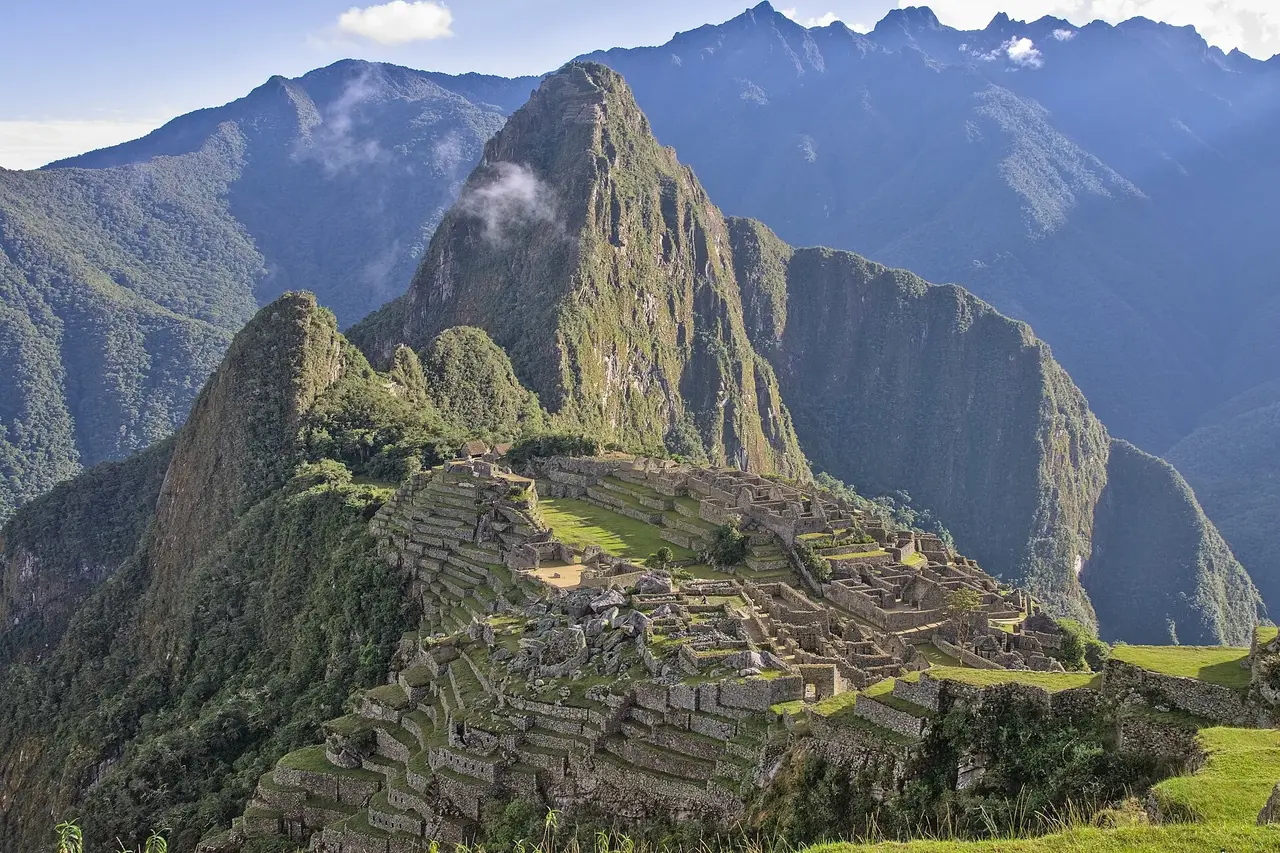
Inca ruins, Andean peaks, and the Amazon — Peru's dry season (May–September) is the sweet spot for Machu Picchu and the highlands, and September is the quiet edge of it: reliably dry, thinner crowds, and Inca Trail permits still available.
The short answer
- Cost: mid-range ≈ $88–128/day
- Best time: May–September dry season (Andes/Machu Picchu driest); September is the shoulder-sweet-spot — dry, fewer crowds, permits still open
- Vibe: Inca ruins, Andean peaks, and the Amazon
Currency
PEN
1 USD = 3.3972 PEN
open.er-api.com (v6/latest/USD) — not an ECB currency, 30 September 2026
Country
Peru
Best time
May–September dry season (Andes/Machu Picchu driest); September is the shoulder-sweet-spot — dry, fewer crowds, permits still open
Verified
August 2026
Money & cards
Currency is the Peruvian sol (S/ or PEN); ~S/3.35 = $1 as of Aug 26 2026 (Trading Economics). Sols for street food, markets, and colectivos; cards widely accepted in hotels and mid-range restaurants. Withdraw at bank ATMs (BCP, BBVA) in cities; carry cash in the highlands and on treks.
SourceTipping
[inferred from general SA/Andes custom] Tipping isn't mandatory but appreciated: ~10% at restaurants (often not auto-added), small bills for tour guides and trek porters, and a few soles for bag handlers. On the Inca Trail, tipping the crew is expected.
SIM / eSIM
[inferred] Claro, Movistar, and Entel prepaid SIMs at airports and city shops; tourist data bundles are cheap. eSIM (Airalo) works on newer phones — buy before you fly to land connected. Coverage thins in the Andes and disappears on multi-day treks.
Power plugs
Plug types A, B, C — same as the US (Type A/B), 220V 60Hz. US two-pin plugs fit; no adapter needed for American devices, but a Type C adapter helps for some outlets.
SourceWhat a day costs
Verified August 2026
Per person, per day, by travel style — local currency PEN, converted at 3.3972 PEN/USD. Conversion rate: open.er-api.com (v6/latest/USD) — not an ECB currency, 30 September 2026.
- Budget backpacker ~S/150–200/day (~$45–60); mid-range ~S/300–435/day (~$80–130); comfortable ~S/600–735/day (~$180–220) — compiled from TheOnlyPeruGuide 2026 and NomadicMatt 2026 Peru cost breakdowns.
- Converted at ~S/3.35 per USD (Trading Economics, 2026-08-26); the sol has strengthened versus 2025, so re-check the rate before booking.
- Standard 2026 fees: Machu Picchu entry S/163 (~$49) foreign adult; PeruRail/Vistadome Cusco–Aguas Calientes ~$70–140 one-way; bus Cusco–Ollantaytambo ~S/15.
Day by day
- 1
Arrive Lima, fly to the Sacred Valley
- 2
Cusco + Sacsayhuamán
- 3
Sacred Valley
- 4
Machu Picchu
- 5
Cusco free day / day trip
Plan Peru with our tools
Every tool runs in your browser against our dated cost dataset — no sign-up.
TL;DR
Peru packs Machu Picchu, the Sacred Valley, and the high Andes into one of the best-value trips in South America — a backpacker gets by on ~$45–60/day, a comfortable mid-range trip runs ~$80–130/day. The catch is the calendar: the dry season (May–September) is when the Andes are reliably walkable, and September is the best of it — dry like July but with the post-peak crowds gone and Inca Trail permits still available. The other catch is altitude: Cusco is at 3,400m, so the first day is about acclimatizing, not sightseeing.
Who it’s for
- First-time South America travelers who want a headline wonders list (Machu Picchu, Colca, Lake Titicaca) without breaking the bank
- Hikers and trekkers: the Inca Trail, Salkantay, and the Cordillera Blanca
- Food people: Lima’s ceviche and criollo scene, Cusco’s picanterías, the Andes’ alpaca and quinoa
- Not for: travelers who hate early starts, thin air, or multiday logistics — Peru rewards planning
Quick Facts
| Currency | Peruvian sol (S/), ~S/3.397 ≈ $1 (25-Sep-2026); cards in cities, cash in the highlands |
| Time zone | PET (UTC-5) |
| Visa | Visa-free for most (US/UK/EU/CA/AU) up to 90–183 days [inferred: confirm your passport] |
| Entry | Fly into Lima (LIM); domestic hop to Cusco (CUZ) ~1h20 |
| Transit | Domestic flights + buses + trains (PeruRail); colectivos locally; no need to self-drive |
| SIM/eSIM | Claro/Movistar/Entel prepaid at airports [inferred] |
| Peak pricing | June–August (dry-season school holidays) spikes Cusco/Machu Picchu train and hotel prices 30–50%+ |
| Daily mid | ~$80–130/day — dataset mid band, breakdown below |
Getting there
Fly into Lima (LIM) — the international gateway — then take a domestic flight to Cusco (CUZ) (~1h20, ~$60–120 one-way in 2026). From Cusco, the Machu Picchu route is taxi/bus to Ollantaytambo, train to Aguas Calientes (PeruRail/Vistadome ~$70–140 one-way), then a bus up to the ruins (S/24, ~$7). A round-trip major-hub flight to Lima runs ~$600 (dataset baseline).
Where to stay
- Lima (Miraflores / Barranco) — safe, coastal, the food scene; base for a day or two
- Cusco (San Blas / Centro) — the highland hub; budget hostels R/ S/40–70, mid-range 3-star S/120–250/night (
$35–75), upscale S/400+/night ($120+) - Sacred Valley (Ollantaytambo / Urubamba) — lower altitude than Cusco, better first night for acclimatizing
- Aguas Calientes — the Machu Picchu gateway; pricey for what it is — book ahead in peak season
- Hostel dorms S/40–70/night (~$12–21); budget guesthouse S/80–150/night (~$24–45); mid-range S/200–435/night (~$60–130) (2026 ranges compiled from TheOnlyPeruGuide + NomadicMatt).
Where to eat
- Ceviche — Lima’s signature; lunch-only at most spots, ~S/25–45 ($7–13)
- Lomo saltado / aji de gallina — criollo classics, ~S/20–35 ($6–10) at a picantería
- Cuy (guinea pig) and alpaca — highland specialties, try in Cusco/Arequipa
- Quinoa soup, rocoto relleno — Andes comfort food
- Quality signal: the neighborhood hole-in-the-wall beats the tourist-menu restaurant on the plaza [inferred]
Itinerary sketch (7 days — dry season)
Days 1–2: Lima + fly to Cusco — Arrive Lima, do Miraflores/Barranco and a ceviche lunch, then fly to Cusco. Sleep low in the Sacred Valley (Ollantaytambo) instead of Cusco your first night — it’s ~600m lower and eases acclimatization.
Day 3: Cusco + Sacsayhuamán — Slow morning (coca tea), then the fortress ruins above the city and the San Pedro market. No heavy exertion.
Day 4: Sacred Valley — Pisac market and ruins, then Ollantaytambo’s terraced fortress — the best-preserved Inca town.
Day 5: Machu Picchu — Early train to Aguas Calientes, bus up to the ruins. Book the Circuit 1 or 2 timed entry (S/163/~$49 foreign adult, 2026). Full day on site.
Day 6: Cusco free day / Rainbow Mountain or Salineras — Optional day trip (both involve more altitude — go slow). Or just wander Cusco’s museums and cafés.
Day 7: Fly out — Cusco → Lima → home, or continue to Arequipa/Lake Titicaca.
All entry fees from official sources: Machu Picchu via tuboleto.cultura.pe (S/163 foreign adult in 2026); PeruRail Cusco–Aguas Calientes ~$70–140 one-way; bus Cusco–Ollantaytambo ~S/15.
Cost guide (from dataset, hand-verified Aug 2026)
| Item | Budget | Mid | Comfortable |
|---|---|---|---|
| Daily (per person) | S/150–200 (~$45–60) | S/300–435 (~$80–130) | S/600–735 (~$180–220) |
| Flights (round-trip, major hub) | $600 [dataset baseline] | $600 [dataset baseline] | $600 [dataset baseline] |
Sourcing notes:
- Daily bands compiled from the 2026 TheOnlyPeruGuide Peru budget breakdown (backpacker $35–50/day; mid $80–130/day; comfort $150–250/day) cross-checked against NomadicMatt’s 2026 Peru costs (backpack $50–80, mid $150–200). Converted at S/3.35/USD (Trading Economics, Aug 26 2026) — the sol has strengthened versus 2025, so USD buying power is a touch lower than a year ago; the rate moves daily, re-check before booking.
- Standard 2026 fees: Machu Picchu entry S/163 (~$49) foreign adult; PeruRail/Vistadome Cusco–Aguas Calientes ~$70–140 one-way; bus Cusco–Ollantaytambo ~S/15.
- Honest caveat: the headline “$45/day” is bare-backpacker and excludes the Machu Picchu day (~$150+/person with train+entry+bus). Budget a real Cusco/Machu Picchu day separately; the rest of the country is genuinely cheap.
Use the Trip Planner with your dates.
Safety
Peru is safe for tourists with standard precautions — the bigger risks are theft and altitude, not violence. Per the Canadian travel advisory:
- Petty theft: the main risk in Lima, Cusco, and on long-distance buses. Use authorized airport taxis or ride apps (don’t hail street cabs), keep bags in front of you, and watch pockets in markets and on the Plaza de Armas.
- Scams: only use official taxi ranks at airports/bus stations; beware “official-looking” helpers steering you to commission hotels. Drink-spiking followed by robbery is reported — never leave a drink unattended.
- Altitude: Cusco (3,400m), Puno (3,800m), Colca (3,600m+) — altitude illness can be life-threatening. Arrive, rest 24–48h, hydrate, try coca tea, avoid alcohol and exertion the first day. Descend if symptoms worsen.
- Trekking: the Inca Trail and Salkantay are serious — go with a registered operator, proper gear, and enough water; permits are capped (~500/day total) and sell out in peak season.
- Earthquakes/tsunamis: coastal risk — follow local authority guidance.
Emergency: 105 (police), 117 (ambulance).
Good to know (2026)
- September is the move — dry like July/August but with thinner crowds and (slightly) lower train/hotel prices; Inca Trail permits still available vs the July crush.
- Acclimatize on purpose — sleep in the Sacred Valley your first night, not Cusco. It’s the single best hack for enjoying the highlands.
- Book Machu Picchu + train early — the timed entry and the train sell out in June–August; September gives you slack.
- Cash in the highlands — ATMs thin out beyond Cusco; carry soles for markets, colectivos, and tips.
- The sol is strong — a stronger currency means slightly less USD buying power than the weak-sol years; still very cheap by Western standards.
Frequently asked questions
- How much does a day in Peru cost?
- Backpacker ≈ S/150–200/day (~$45–60); a comfortable mid-range day runs ≈ S/300–435/day (~$80–130) once you add hotels, meals out, and a few tours; upscale/trek-inclusive runs S/600–735/day (~$180–220). All converted at ~S/3.35/USD (Aug 26 2026). The big variable is Machu Picchu: train + entry + bus pushes a Cusco day to $150+ per person. [inferred: daily totals compiled from 2026 published ranges, not a single quoted receipt.]
- Do I need a visa for Peru?
- Most nationalities — US, UK, EU, Canada, Australia — don't need a visa for tourist stays up to 183 days (90 by default at the border, extendable). Just a valid passport. [inferred: confirm your own nationality's current allowance before booking.]
- When is the best time to visit Peru?
- May–September is the Andean dry season — the time for Machu Picchu, Cusco, and the Inca Trail, with minimal rain and clear mountain views. September is the sweet spot: still dry, but after the July–August peak crowds thin and Inca Trail permits (limited to ~500/day total) are easier to get. The coast (Lima) is gray/foggy in winter; the Amazon is best May–September too (less rain, fewer mosquitoes).
- Is Peru safe for tourists?
- Yes, with standard precautions. Petty theft is the main risk in Lima, Cusco, and on buses — use authorized airport taxis or ride apps (don't hail street cabs), watch bags in markets, and beware drink-spiking scams. The real health risk is altitude: Cusco sits at 3,400m — arrive, rest, hydrate, try coca tea, and avoid alcohol the first day. The Canadian advisory flags altitude illness as life-threatening if ignored.
- How do I get from Lima to Machu Picchu?
- Fly Lima→Cusco (~1h20, ~$60–120), then the classic route is taxi/bus to Ollantaytambo, train to Aguas Calientes (PeruRail/Vistadome ~$70–140 one-way), then a bus up to the ruins (S/24/~$7). Book the train and the timed Machu Picchu entry (S/163/~$49 foreign adult in 2026) well ahead in peak months. [inferred: fares observed 2026; book via official tuboleto.cultura.pe.]
Sources & facts
| Best time to visit | May–September dry season (Andes/Machu Picchu driest); September is the shoulder-sweet-spot — dry, fewer crowds, permits still open |
|---|---|
| Prices verified | August 2026 |
| Page last updated | — |
| Sources |
|