Destination guide · Asia
India
The subcontinent where a mid-range day sits around $55-90 - the Golden Triangle, Rajasthan forts, and Kerala backwaters all accessible on a backpacker budget, with October-March offering the best weather and the cheapest flights of the year.
The short answer
- Cost: mid-range ≈ $55–90/day
- Best time: October-March (peak season: cool, dry, sunny; October-November and February-March are the sweet spots)
- Vibe: The subcontinent where a mid-range day sits around $55-90 - the Golden Triangle, Rajasthan forts, and Kerala backwaters all accessible on a backpacker budget, with October-March offering the best weather and the cheapest flights of the year
Currency
INR
1 USD = 95.8173 INR
ECB reference rates via the Frankfurter mirror (providers=ecb), 25 September 2026
Country
India
Best time
October-March (peak season: cool, dry, sunny; October-November and February-March are the sweet spots)
Verified
October 2026
Money & cards
Indian rupee (₹, INR). Cash is still widely used outside major cities and tourist hubs - ATMs are common in Delhi, Mumbai, Jaipur, and Agra but can be unreliable in smaller towns. Cards are accepted at upscale hotels, restaurants, and online (IRCTC for trains, MakeMyTrip for flights). UPI (Unified Payments Interface) dominates digital payments but requires an Indian bank account - not accessible to short-term visitors. US$95.725 = ₹1 (RBI reference rate, Sep 2026).
SourceTipping
[inferred from local custom] Tipping is not traditionally expected but is increasingly common in tourist-facing restaurants and hotels. At restaurants, 5-10% is appreciated if service charge is not included (check the bill - many places add 5-10% service charge automatically). For drivers, ₹200-500/day is standard. For hotel staff, ₹50-100 for porters. For guides, ₹500-1,000/day. Based on general India travel guidance.
SIM / eSIM
Jio and Airtel dominate; both offer tourist eSIM options. Jio's eSIM starts at ~₹299 for 2GB/day valid 28 days - activate on arrival at the airport kiosk or any Jio store with passport and eVisa printout. Airtel's eSIM is similar pricing. Physical SIMs require passport copy, visa copy, and a passport photo. Coverage is excellent in cities and along major highways, patchy in remote Himalayan or desert areas. WiFi is widely available in hotels and cafés.
Power plugs
Plug types C, D, M - three large round pins (Type D) and the smaller Europlug (Type C), 230V 50Hz. Bring a universal adapter with USB ports; power cuts are common outside major cities, and voltage fluctuations can damage electronics. A small surge protector is advisable for expensive gear.
SourceWhat a day costs
Verified October 2026
Per person, per day, by travel style — local currency INR, converted at 95.8173 INR/USD. Conversion rate: ECB reference rates via the Frankfurter mirror (providers=ecb), 25 September 2026.
- Hand-verified October 2026 against Private Driver India Tour, PlanMyOffbeat, Audley Travel, and RBI exchange rates.
- Budget ₹3,350-4,800/day (~$35-50) — hostel dorm, street food, local buses, trains. Mid ₹5,250-8,600/day (~$55-90). Comfortable ₹8,600-15,300/day (~$90-160).
- Accommodation is the swing factor: hostel dorms ₹400-800 ($5-10); budget guesthouses ₹1,200-2,000 ($15-25); mid-range hotels ₹3,500-6,500 ($40-80).
- Converted at ~95.725 INR/USD (RBI reference rate, Sep 2026); the rupee has weakened ~9.3% YoY vs USD.
- No tourist tax. Heritage site entry fees vary: Taj Mahal ₹1,100 foreign, Red Fort ₹35 foreign, Amber Fort ₹500 foreign.
- Cash still widely used outside major cities; UPI dominates digital but requires Indian bank account (not for short-term visitors).
- e-Tourist Visa (1-year multiple entry) available for US$80 (most Western nationals) at indianvisaonline.gov.in.
- October-March is peak season; book trains and hotels 2-4 weeks ahead. Delhi AQI regularly exceeds 300 (hazardous) in Oct-Nov.
Day by day
- 1
Old Delhi + New Delhi
- 2
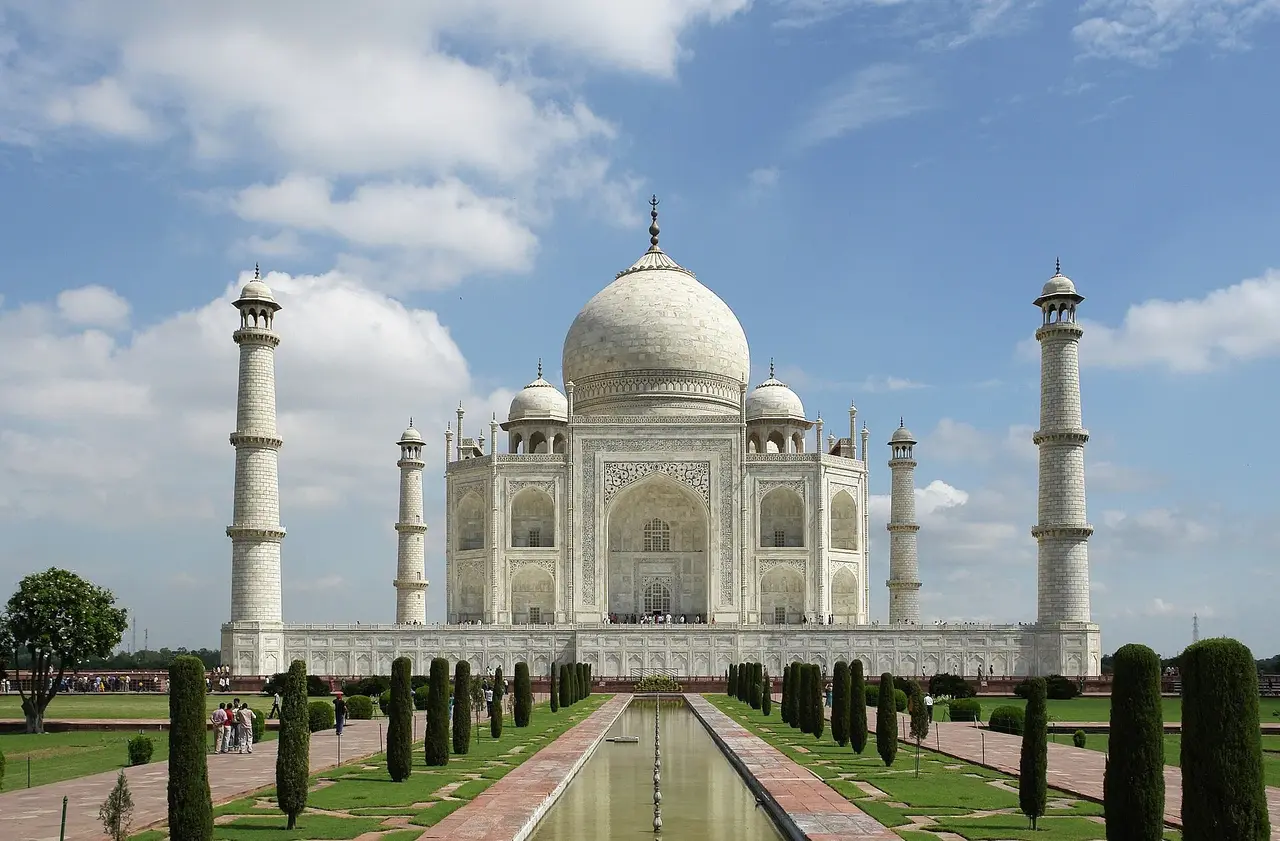
Delhi to Agra + Taj Mahal
- 3
Agra to Jaipur via Fatehpur Sikri
- 4
Jaipur Pink City deep dive
- 5
Jaipur markets + departure
Plan India with our tools
Every tool runs in your browser against our dated cost dataset — no sign-up.
TL;DR
India is the subcontinent where a mid-range day sits around $55-90/day - the site’s hand-verified October 2026 dataset puts budget at $35-50/day, mid at $55-90/day, comfortable at $90-160/day. The Golden Triangle (Delhi-Agra-Jaipur), Rajasthan’s painted forts, and Kerala’s backwaters are all accessible on a backpacker budget. The 2026 hook: October-March is peak season with the best weather and cheapest flights of the year (round-trip from the US East Coast from $610-900), the rupee is at historic lows (~₹95.7/USD, RBI Sep 2026), and the e-Tourist Visa (US$80 for 1-year multiple entry) makes arrival painless.
Who it’s for
- First-timers to South Asia: the Golden Triangle is the classic introduction - well-trodden, good infrastructure, English widely spoken
- Budget travelers: among the cheapest destinations in Asia at $35-50/day
- Food lovers: from ₹40 ($0.40) street thalis to ₹2,000 ($20) heritage restaurant tasting menus
- Culture seekers: 40+ UNESCO World Heritage Sites, 22 official languages, and festivals year-round
- Not for: travelers who hate chaos (traffic, noise, crowds), extreme heat (April-May hits 45°C), or bureaucratic friction (visa required, train bookings competitive)
Quick Facts
| Currency | Indian Rupee (₹, INR). 1 USD = 95.8173 INR (ECB reference rate, 25-Sep-2026). Cash still widely used outside cities. |
| Time zone | IST (UTC+5:30) — one of the world’s few half-hour offsets |
| Entry (visa) | e-Tourist Visa: 1-year multiple entry US$80 (most Western nationals), 5-year US$200+. Apply at indianvisaonline.gov.in. Arrive at designated airports only. (Indian Visa Online, CGI San Francisco, Oct 2026) |
| Airport | Indira Gandhi International (DEL), Delhi — 20 min to central Delhi by metro; Chhatrapati Shivaji Maharaj International (BOM), Mumbai |
| Transit | Trains (IRCTC, MakeMyTrip), domestic flights ($30-80), private car with driver (~₹3,500-5,000/day), Uber/Ola within cities |
| SIM/eSIM | Jio or Airtel eSIM ~₹299 for 2GB/day valid 28 days. Physical SIM requires passport + visa copy. Coverage excellent in cities. |
| Tourist tax | None. Some states charge small entry fees for heritage sites. |
| Peak months | October-March (winter), with October-November and February-March the sweet spots |
| Daily mid (hand-verified) | $55-90 (≈ ₹5,250-8,600) — breakdown below |
Getting there
Indira Gandhi International (DEL) in Delhi is the main gateway for the Golden Triangle.
- From the US East Coast: round-trip flights $610-900 (Skyscanner, Sep 2026). Virgin Atlantic from $806, Air France from $782, United from $1,515 (premium). Book 2-3 months ahead for October-March peak.
- From Europe: round-trip flights $500-800 on Air India, Virgin Atlantic, or Lufthansa.
- From Southeast Asia: round-trip flights $200-400 on AirAsia, IndiGo, or Singapore Airlines.
- Airport to central Delhi: Airport Express Metro (₹100, 20 min) or prepaid taxi (₹500-800, 30-45 min). Uber/Ola also available.
Where to stay
| Area | Budget | Mid-range | Notes |
|---|---|---|---|
| Paharganj, Delhi | Hostel dorm $5-10 / budget guesthouse $15-25 | 3-star hotel $40-70 | Backpacker hub near New Delhi Railway Station. Noisy, chaotic, but well-connected and cheap. |
| Connaught Place, Delhi | Budget hotel $25-40 | Boutique hotel $60-120 | Central, walkable to major sights, metro access. More upscale than Paharganj. |
| Taj Ganj, Agra | Hostel dorm $5-10 / budget guesthouse $15-25 | Mid-range hotel $40-80 | Walking distance to the Taj Mahal. Rooftop restaurants with Taj views. |
| Pink City, Jaipur | Hostel dorm $5-10 / haveli guesthouse $20-35 | Heritage hotel $60-150 | Stay in a converted haveli (traditional mansion) for the full Rajasthan experience. |
Accommodation is the swing factor: hostel dorms $5-10, budget guesthouses $15-25, mid-range hotels $40-80, heritage properties $80-200 (Booking.com observed Oct 2026, Private Driver India Tour, PlanMyOffbeat). No tourist tax in India.
Where to eat
| Meal | Budget | Mid-range |
|---|---|---|
| Breakfast | Chole bhature, poha, or paratha $1-2 | South Indian thali (dosa, idli, sambar) $3-5 |
| Lunch | Street thali (rice, dal, veg, roti, pickle) $1-2 | Restaurant thali or biryani $4-8 |
| Dinner | Street food (chaat, kebabs, momos) $2-4 | Restaurant meal with a beer $8-15 |
| Drinks | Chai (tea) $0.20-0.50 | Lassi (yogurt drink) $1-2 / Kingfisher beer $2-4 |
The street thali is the backpacker superweapon: unlimited rice, dal, vegetable curry, pickle, papadum, and buttermilk for ₹40-100 ($0.40-1). Most budget travelers eat twice a day at local dhabas (roadside eateries) - it’s fresh, flavorful, and safe if you pick busy spots. (Private Driver India Tour, PlanMyOffbeat)
Itinerary sketch (5 days / 4 nights — Golden Triangle)
Day 1: Old Delhi + New Delhi — Start at Red Fort (UNESCO, entry ₹35 foreign) → Jama Masjid (India’s largest mosque, entry ₹300, climb the minaret for views) → Chandni Chowk (chaos, street food, parathas at Paranthe Wali Gali) → rickshaw ride through the old city → afternoon: Humayun’s Tomb (UNESCO, ₹300 foreign) → Qutub Minar (UNESCO, ₹300 foreign) → dinner in Connaught Place. Plan B (rain): National Museum (₹20 foreign) or the National Gallery of Modern Art.
Day 2: Delhi to Agra — Early morning train to Agra (Gatimaan Express, 100 min, AC chair car ₹750-1,000) → check into Taj Ganj → afternoon: Taj Mahal (UNESCO, entry ₹1,100 foreign + ₹200 for the main mausoleum; closed Fridays) → sunset from Mehtab Bagh (across the river, ₹200 foreign, best Taj views without the crowds). Plan B: Agra Fort (UNESCO, ₹550 foreign) and Itimad-ud-Daulah (Baby Taj, ₹200 foreign).
Day 3: Agra to Jaipur — Morning: Fatehpur Sikri (UNESCO, ₹500 foreign, 40 km from Agra) → en route to Jaipur, stop at Abhaneri Stepwell (Chand Baori, one of India’s deepest stepwells, free) → arrive Jaipur by evening → check into Pink City haveli → dinner at a rooftop restaurant (try laal maas, the fiery Rajasthani mutton curry). Plan B (too tired): Skip Fatehpur Sikri, drive straight to Jaipur (4-5 hours), explore the bazaars in the evening.
Day 4: Jaipur — Early morning: Amber Fort (entry ₹500 foreign, jeep up ₹1,000 or walk) → Jaigarh Fort (connected to Amber, ₹200 foreign) → afternoon: City Palace (₹700 foreign) → Jantar Mantar (UNESCO astronomical observatory, ₹200 foreign) → Hawa Mahal (Palace of Winds, photo stop from outside, entry ₹50 foreign) → evening: bazaar crawl in Bapu Bazaar (textiles, mojari shoes, block-printed bedspreads). Plan B: Nahargarh Fort for sunset views over the city.
Day 5: Jaipur + departure — Morning: Albert Hall Museum (₹200 foreign, Indo-Saracenic architecture) → Galtaji Temple (Monkey Temple, free, 10 km from city center) → last-minute shopping (blue pottery, lac bangles, spices) → train or flight back to Delhi (Shatabdi Express 4.5 hours, ₹1,000-1,500 AC; or flight 1 hour, $40-60). Plan B (extra day): Pushkar (3 hours from Jaipur, sacred lake, camel rides, hippie cafés - or time it for the Pushkar Camel Fair in November).
Cost guide (from dataset, hand-verified October 2026)
| Item | Budget | Mid | Comfortable |
|---|---|---|---|
| Daily (per person) | $35-50 (≈ ₹3,350-4,800) | $55-90 (≈ ₹5,250-8,600) | $90-160 (≈ ₹8,600-15,300) |
| Flights (round-trip, US East Coast) | $610-900 [dataset baseline] | $610-900 | $610-900 |
| Accommodation (per night) | $5-10 dorm/guesthouse | $40-80 hotel/boutique | $80-200 heritage/palace |
| Transit (daily) | $5-10 local bus/train | $15-30 AC train/domestic flight | $40-80 private car/driver |
| Attractions (daily) | $5-10 (local sights) | $15-25 (UNESCO sites, forts) | $30-50 (guided tours, safari) |
| Food (daily) | $5-10 (street food, dhabas) | $15-25 (restaurants, cafés) | $30-50 (fine dining, heritage restaurants) |
All bands cross-checked against two sources each:
- Private Driver India Tour “India Travelling Cost 2026” (verified Oct 2026): budget ₹3,000-4,000/day ($35-50), mid-range ₹4,500-7,000/day ($55-90), luxury ₹7,500-13,500/day ($90-160). Hostel dorms ₹750-1,500 ($9-20), budget guesthouses ₹4,000-5,000 ($50-60), mid-range hotels ₹8,500-18,500 ($110-220).
- PlanMyOffbeat “Budget Travel India Per Day 2026” (verified Oct 2026): ultra-budget ₹500-1,000/day ($6-12), budget backpacker ₹1,000-1,500/day ($12-18), comfortable mid-range ₹1,500-3,000/day ($18-35), premium ₹3,000-6,000/day ($35-70). Rajasthan and Uttar Pradesh among the most affordable states.
- Skyscanner (observed Sep 2026): round-trip US East Coast to Delhi from $610-900. Virgin Atlantic from $806, Air France from $782, Momondo from $742.
- Trading Economics / RBI (Sep 2026): 1 USD = 95.8173 INR (ECB reference rate, 25-Sep-2026). The rupee has weakened ~9.3% YoY, making India significantly cheaper for USD travelers.
Currency: 1 USD = 95.8173 INR (ECB reference rate, 25-Sep-2026). Converted figures are [inferred] round-trip sanity; use the Trip Planner with your dates.
Safety
India is broadly safe for tourists who take sensible precautions. The risks to plan for are different from typical Western travel:
- Petty theft: Pickpocketing and phone snatching are common in crowded areas (Chandni Chowk, Agra Taj Ganj, Jaipur bazaars). Use a money belt, keep your phone off the table, and be alert in crowds.
- Scams: Common ones include “the Taj is closed today, let me take you to a friend’s shop” (tout commission), fake “government” taxi meters, and overpriced rickshaw rides. Always use Uber/Ola or prepaid taxis from the airport counter.
- Solo female travelers: Smartraveller advises women not to travel alone in remote areas. Use women-only train compartments (available on most long-distance trains), women-only taxi services (some cities), and avoid isolated areas after dark. The Golden Triangle is well-trodden and generally safe for solo women who take precautions.
- Food and water: Don’t drink tap water - buy filtered water (₹20-30/liter) or bring a SteriPen. Eat at busy dhabas where food turns up fast. Avoid raw salads and cut fruit from street vendors unless you’re confident in the hygiene.
- Traffic: India has one of the world’s highest road fatality rates. Use seatbelts where available, avoid night buses on mountain roads, and don’t hesitate to ask your driver to slow down.
- Air quality: Delhi’s air quality index (AQI) regularly exceeds 300 (hazardous) in October-November due to crop burning and Diwali fireworks. Bring an N95 mask and consider an air purifier for your hotel room if you have respiratory issues.
Good to know (2026)
- The rupee is at historic lows. The USD/INR rate hit 96.07 in September 2026 (Trading Economics), up from ~83 a year ago. This makes India significantly cheaper for USD, EUR, and GBP travelers than in recent years. Your money stretches further on accommodation, food, and activities.
- October-March is peak season. Book trains and hotels 2-4 weeks ahead for October-November (Diwali, Pushkar Fair) and February-March (Holi, pleasant weather). December-January is also busy but can be foggy in the north.
- The e-Tourist Visa is easy but has rules. Apply at indianvisaonline.gov.in at least 4 days before travel. You must arrive at one of 28 designated airports (Delhi, Mumbai, Jaipur, etc.) - not land borders. Print your eVisa approval and carry it with you. The 1-year visa allows multiple entries with a maximum stay of 180 days per calendar year.
- Trains are an experience, not just transport. Book AC 2-tier or AC 3-tier for long distances - it’s comfortable, safe, and cheap. Use IRCTC (official) or MakeMyTrip (easier for foreign cards). Tatkal (last-minute) bookings open 1 day ahead and sell out in minutes for popular routes.
- UPI is everywhere but not for visitors. India’s Unified Payments Interface (UPI) dominates digital payments but requires an Indian bank account. As a short-term visitor, you’ll rely on cash, cards, or international payment apps. Some upscale hotels and restaurants accept Apple Pay and Google Pay linked to foreign cards.
- Dress modestly for temples. Shoulders and knees covered for both men and women entering Hindu temples, mosques, and gurdwaras. Remove shoes before entering (look for the shoe rack at the entrance). Ask before photographing religious ceremonies.
- Bargaining is expected in bazaars. Start at 30-50% of the asking price and work up. It’s a social ritual, not a confrontation - keep it friendly. Fixed-price shops (government emporiums, upscale boutiques) don’t bargain.
- The weekend is Sunday only. India’s weekend is Sunday only (some businesses also close Saturday afternoon). Government offices, banks, and many shops are open Monday-Saturday.
Frequently asked questions
- How much does a day in India cost?
- From the site's hand-verified dataset (October 2026): budget $35-50/day (hostel dorm, street food, local buses, trains), mid-range $55-90/day (3-star hotel, restaurants, AC train, domestic flights), comfortable $90-160/day (heritage hotel, private driver, guided tours). The Golden Triangle (Delhi-Agra-Jaipur) is cheaper than Mumbai or Goa.
- Do I need a visa for India?
- Yes - India requires a visa for almost all foreign nationals. The e-Tourist Visa (eTV) is the easiest option: 1-year multiple entry for US$80 (for most Western nationals including US, Canada, UK, EU, Australia), processed online at indianvisaonline.gov.in. Processing takes 3-5 days. You must arrive at one of 28 designated airports (Delhi, Mumbai, Jaipur, etc.). Your passport must be valid for at least 6 months with 2 blank pages. A 5-year e-Tourist Visa is also available for US$200+ (varies by nationality). Bank charge of 2.5-3% applies.
- Is India safe for solo travelers?
- India is broadly safe for tourists who take sensible precautions. Violent crime against visitors is rare; petty theft (pickpocketing, phone snatching) is more common in crowded areas. Smartraveller (Australia) advises exercising a high degree of caution. For solo female travelers: official advice is to avoid isolated areas, use women-only train compartments and taxis where available, and restrict evening entertainment to well-known venues. The Golden Triangle is well-trodden and generally safe. Avoid the Kashmir region and parts of the northeast (check current advisories).
- When is the best time to visit India?
- October-March is peak season: cool, dry, sunny weather nationwide. October-November is the sweet spot - post-monsoon greenery, comfortable temperatures (20-35°C), and festivals like Diwali and the Pushkar Camel Fair. February-March is also excellent - warm days, cool nights, and Holi festival. December-January can be foggy in the north (Delhi, Agra) with temperatures dropping to 5-10°C at night. April-May is very hot (40-45°C) but cheaper. June-September is monsoon - lush but wet, with some areas inaccessible.
- What's the best way to get around India?
- Trains are the backbone - book AC 2-tier or AC 3-tier for long distances (Delhi to Jaipur, Delhi to Agra) via IRCTC or MakeMyTrip. For the Golden Triangle, a private car with driver is the most practical option (~₹3,500-5,000/day, ~$45-60). Domestic flights (IndiGo, SpiceJet, Air India) connect major cities from $30-80 one-way. Within cities, use Uber/Ola (app-based, metered, no haggling) or auto-rickshaws (negotiate before riding or use the Ola Auto feature). Avoid unmarked taxis.
Sources & facts
| Best time to visit | October-March (peak season: cool, dry, sunny; October-November and February-March are the sweet spots) |
|---|---|
| Prices verified | October 2026 |
| Page last updated | — |
| Sources |
|