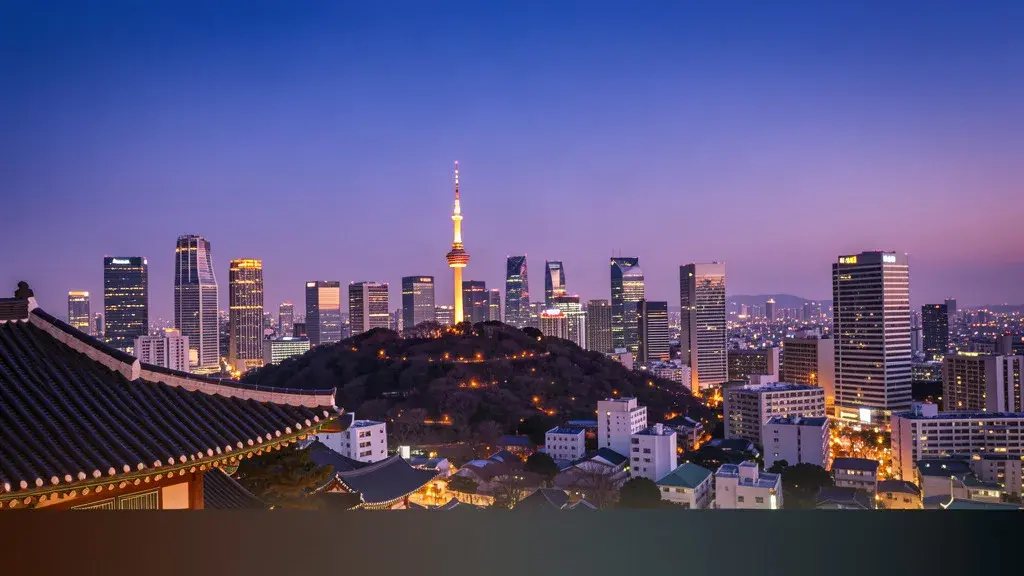
Destination guide · Asia
Seoul
Hyper-connected megacity where 5,000-year-old palaces meet K-pop futurism — and a mid-range day costs less than Western Europe.
The short answer
- Cost: mid-range ≈ $96–148/day
- Best time: Spring (Apr–May, cherry blossom) and Autumn (Oct–Nov, foliage)
- Vibe: Hyper-connected megacity where 5,000-year-old palaces meet K-pop futurism
Currency
KRW
1 USD = 1355.05 KRW
ECB reference rates via the Frankfurter mirror (providers=ecb), 25 September 2026
Country
South Korea
Best time
Spring (Apr–May, cherry blossom) and Autumn (Oct–Nov, foliage)
Verified
September 2026
Money & cards
Currency is the South Korean won (KRW, ₩). Korea is effectively cashless — cards dominate, but foreign bank cards are rejected ~70% of the time (Never Ending Footsteps, 2026). Carry won cash as backup, and use a T-Money card (₩4,000 at convenience stores) for transit. Exchange a small amount at the airport for transit, then convert the rest in Myeongdong or Hongdae for better rates.
SourceTipping
[inferred from local custom] Tipping is not expected in South Korea. Restaurant bills include service; taxi fares are metered. Leaving a tip can cause confusion. Based on general Korea travel guidance, not a verified survey.
SIM / eSIM
eSIMs (Airalo, Holafly, Ubigi) work on arrival with 5G coverage citywide. Klook sells 20GB/15 days for ~$18. Prepaid tourist SIMs at Incheon Airport (Travel Depot, Hongdae) run ~$50 for 14 days unlimited. Free Wi-Fi is ubiquitous in cafés, subways, and public spaces.
SourcePower plugs
Plug type C/F (Europlug/Schuko), 220V 50Hz — two-pin European sockets. Visitors from the US/UK need a voltage-compatible adapter.
SourceWhat a day costs
Verified September 2026
Per person, per day, by travel style — local currency KRW, converted at 1355.05 KRW/USD. Conversion rate: ECB reference rates via the Frankfurter mirror (providers=ecb), 25 September 2026.
- Budget ₩70,000–100,000/day (~$51–73 USD) per Never Ending Footsteps (2026) and TravelCostcalculator (2026) — hostel dorms, street food, subway.
- Mid-range ₩130,000–200,000/day (~$95–147 USD); comfortable ₩280,000–500,000/day (~$205–368 USD) — private guesthouse/hotel, restaurant meals, attractions.
- Accommodation is the swing factor: hostel dorms ₩25,000–40,000; budget private ₩70,000–120,000; mid-range ₩120,000–250,000 (Never Ending Footsteps, TripWis, Seoulstart — verified Sep 2026).
- Converted at ~1,360 KRW/USD (OFX, Sep 4 2026); the won has weakened ~3% over 12 months, so USD buying power is slightly stronger than 2025.
- No tourist tax; 10% VAT is in posted prices. Tipping is not expected.
Day by day
- 1
Palaces + Bukchon
- 2
Hongdae + Han River
- 3
DMZ or Gangnam
Plan Seoul with our tools
Every tool runs in your browser against our dated cost dataset — no sign-up.
TL;DR
Seoul is the rare East Asian megacity where a mid-range day costs under $150 USD — the site’s hand-verified September 2026 dataset puts mid-range at ₩130,000–200,000/day (~$95–147 USD) with flights from US hubs around $900 round-trip. Five-thousand-year-old palaces, K-pop culture, and some of the world’s best street food are all accessible on a budget that undercuts Tokyo and Singapore. The 2026 hook: autumn foliage season (October–November) is peak right now — the content trend is viral on TikTok and Instagram, and shoulder-season pricing in September offers the best value before the October rush.
Who it’s for
- Culture travelers who want ancient history and hyper-modern pop culture in one city — Gyeongbokgung Palace at sunrise, Hongdae clubs at midnight
- Food people: Korean BBQ, street food, and Michelin-starred restaurants all coexist at every budget level
- K-culture fans: K-pop, skincare, and Squid Game filming locations are everywhere
- Solo travelers: one of the safest capitals in the world, with 24/7 transit and walkable neighborhoods
- Not for: travelers who need English everywhere — signage and menus are increasingly bilingual, but outside tourist zones, Korean dominates and translation apps are essential
Quick Facts
| Currency | South Korean won (KRW, ₩). 1 USD = 1,360 KRW (OFX, Sep 4 2026). Cashless society; carry won as backup for foreign card rejections. |
| Time zone | KST (UTC+9) |
| Entry (visa) | K-ETA required for most Western nationalities (fee ~₩10,000 / ~$7.40 USD, apply 72h ahead). Some countries exempt. (K-ETA, Sep 2026) |
| Airport | Incheon (ICN) — 43 min to Seoul Station via AREX Express (₩9,500 / ~$7) |
| Transit | T-Money card (₩4,000 at convenience stores) for subway + bus. Subway base fare ₩1,350 (< 10 km). Climate Card unlimited monthly pass: ₩62,000 (~$45). |
| SIM/eSIM | eSIM (Airalo/Holafly/Ubigi) on arrival; Klook 20GB/15 days ~$18. Free Wi-Fi everywhere. |
| Taxes | 10% VAT included in posted prices. No tourist tax. |
| Peak months | [inferred] Mar–Apr (cherry blossom), Oct–Nov (foliage). Shoulder: May–Jun, Sep. |
| Daily mid (hand-verified) | ₩130,000–200,000 (~$95–147 USD) — breakdown below |
Getting there
Incheon International (ICN) is the main gateway. Options to Seoul Station:
- AREX Express train: ₩9,500 (~$7), 43 minutes, runs every 30–40 min. Best value.
- All-stop train: ₩4,150 (~$3), 53 minutes.
- Airport limousine bus: ₩17,000 (~$12.50), door-to-door to major hotels.
- Taxi: ₩70,000 (~$51), 60–90 min depending on traffic.
From US West Coast: round-trip flights ~$800–1,000. From East Coast: ~$900–1,200. Book 2–3 months ahead for cherry blossom and foliage seasons.
Where to stay
| Area | Budget | Mid-range | Notes |
|---|---|---|---|
| Hongdae | Hostel dorm ₩25,000–40,000 (~$18–29) | Guesthouse ₩70,000–120,000 (~$51–88) | Nightlife, street food, youthful energy. Best for solo/couples. |
| Myeongdong | Capsule hotel ₩40,000–60,000 (~$29–44) | Boutique hotel ₩120,000–200,000 (~$88–147) | Central, shopping, walkable to palaces. Tourist-heavy. |
| Insadong | Hanok guesthouse ₩60,000–100,000 (~$44–73) | Mid-range hotel ₩150,000–250,000 (~$110–184) | Traditional culture, tea houses, Bukchon Hanok Village nearby. |
| Gangnam | — | Business hotel ₩180,000–300,000 (~$132–220) | Upscale, COEX mall, medical tourism hub. |
Rates: Never Ending Footsteps 2026, TripWis 2026, Seoulstart 2026. Verified September 2026.
Where to eat
| Meal | Budget | Mid-range |
|---|---|---|
| Breakfast | ₩5,000–8,000 (~$3.50–6) convenience store/café | ₩12,000–18,000 (~$9–13) brunch café |
| Lunch | ₩7,000–12,000 (~$5–9) street food/bibimbap | ₩15,000–25,000 (~$11–18) Korean restaurant |
| Dinner | ₩10,000–15,000 (~$7–11) fried chicken/dakgalbi | ₩25,000–50,000 (~$18–37) Korean BBQ |
| Drinks | Soju ₩4,000 ( | Cocktail ₩15,000–23,000 (~$11–17) |
The hybrid strategy — street food breakfast/lunch, one sit-down dinner — keeps mid-range spend around ₩25,000–35,000 (~$18–26) food/day. (Never Ending Footsteps, TripWis)
Itinerary sketch (3 days / 2 nights)
Mirrors the site’s itinerary philosophy (slow, scannable, with a Plan B):
Day 1: Palaces + Bukchon — Gyeongbokgung Palace (₩3,000 / ~$2.20; rent a hanbok for free entry) → Bukchon Hanok Village (free, residential — keep voices down) → lunch at a bibimbap spot in Insadong → walk along Cheonggyecheon Stream (free) → dinner in Myeongdong (Korean BBQ, ₩25,000–40,000). Plan B (rain): National Museum of Korea (free) + COEX Library (free, Gangnam).
Day 2: Hongdae + Han River — Hongdae street performances and café hopping (free to wander) → lunch at a pojangmacha (street food tent, ₩8,000–12,000) → Yeouido Hangang Park for a riverside picnic (free; order chicken and beer delivery to the park) → evening clubbing or karaoke (₩15,000–25,000). Plan B: Namsan Seoul Tower (₩21,000 / ~$15) or hike Namsan trail (free, same view).
Day 3: DMZ or Gangnam — DMZ half-day tour (₩50,000–80,000 / ~$37–59; book ahead, passport required) OR Gangnam: COEX Mall + Bongeunsa Temple (free, contrast of mall and monastery) → skincare shopping in Myeongdong → farewell samgyetang (chicken ginseng soup, ₩15,000–20,000). Plan B (no DMZ): Ikseon-dong hanok cafés + Gwangjang Market street food crawl (₩10,000–15,000 for a full meal).
Cost guide (from dataset, hand-verified September 2026)
| Item | Budget | Mid | Comfortable |
|---|---|---|---|
| Daily (per person) | ₩70,000–100,000 (~$51–73) | ₩130,000–200,000 (~$95–147) | ₩280,000–500,000 (~$205–368) |
| Flights (round-trip, US hub) | $800–1,000 [inferred baseline] | $800–1,000 | $800–1,000 |
| Accommodation (per night) | ₩25,000–60,000 dorm/capsule | ₩70,000–200,000 guesthouse/hotel | ₩250,000–500,000 design hotel |
| Transit (daily) | ₩3,000–5,000 subway/bus | ₩5,000–10,000 incl. taxi | ₩15,000–30,000 taxi-heavy |
| Attractions (daily) | ₩3,000–10,000 (palaces) | ₩10,000–30,000 (tower, tours) | ₩30,000–80,000 (DMZ, spa, shopping) |
All bands cross-checked against two sources each:
- Never Ending Footsteps “Cost of Travel in South Korea 2026” (verified Sep 2026): hostel dorm $18/night, budget private $30/night, well-reviewed private $70/night; food $19/day, transport $10.20/day → backpacker ~$50/day, couple budget ~$82/day, average $137/day.
- TripWis “Seoul Travel Costs 2026” (verified Sep 2026): $100/day per person excluding flights (2 people, 2 weeks, incl. shopping/beauty); direct flight from Barcelona $720 round-trip; NYC direct ~$480 one-way.
- TravelCostcalculator “South Korea 2026” (verified Sep 2026): average daily $159, range $95 (backpacker) to $286 (comfortable); Seoul ~$221/day.
Currency: 1 USD = 1,360 KRW (OFX, Sep 4 2026). Converted figures are [inferred] round-trip sanity; use the Trip Planner with your dates.
Safety
Seoul is one of the safest capitals in the world — violent crime against tourists is extremely rare. Real risks:
- Petty theft: pickpocketing in crowded areas (Myeongdong, Hongdae, subway during rush hour). Keep bags zipped and phones in front pockets. (Never Ending Footsteps, 2026)
- Traffic: scooters zip through crosswalks; look both ways even on green. Taxis are safe but can be aggressive — use Kakao T app for tracked rides.
- Women’s safety: Seoul ranks high for women’s safety, but solo women should avoid unlicensed taxis late at night and use women-only subway cars (marked with pink signs) after 10 PM.
- Air quality: fine dust (미세먼지) spikes in spring (March–May). Check the Air Korea app; wear a KF94 mask on bad days.
- Emergency: 112 (police), 119 (fire/ambulance). Tourist hotline: 1330 (24/7, English-speaking).
Good to know (2026)
- Foreign card rejection is real. Korea is cashless, but foreign cards fail ~70% of the time (Never Ending Footsteps, 2026). Carry won cash, and use a T-Money card for transit. Exchange money in Myeongdong or Hongdae, not at the airport.
- The Climate Card is the transit win. ₩62,000/month (~$45) for unlimited subway + bus rides. If you’re staying a week, it pays for itself in 4–5 days of regular transit use. (Seoulstart, 2026)
- K-ETA is mandatory for most. Apply at least 72 hours before flying at k-eta.go.kr. Fee:
₩10,000 ($7.40). Some countries are exempt — check the official site. - Autumn foliage is the 2026 moment. October–November is peak — Seoul’s parks and mountain trails go viral on TikTok and Instagram every year. September is shoulder season with lower prices and mild weather; book ahead for October.
- K-culture is the budget line you didn’t plan for. K-pop merch, skincare (Dr.Jart+, Laneige, Sulwhasoo), and street fashion in Hongdae/Myeongdong add up. Budget ₩50,000–200,000 (~$37–147) for shopping if you’re tempted.
- Tipping is not a thing. Restaurant bills include service. Leaving a tip can cause confusion or embarrassment. Just pay the bill as shown.
- Download Naver Map or Kakao Maps. Google Maps is limited in South Korea (no walking/driving directions due to security laws). Naver Map has English and works for transit, walking, and taxis.
- The DMZ requires a tour. You can’t visit independently. Book through Klook or Viator (₩50,000–80,000 / ~$37–59). Passport required. No shorts, sandals, or military-style clothing.
Frequently asked questions
- How much does a day in Seoul cost?
- From the site's hand-verified dataset (September 2026): budget ₩70,000–100,000/day (~$51–73 USD), mid-range ₩130,000–200,000/day (~$95–147 USD), comfortable ₩280,000–500,000/day (~$205–368 USD) per person. Accommodation is the swing factor — see the cost table.
- Is Seoul expensive?
- No — it's cheaper than Tokyo, Singapore, and Western Europe. A solid mid-range day runs ~$95–147 USD including a private room, restaurant meals, and attractions. Street food lunch is ~$5–7; subway rides are ~$1. The budget line is accommodation, not daily spending.
- Do I need a K-ETA?
- Most Western nationalities (US, EU, UK, AU, CA, NZ) need a K-ETA (Korea Electronic Travel Authorization) before flying. Apply online at least 72 hours before departure; fee is ~₩10,000 (~$7.40 USD). Some countries are exempt — check the official K-ETA site for your nationality.
- What's the best time to visit?
- Spring (April–May) for cherry blossom and autumn (October–November) for foliage. Both are peak seasons — book flights and hotels 2–3 months ahead. Shoulder months (May–June, September) offer lower prices and mild weather. July–August is hot, humid, and rainy.
- How do I get from Incheon Airport to the city?
- AREX Express train to Seoul Station: ₩9,500 (~$7), 43 minutes. All-stop train: ₩4,150 (~$3), 53 minutes. Airport limousine bus: ₩17,000 (~$12.50). Taxi: ₩70,000 (~$51). The AREX Express is the best value for most travelers.
Sources & facts
| Best time to visit | Spring (Apr–May, cherry blossom) and Autumn (Oct–Nov, foliage) |
|---|---|
| Prices verified | September 2026 |
| Page last updated | — |
| Sources |
|