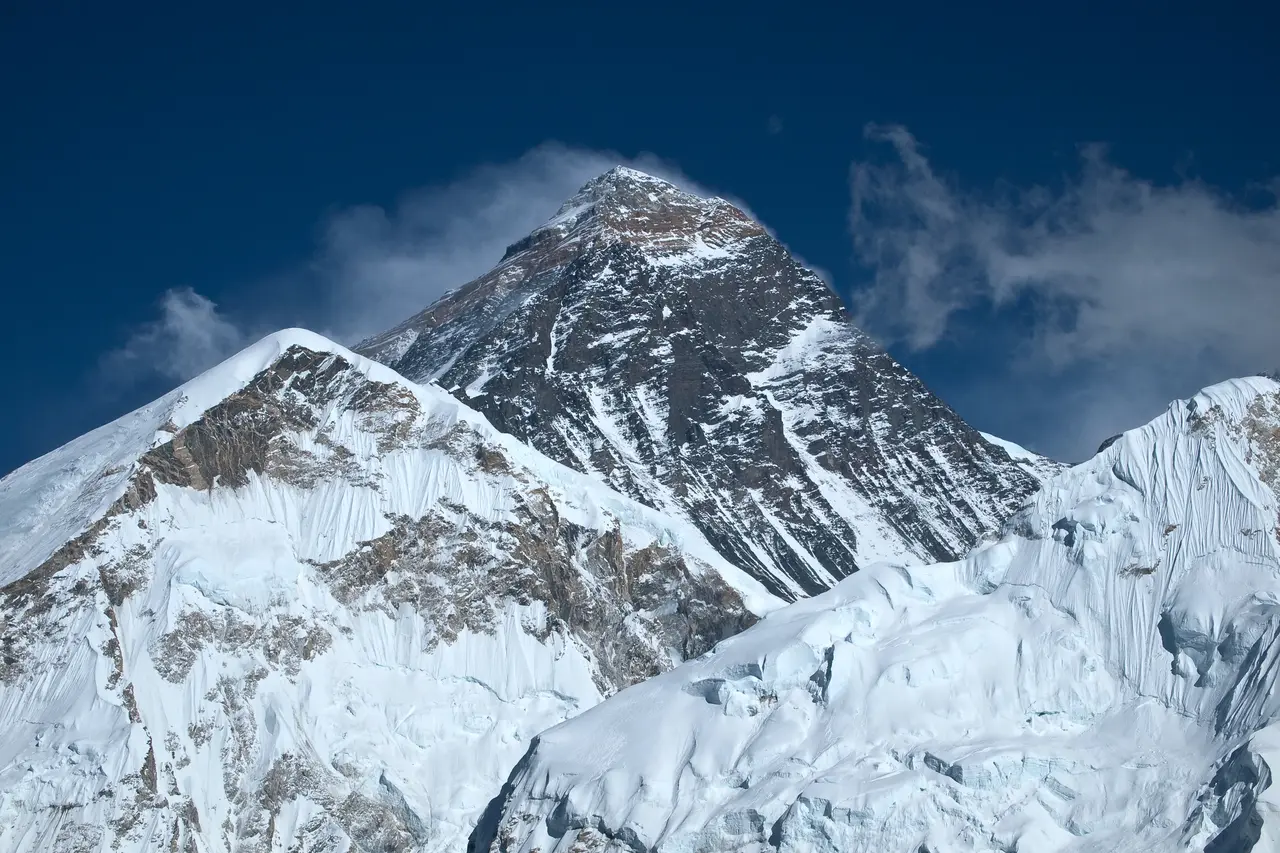
Destination guide · Asia
Nepal
Himalayan kingdom where a mid-range day sits around $50-80 - Everest Base Camp, Annapurna Circuit, and medieval Kathmandu Valley temples all within reach of a backpacker budget.
The short answer
- Cost: mid-range ≈ $50–79/day
- Best time: October-November (peak trekking season: clear skies, stable weather, post-monsoon visibility)
- Vibe: Himalayan kingdom where a mid-range day sits around $50-80 - Everest Base Camp, Annapurna Circuit, and medieval Kathmandu Valley temples all within reach of a backpacker budget
Currency
NPR
1 USD = 153.62 NPR
open.er-api.com (v6/latest/USD) — not an ECB currency, 30 September 2026
Country
Nepal
Best time
October-November (peak trekking season: clear skies, stable weather, post-monsoon visibility)
Verified
September 2026
Money & cards
Nepalese rupee (रू, NPR). Cash is king outside Kathmandu and Pokhara — ATMs are scarce on trekking routes and in rural areas. Carry enough cash for your entire trek before leaving the cities. Indian rupees (₹100 and above) are accepted in some border areas but not elsewhere. Cards work at upscale hotels and some Kathmandu restaurants.
SourceTipping
[inferred from local custom] Tipping is not traditionally expected in Nepal but is increasingly common in tourist-facing restaurants and on treks. At restaurants, 5–10% is appreciated for good service. On treks, porters and guides expect tips — budget ~$5–10/day for guides, $3–5/day for porters if not included in your trekking package. Based on general Nepal travel guidance.
SIM / eSIM
Nepal Telecom (NTC) and Ncell both offer tourist SIM cards. NTC's tourist SIM runs ~रू1,000–2,000 for 5–10 GB valid 1–2 months. You'll need a passport photo and copy. Coverage is good in cities and along major roads but unreliable on trekking routes above 3,500m. WiFi is available in most guesthouses in Kathmandu and Pokhara but patchy in mountain areas.
Power plugs
Plug types C, D, M — three-pin Indian-style round sockets (Type D) and Europlug (Type C), 220V 50Hz. Bring a universal adapter with at least two USB ports; power cuts are common outside Kathmandu.
What a day costs
Verified September 2026
Per person, per day, by travel style — local currency NPR, converted at 153.62 NPR/USD. Conversion rate: open.er-api.com (v6/latest/USD) — not an ECB currency, 30 September 2026.
- Hand-verified September 2026 against Awesome Holidays Nepal, Topologica, and Trip.com.
- Budget NPR 3,050–4,580/day (~$20–30) — hostel dorm, dal bhat meals, local buses. Mid NPR 7,630–12,210/day (~$50–80). Comfortable NPR 15,260–22,890/day (~$100–150).
- Accommodation is the swing factor: hostel dorms NPR 750–1,500 ($5–10); budget guesthouses NPR 2,250–3,800 ($15–25); mid-range hotels NPR 6,100–12,200 ($40–80).
- Converted at ~152.59 NPR/USD (NRB, Sep 2026); the rupee is pegged to the Indian rupee at 1.6 NPR/INR.
- No tourist tax. Trekking permits required for national parks (Sagarmatha NPR 3,000, ACAP NPR 3,000, TIMS NPR 1,000–2,000).
- Cash is king outside Kathmandu/Pokhara — ATMs scarce on trekking routes. Carry enough for entire trek before leaving cities.
- Mandatory licensed guides since April 2023 for most trekking areas (~NPR 3,800–5,300/$25–35 per day).
- US citizens need a tourist visa (on arrival: $30/15d, $50/30d, $125/90d — all multiple entry). eVisa at immigration.gov.np.
Day by day
- 1
Kathmandu Durbar Square + Swayambhunath
- 2
Bhaktapur + Boudhanath
- 3
Travel to Pokhara
- 4
Sarangkot sunrise + Lakeside
- 5
Return to Kathmandu + departure
Plan Nepal with our tools
Every tool runs in your browser against our dated cost dataset — no sign-up.
TL;DR
Nepal is the Himalayan kingdom where a mid-range day sits around $50–80/day — the site’s hand-verified September 2026 dataset puts budget at $20–30/day, mid at $50–80/day, comfortable at $100–150/day. Everest Base Camp, Annapurna Circuit, and the medieval temples of the Kathmandu Valley are all accessible on a backpacker budget. The 2026 hook: Nepal is launching a 5-year digital nomad visa with Asia’s lowest income threshold ($1,500/month or $20,000 savings), October–November is peak trekking season with perfect weather and clear mountain views, and mandatory licensed guides (since April 2023) mean a supported trek is now the only legal option.
Who it’s for
- Trekkers: Everest Base Camp, Annapurna Circuit, and Langtang Valley are world-class multi-day hikes
- Culture travelers: seven UNESCO World Heritage Sites within 200 km of Kathmandu
- Budget backpackers: among the cheapest destinations in Asia at $20–30/day
- Digital nomads: Kathmandu and Pokhara have co-working spaces and cheap living (new DN visa launching 2026)
- Not for: travelers who hate altitude (most treks start at 2,500m+), unpaved roads, or bureaucratic visa-on-arrival queues
Quick Facts
| Currency | Nepalese Rupee (NPR, रू). 1 USD = 153.62 NPR (25-Sep-2026). Cash is king outside cities. |
| Time zone | NPT (UTC+5:45) — one of the world’s few quarter-hour offsets |
| Entry (visa) | Tourist visa on arrival: 15 days $30, 30 days $50, 90 days $125 (all multiple entry). eVisa at immigration.gov.np. Digital nomad visa launching 2026: 5-year, $1,500/month income or $20k savings. (Nepal Tourism Board, Sep 2026) |
| Airport | Tribhuvan International (KTM), Kathmandu — 30 min to Thamel by taxi |
| Transit | Domestic flights ($50–150 one-way), tourist buses ($10–25 long-haul), local buses ($1–3). Roads are often unpaved outside valleys. |
| SIM/eSIM | Nepal Telecom or Ncell tourist SIM ~रू1,000–2,000 for 5–10 GB. No eSIM widely available. Coverage poor on treks above 3,500m. |
| Tourist tax | None. Some trekking permits required — see trekking costs section. |
| Peak months | October–November (trekking), March–April (spring trekking), December–February (city visits) |
| Daily mid (hand-verified) | $50–80 (≈ NPR 7,600–12,200) — breakdown below |
Getting there
Tribhuvan International (KTM) in Kathmandu is the only international airport.
- Taxi to Thamel/Pokhara: ~रू800–1,200 ($5–8) to Thamel if you pre-book at the airport counter; street taxis often overcharge. To Pokhara, a tourist bus runs ~$8–12 (8–10 hours).
- From India: multiple land border crossings (Sunauli-Belahiya, Raxaul-Birgunj) with onward buses. Overnight trains from Delhi/Kolkata to the border are cheap but slow.
- From the US/Europe: round-trip flights $800–1,400 depending on season and hub. Book 2–3 months ahead for October–November peak.
Where to stay
| Area | Budget | Mid-range | Notes |
|---|---|---|---|
| Thamel, Kathmandu | Hostel dorm $5–10 / budget guesthouse $15–25 | 3-star hotel $40–80 | Tourist hub, walking distance to Durbar Square, trekking agencies, and nightlife. Can be noisy. |
| Lakeside, Pokhara | Hostel dorm $5–8 / budget guesthouse $15–20 | Boutique hotel $35–70 | Annapurna views, paragliding, quieter than Thamel. Most treks depart from here. |
| Swayambhu (Monkey Temple), Kathmandu | Guesthouse $15–25 | Boutique $40–60 | Hilltop above the city, quieter, great sunrise views. |
| Bhaktapur | Guesthouse $10–20 | Boutique $30–50 | Medieval city, fewer tourists than Kathmandu, closer to daily life. |
Accommodation is the swing factor: hostel dorms $5–10, budget guesthouses $15–25, mid-range hotels $40–80 (Booking.com observed Sep 2026, Awesome Holidays Nepal, Trip.com). No tourist tax in Nepal.
Where to eat
| Meal | Budget | Mid-range |
|---|---|---|
| Breakfast | Dal bhat (rice, lentil soup, veg curry) $2–4 | Continental breakfast at a café $4–7 |
| Lunch | Momos (dumplings) $2–3 / thali set $3–5 | Restaurant dal bhat or Western meal $6–10 |
| Dinner | Street food (chatpani, samosa) $2–4 | Restaurant meal with a beer $8–15 |
| Drinks | Local beer (Nepal Ice, Everest) $2–3 | Imported beer or cocktail $4–6 |
The dal bhat is the backpacker superweapon: all-you-can-eat rice, lentil soup, vegetable curry, pickle, and papadum for $2–4. Most trekkers eat it twice a day — it’s cheap, calorie-dense, and refills are free at teahouses. (Awesome Holidays Nepal, Trip.com)
Itinerary sketch (5 days / 4 nights — Kathmandu + Pokhara)
Day 1: Kathmandu Durbar Square + Swayambhunath — Walk Kathmandu Durbar Square (UNESCO, entry रू1,500 foreign) → Kumari Ghar (living goddess house) → taxi up to Swayambhunath (Monkey Temple, रू200, best at sunset) → dinner in Thamel (momo crawl + dal bhat). Plan B (rain): Patan Museum (रू1,000) and the old quarter of Patan across the Bagmati River.
Day 2: Bhaktapur + Boudhanath — Morning bus to Bhaktapur (30 min, रू50) → Durbar Square (रू1,500 foreign) → Nyatapola Temple → lunch (Bhaktapur’s yogurt/juhi रू150) → return to Kathmandu → Boudhanath Stupa (रू400, circumambulate with pilgrims at dusk). Plan B: Full-day hike up to Nagarjun Forest Reserve (entrance रू600 foreign) for a Himalayan panorama without leaving the valley.
Day 3: Fly or bus to Pokhara — Morning flight (30 min, ~$65) or tourist bus (6–8 hours, ~$10) to Pokhara → check into Lakeside → walk to Phewa Lake (free, boating रू300–500/hour) → World Peace Pagoda hike (1–2 hours up, free, sunset view of Annapurna range). Plan B (too tired): Rent a bicycle (रू500/day) and loop the lakeside road.
Day 4: Annapurna viewpoint or Sarangkot sunrise — 4 AM taxi to Sarangkot (रू1,500–2,000 round-trip) for sunrise over Dhaulagiri and Annapurna I → back for breakfast → visit Devi’s Fall (रू200) and Gupteshwor Cave (रू200) → afternoon in Lakeside (bookshops, cafés, trekking agencies). Plan B: Full-day Begnas Lake hike (2 hours from Lakeside, quieter than Phewa).
Day 5: Return to Kathmandu — Last-minute shopping in Thamel (pashmina, singing bowls, trekking gear — haggle hard) → bus or flight back → onward travel or evening bus to the Indian border. Plan B (extra day): Chitwan National Park (2-day safari, rhinos, elephants — bus 5–6 hours each way, packages from ~$150 all-in).
Trekking costs (2026)
| Trek | Duration | Permit Cost | Daily Teahouse | Notes |
|---|---|---|---|---|
| Everest Base Camp | 12–14 days | ~$63 (Sagarmatha NP $25 + TIMS $17 + Khumbu permit $21) | $20–40 (food + basic teahouse) | Lukla flight $180–200 one-way. Guide mandatory since Apr 2023 (~$25–35/day). |
| Annapurna Circuit | 12–16 days | ~$42 (ACAP $25 + TIMS $17) | $20–35 | Thorong La pass at 5,416m. Bus from Pokhara ~$5. Guide mandatory since Apr 2023. |
| Annapurna Base Camp | 7–10 days | ~$38 (ACAP $25 + TIMS $13 group) | $20–35 | Lower altitude, no passes. Ghandruk village is a highlight. |
| Langtang Valley | 7–9 days | ~$40 (Langtang NP $25 + TIMS $17) | $20–30 | Easier access from Kathmandu (bus $5–8). Closer to the 2015 earthquake recovery areas. |
Permit costs: Sagarmatha National Park NPR 3,000 ($20–25), ACAP NPR 3,000 ($20–25), TIMS group NPR 1,000 ($8), TIMS individual NPR 2,000 ($15), Khumbu rural municipality NPR 2,000 (~$14). (Follow Alice, Himalaya Guide Nepal, Green Valley Nepal Treks, Sep 2026)
Cost guide (from dataset, hand-verified September 2026)
| Item | Budget | Mid | Comfortable |
|---|---|---|---|
| Daily (per person) | $20–30 (≈ NPR 3,050–4,580) | $50–80 (≈ NPR 7,630–12,210) | $100–150 (≈ NPR 15,260–22,890) |
| Flights (round-trip, US East Coast) | $800–1,400 [inferred baseline] | $800–1,400 | $800–1,400 |
| Accommodation (per night) | $5–10 dorm/guesthouse | $40–80 hotel/boutique | $80–150 luxury/lodge |
| Transit (daily) | $3–8 local bus/flight | $15–40 domestic flights/taxi | $40–80 private car/helicopter |
| Attractions (daily) | $3–5 (local sights) | $10–20 (temples, permits) | $25–50 (guided tours, paragliding) |
| Food (daily) | $5–10 (dal bhat, street food) | $15–25 (restaurants, cafés) | $30–50 (fine dining, treks with meals) |
All bands cross-checked against two sources each:
- Awesome Holidays Nepal “Nepal Travel Budget” (verified Sep 2026): backpacker $20–40/day, mid-range $40–100/day, comfort $100–250/day. Hostel dorms $5–15, guesthouses $15–40, hotels $40–100.
- Topologica “Nepal Budget Calculator” (verified Sep 2026): total daily budget $22/day (accommodation $8, food $5, transport $3, activities $6).
- Trip.com “[2026] Trip to Nepal Cost” (verified Sep 2026): budget $20–30/day, mid-range $50–80/day. Includes breakdowns for accommodation, food, transport, and activities.
- Numbeo “Cost of Living in Kathmandu” (visited Sep 2026): monthly ex-rent ~$240, meal at inexpensive restaurant ~$2.
Currency: 1 USD = 153.62 NPR (25-Sep-2026). Converted figures are [inferred] round-trip sanity; use the Trip Planner with your dates.
Safety
Nepal is broadly safe for tourists in the Kathmandu Valley and Pokhara — violent crime against visitors is uncommon. The risks to plan for are different from typical city travel:
- Altitude sickness: The #1 health risk for treks. Ascend gradually (no more than 500m sleeping altitude above 3,000m per day), know the symptoms (headache, nausea, dizziness), and descend if they worsen. Diamox (acetazolamide) helps with prevention — consult a travel doctor before departure.
- Road safety: Mountain buses are the main transit mode outside cities, and accidents are common on winding Himalayan roads. Tourist buses are marginally safer than local buses. Domestic flights avoid the roads but have their own safety record — use reputable airlines (Yeti Airlines, Buddha Air, Shree Airlines).
- Trekking solo: Smartraveller advises women not to travel alone in remote areas. Since April 2023, guides are mandatory for most trekking areas anyway — hire through a registered agency, not a random offer in Thamel.
- Scams: Common ones include “the temple is closed, let me take you to another” (tout commission), fake trekking permits sold on the street, and taxi meters that “don’t work.” Always buy permits at official counters.
- Earthquakes: Nepal is seismically active. The 2015 earthquake killed ~9,000 people and damaged many heritage sites. Familiarize yourself with earthquake safety in your hotel.
Good to know (2026)
- The digital nomad visa is launching. Nepal is rolling out a 5-year digital nomad visa in 2026 — income threshold $1,500/month (or $20,000 savings as an alternative), health insurance required. This is among the lowest income requirements in Asia. Kathmandu and Pokhara already have a small but growing nomad scene with co-working spaces and cheap coliving. (Stamped Nomad, Stella Sentiero, 2026)
- October–November is the best trekking window. Clear skies, stable post-monsoon weather, temperatures comfortable at altitude, and mountain visibility at its peak. Book Lukla flights and teahouses well in advance — these months are busy.
- The mandatory guide rule is real. Since April 2023, all foreign trekkers must be accompanied by a licensed guide or porter-guide. The government enforces this at permit checkpoints. Budget an extra $25–35/day for a guide. Independent trekking without support is no longer legal in national parks and conservation areas.
- Carry cash for treks. There are no ATMs on trekking routes. Withdraw enough rupees in Kathmandu or Pokhara for your entire trek — teahouse costs (food + lodging) run $20–40/day on popular routes.
- The rupee is pegged to the Indian rupee. Nepal maintains a fixed exchange rate of रू1.60 = ₹1. This keeps the NPR relatively stable against the USD (via the INR) but means Nepal’s purchasing power shifts with the Indian economy.
- Dress modestly for temples. Shoulders and knees covered for both men and women entering Hindu and Buddhist temples. Remove shoes before entering stupas and monasteries. Ask before photographing religious ceremonies.
- Stay hydrated, but don’t drink the tap water. Bottled water is available everywhere (रू30–50/liter), but the plastic waste is a problem on treks. Bring a SteriPen or water purification tablets — teahouses provide safe boiled water for a small fee (रू50–100).
- Sunday is not the weekend. Nepal’s weekend is Saturday only. Government offices, banks, and many businesses are closed Saturday and open Sunday.
Frequently asked questions
- How much does a day in Nepal cost?
- From the site's hand-verified dataset (September 2026): budget $20–30/day (hostel dorm, dal bhat meals, local buses), mid-range $50–80/day (private guesthouse, restaurants, domestic flights), comfortable $100–150/day (boutique hotel, guided trekking, private transport). Treks cost more — see the trekking costs section.
- Do I need a visa for Nepal?
- Yes — Nepal requires a visa for almost all foreign nationals. Tourist visas are available on arrival at Kathmandu airport and land borders: 15 days for $30, 30 days for $50, 90 days for $125. All are multiple entry. You can also apply for an eVisa online at immigration.gov.np before arrival. Your passport must be valid for at least 6 months and have at least 2 blank pages.
- Is Nepal safe for solo travelers?
- Kathmandu and Pokhara are generally safe for solo travelers — violent crime against tourists is rare. Pickpocketing occurs in crowded areas (Thamel, Asan, tourist buses). Smartraveller advises women not to travel alone in remote areas — for trekking, hire a licensed guide or join a group (mandatory for some restricted areas since 2023). The main risks are altitude sickness on treks, road safety on mountain buses, and monsoon flooding (avoid Oct–Nov trekking in some regions).
- When is the best time to trek in Nepal?
- October–November is peak trekking season: clear skies, stable weather, temperatures comfortable at altitude, and post-monsoon visibility is at its best. March–April (spring) is the second-best window — rhododendrons bloom at lower elevations. December–February is cold above 3,000m but possible. June–September is monsoon — trails are muddy, leeches are common, and mountain views are rare.
- Do I need a guide for trekking?
- As of April 2023, all foreign trekkers in Nepal must be accompanied by a licensed guide or porter-guide for most trekking areas — independent trekking without any support is no longer permitted in national parks and conservation areas. Guide fees run ~$25–35/day, porters ~$15–25/day. This was introduced for safety and employment reasons. Some remote restricted-area treks (Nar-Phu, Upper Mustang) already required guides.
Sources & facts
| Best time to visit | October-November (peak trekking season: clear skies, stable weather, post-monsoon visibility) |
|---|---|
| Prices verified | September 2026 |
| Page last updated | — |
| Sources |
|