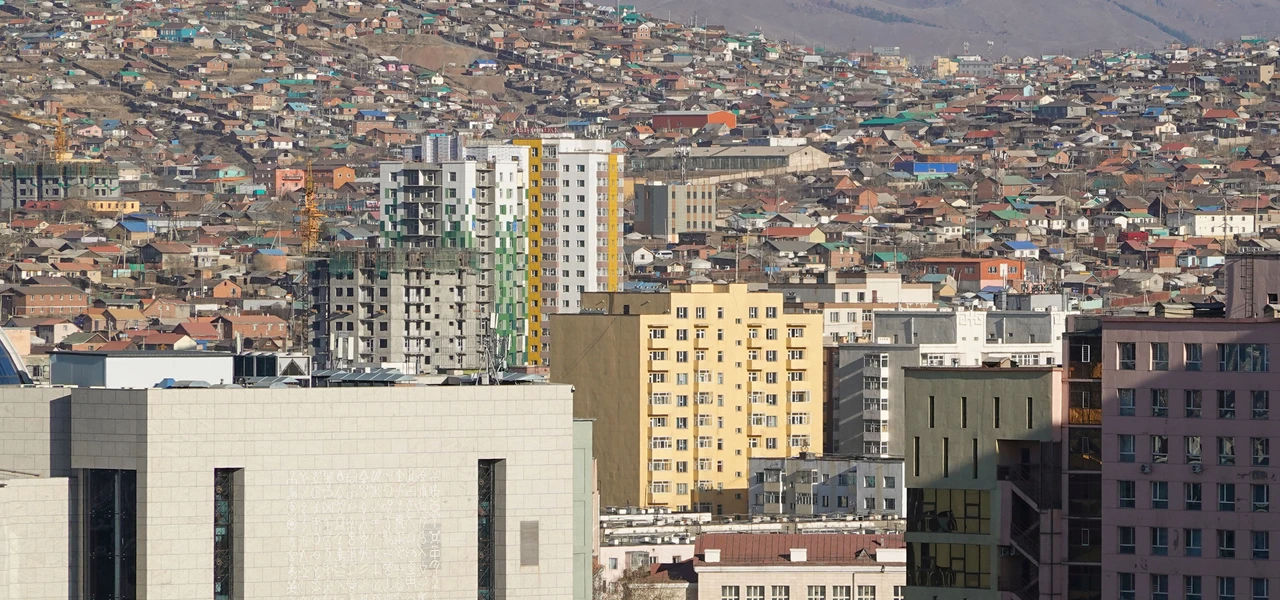
Destination guide · Central Asia
Ulaanbaatar
Mongolia's only city sits at 1,350 m in a valley the Soviets widened and filled with concrete, and everything worth seeing is 50-1,500 km outside it. The receipts truth: the city itself is a $26-49/day transit stop, and the trip is the per-day driver-guide rate — $100-200/person/day all-inclusive — which is the number that decides whether Mongolia is cheap or not. Visa-free 90 days for US passports, 30 days for a 34-country list that excludes Germany.
The short answer
- Cost: mid-range ≈ $125–156/day
- Best time: Late September to mid-October. October is peak season for steppe colour, and the Golden Eagle Festival at Olgii falls 3-4 October 2026. Peak months on this page's dataset are September through November; June-August is the competing peak, dry and hot, best for trekking.
- Vibe: Mongolia's only city sits at 1,350 m in a valley the Soviets widened and filled with concrete, and everything worth seeing is 50-1,500 km outside it
Currency
MNT
1 USD = 3595.99 MNT
currency-api (@fawazahmed0) 4 October 2026: 3595.99 MNT/USD, agreeing with FloatRates (daily/mnt.json, 2 October 2026) at 3595.83 to 0.005%. open.er-api.com (v6/latest/MNT) printed 3636.36 the same morning, 1.12% HIGHER — published as a disagreement, not averaged; the tugrik floats with no peg, so a 1.1% move is possible but is not what two sources holding to 0.005% across two days indicates. NOT an ECB currency: a direct Frankfurter query returns "not found" and MNT is absent from its 30-code list, so this is a two-non-ECB-route check, not a second ECB quote. Bank of Mongolia (mongolbank.mn) did not resolve to a readable rate table on 4 October 2026 and would be the route that settles it, 4 October 2026
Country
Mongolia
Best time
Late September to mid-October. October is peak season for steppe colour, and the Golden Eagle Festival at Olgii falls 3-4 October 2026. Peak months on this page's dataset are September through November; June-August is the competing peak, dry and hot, best for trekking.
Verified
October 2026
Money & cards
The tugrik (MNT) is the only legal tender and cards are a city-only convenience. The US State Department guidance is explicit: credit cards are widely accepted in Ulaanbaatar and tourist destinations, but rarely accepted elsewhere, and you should carry sufficient cash for those regions. That means an organised tour, where the guide's cash float is your practical lifeline, not the airport ATM. Tipping norms are in practice follow the guide, not the posted rule. [inferred] — no operator-published tipping schedule was reachable at the time of writing.
SourceSIM / eSIM
The US embassy states plainly that cell phone coverage and emergency services may not exist in rural areas, and advises travelling with a tour company or in a group. Buy a local SIM in Ulaanbaatar (Mobicom, Unitel, G-Mobile are the three big carriers) for city use, and do not count on it once you are on the steppe. [inferred] — carrier per-MB tourist packages were not verifiable at the time of writing.
Power plugs
Mongolia uses Type C and Type F sockets (the European round two-pin plus the Russian flat-blade plug) at 220V 50Hz. A Type C/F adaptor covers it. The same shape works in most of continental Europe, so a European multi-adaptor usually needs nothing extra. Bring a power bank: the long drives between ger camps mean hours without a vehicle socket.
What a day costs
Verified October 2026
Per person, per day, by travel style — local currency MNT, converted at 3595.99 MNT/USD. Conversion rate: currency-api (@fawazahmed0) 4 October 2026: 3595.99 MNT/USD, agreeing with FloatRates (daily/mnt.json, 2 October 2026) at 3595.83 to 0.005%. open.er-api.com (v6/latest/MNT) printed 3636.36 the same morning, 1.12% HIGHER — published as a disagreement, not averaged; the tugrik floats with no peg, so a 1.1% move is possible but is not what two sources holding to 0.005% across two days indicates. NOT an ECB currency: a direct Frankfurter query returns "not found" and MNT is absent from its 30-code list, so this is a two-non-ECB-route check, not a second ECB quote. Bank of Mongolia (mongolbank.mn) did not resolve to a readable rate table on 4 October 2026 and would be the route that settles it, 4 October 2026.
- THE CITY BAND IS NOT THE TRIP BAND: Ulaanbaatar at 95,000-175,000 MNT/day budget is real, but outside the city there is no scheduled public transport, so a Mongolia trip consumes a guide-driver day rate of USD 100-200 per person per day all-inclusive (mongoliantour.guide, 2026), which covers vehicle, driver, fuel, meals and ger camp. A 10-day overland tour is therefore 1,000-2,000 USD before flights, and the two sets of figures must NOT be added together - they price different trips.
- FOUR SOURCES FOR FX, ONE OF THEM OFF BY 1.12%: converted at 3,595.99 MNT/USD (currency-api @fawazahmed0, 4 Oct 2026), agreeing with FloatRates 3,595.83 (2 Oct 2026) to 0.005%; open.er-api printed 3,636.36 the same morning, 1.12% HIGHER. Published as a disagreement rather than averaged - two sources holding to 0.005% across two days is what a floating market rate looks like, and the tugrik has no peg, so the third route reads as a stale feed. NOT an ECB currency: Frankfurter returns "not found" for MNT and the code is absent from its 30-code list, so there is no second-ECB route. Bank of Mongolia (mongolbank.mn) did not resolve to a readable rate table on 4 Oct 2026 and is the route that would settle it.
- VISA-FREE, BUT NOT FOR THE SAME PERIOD FOR EVERYONE - the 90-day claim is the single easiest mistake on this destination. US PASSPORT HOLDERS get 90 DAYS: the State Department states "You can stay in Mongolia without a visa for 90 days for tourism or business" and the Embassy of Mongolia in Washington dates that regime to 18 July 2001 - but BOTH statements are about the US-citizen regime specifically. EVERYONE ELSE ON THE EXEMPTION LIST GETS 30 DAYS, NOT 90. Mongolia's own Immigration Agency publishes the wider list with the limit in its own title: "THE LIST OF THE COUNTRIES TO BE EXEMPTED FROM TOURIST VISA REQUIREMENTS TO VISIT MONGOLIA UP TO 30 DAYS IN 2026" (immigration.gov.mn/en/articles/537) - 34 countries: Austria, Belgium, Hungary, Greece, Denmark, Spain, Italy, Latvia, Lithuania, Liechtenstein, Luxembourg, Malta, Netherlands, Poland, Portugal, Slovakia, Slovenia, Finland, France, Croatia, Czechia, Sweden, Estonia, Norway, Iceland, Switzerland, Bulgaria, Ireland, Cyprus, Romania, Monaco, UK, Australia, New Zealand. A SECOND, OLDER 90-DAY LIST EXISTS AND THE FIRST DRAFT MISSED IT: the Mongolian MFA consular portal (consul.mn/visa/c/18) publishes a separate table granting 90 days by country with individual effective dates back to 1994 - USA 90d (2001.07.06), Kazakhstan 90d (1994.12.02), Kyrgyzstan 90d (1999.12.04), Brazil 90d (2015.09.21), Chile 90d (2018.12.29), Peru 90d (2021.10.01), Argentina 90d (2018.02.19), Ecuador 90d (2020.10.23), Ukraine 90d, Belarus 90d, Macau 90d, Paraguay 90d - AND COUNTRIES ON THE 30-DAY LIST ONLY: CANADA 30d (2014.01.01), JAPAN 30d (2010.04.01), RUSSIA 30d (2014.09.03), TURKEY 30d (2013.10.10), SOUTH KOREA 30d (2013.05.08). SO A US PASSPORT GETS 90 DAYS, A CANADIAN PASSPORT GETS 30, AND A GERMAN PASSPORT NEEDS A VISA - which is the opposite of what the aggregators say in both directions. Also note South Korea's entry carries an explicit expiry of 2026.12.31 and a tourism-only condition, and Colombia appears in both lists with different periods (90d ordinary passport from 2026.01.26, 30d diplomatic from 2013.09.23). TWO REGISTRATION DUTIES, EASY TO CONFLATE: (a) the HOST must register you within 48 HOURS of arrival - Art. 24.4 of the Law on the Legal Status of Foreign Nationals puts the duty on individual or legal entities providing housing, done online via eimmigration.gov.mn or the E-immigration app, repeated in the Agency FAQ Q1 (immigration.gov.mn/en/48-cagijn-brtgel/ and /en/faq/); (b) YOU must register if staying more than 30 days (embassy US-citizen page, within 7 days). THERE IS NO PAPER ARRIVAL CARD. ADDRESS VERIFICATION IS NOW A VISA-STAGE GATE: effective 3 FEBRUARY 2025 the Agency verifies your stated address via hotel confirmation, verified residential address, for tourists an official travel-agency letter with itinerary, or an inviting-organisation letter for rural work; it names the failure modes it rejects (unstamped booking forms, altered dates, one document reused across applications, expired rental agreements) and states 25 VALID VISAS WERE REVOKED IN A SINGLE WEEK on confirmed falsified addresses (immigration.gov.mn/en/articles/457/). An independently booked trip therefore depends on the hotel's confirmation and an organised tour on the agency's letter. GERMANY IS NOT ON THAT LIST - it appears in Mongolia's consular material only as a Schengen visa issuer (consul.mn/visa/c/17) - so German nationals should assume they need a visa or e-Visa. This correction was found by a delegated scout AFTER the first draft had already published 90 days for everyone, and re-verified first-party before being fixed in all five copies of the claim (summary, FAQ, TL;DR, Quick Facts, Good to know). EVERYONE ELSE needs category K2, by e-Visa (97 eligible countries, immigration.gov.mn/en/evisa-country-list) or embassy. Embassy tariff for 30 days or less: single entry USD 50, double USD 65, single transit USD 25, double transit USD 50, multiple transit USD 75, multiple entry up to 6 months USD 105, 6-12 months USD 205 - but that is a US-MISSION fee, NOT the in-Mongolia e-Visa fee, which evisa.mn does not publish in extractable text, so no e-Visa price is stated. PASSPORT VALIDITY: at least 6 months beyond the intended stay (embassy and State Department agree). ONE 30-DAY EXTENSION IS AVAILABLE ON ARRIVAL: per Art. 19.2 of the Law on the Legal Status of Foreign Nationals and Sec. 9.1 of the Visa Issuance Regulation (Gov. Res. 192/2021), a visitor who arrived without a visa may extend ONCE for up to 30 days, applying at least 5 working days before expiry, with a 30-day state stamp duty of 168,800 MNT (40,000 MNT for up to 7 days); a further request may only be made 90 days after the previous extension expires (immigration.gov.mn/en/visa-extension). That is very likely the source of the widespread 90-days-for-everyone claim: 30 + 30 = 60, not 90. THE 30-DAY REGISTRATION RULE CATCHES VISA-FREE TRAVELLERS: the embassy's US-citizen page states "Any foreign national staying in Mongolia more than 30 days is required to be registered at the Immigration Authority of Mongolia within 7 days". Overstay past the permitted period is fined per day and the fine must be paid to leave. NOTE ON DATES: the 34-country list self-dates only to "IN 2026" and carries no expiry date, so it should not be assumed to survive into 2027 without re-checking. CORRECTION AND THE EMBASSY TABLES ARE EASY TO CONFLATE: the same embassy's separate US-citizen table (effective 16 Aug 2021) lists H and F at USD 230 - those are the >90-day categories requiring Immigration Authority approval, NOT tourist visas.
- CURRENCY DECLARATION IS SYMMETRIC AND LARGE: the State Department gives a 15,000,000 MNT (approx USD 4,170) maximum BOTH on entry and on exit. Cards are widely accepted in Ulaanbaatar and other tourist destinations but rarely accepted elsewhere - the same guidance says to carry sufficient cash for those regions, which in practice means the guide's float is your lifeline rather than an ATM. This also means a Mongolia quote that omits whether it includes a vehicle and driver is an unusable number, which is why the city band and the day rate are published as separate rows rather than summed.
- TWO STATE DEPARTMENT DOCUMENTS DATED ONE DAY APART, AND THE GUIDE KEEPS THEM APART: the Travel Advisory is LEVEL 1, issued 29 July 2026, summary "Mongolia is generally a safe destination for travelers" - but its body is ~200 words of administrative advice (STEP, OSAC, CDC, insurance) carrying NO weather, altitude or road guidance. The terrain facts come from the separate Country Information / travel guidance sections issued 30 JULY 2026, and attributing them to the advisory would credit a document that does not contain them. THE LINE THAT SHOULD DECIDE HOW YOU TRAVEL, from those sections: help "may take several hours to arrive" and "HELICOPTER EVACUATION IS NOT AVAILABLE". Emergency and roadside service outside the cities is rare, paved countryside roads lack lighting, road conditions deteriorate rapidly, overloaded vehicles are common, an international driving permit is required, and the guidance advises two spare tires and refuelling at every opportunity. That is the US government's own argument for the all-inclusive tour rate published above - the vehicle, fuel and radio ARE the emergency infrastructure. Altitude bites in the WESTERN provinces rather than at the 1,350 m capital; the guidance advises learning altitude-sickness symptoms and pre-clearing diabetes/hypertension before western travel. Weather is seasonal and October sits at the safe end: winter cold "severe and can be deadly", snowstorms Dec-Jan, thin ice, spring floods Apr-May, and autumn SANDSTORMS in the south. A Worldwide Caution is in force for all destinations (undated banner) and is context, not a Mongolia-specific signal. THE EMBASSY ITEMS AND THE LIVE ALERT: demonstrations are common, may be triggered by political or economic issues as well as holidays and large events, are unpredictable, and should be avoided; cell phone and emergency services may not exist in rural areas, so travel with a tour company or in a group; exercise caution riding horses and camels even when experienced, because riding and training differ from Western standards; and obtain proper certification for souvenirs that may appear to be antiques. Petty AND violent crime both occur, especially in larger cities and towns, with violent crime concentrated late at night outside bars and nightclubs, and crime rates peaking during major festivals such as Naadam in July and Tsagaan Sar in Jan-Feb. Emergency numbers work in the capital (101 fire, 102 police, 103 ambulance) but responders usually do not speak English. The US Embassy issued a Demonstration Alert for ongoing protests on 1 OCTOBER 2026 (mn.usembassy.gov/demonstration-alert-100126/), which POST-DATES the advisory by three months - so the country-level Level 1 summary does not describe current conditions in the capital, and the guide flags the city specifically.
- FOOD IS THE CHEAPEST LINE AND THE NUMBERS SAY WHY: Numbeo (2 Oct 2026, 604 entries from 45 contributors) puts an inexpensive meal at 20,000 MNT, meal-for-two mid-range at 115,500 MNT, and a single person excluding rent at 2,217,568 MNT/month against a monthly average net salary of 2,120,104 MNT - the city is priced close to its own median wage. Self-catering therefore buys little in the city, though it matters on tour where camp meals are already included. Local transit is cheap and knowable: bus ticket 1,000 MNT, monthly pass 60,000, taxi start 1,900, taxi mile 3,138.22, taxi hour waiting 22,800 - that last figure is the tell, since the meter charges heavily for the wait. Petrol 4,107.72/litre.
- ACCOMMODATION IS SOURCED ON BOTH SIDES, NOT AVERAGED: Booking.com Ulaanbaatar gives 3-star USD 82 and 4-star USD 112 on a current weekend average; Trip.com gives USD 89 and USD 125. The floor is separate: Hostelworld has UB Guesthouse & Tours at USD 10/night for a 6-bed dorm (2026), Booking.com guesthouse runs from USD 21.27. Published 40,000-95,000 MNT budget (USD 11-26), which brackets dorm-to-guesthouse. The cheap aggregator figures (Expedia "3 star from USD 26", KAYAK "4-star+ from USD 26") are search-window floors on one night, not averages, and are not plannable. For this destination the stay table and the cost-guide accommodation row MUST agree: both read 40,000-95,000 / 295,000-350,000 / 400,000-500,000.
- MONTH-SPECIFIC, AND ONE DATE IS A TRAP: peak months here are September-November for steppe colour. The Golden Eagle Festival is 3-4 OCTOBER 2026 in Olgii, Bayan-Olgii Province - about 1,800 km west of the capital, so it needs a flight to Khovd plus ground transfer and is a 4-5 day commitment, not a day trip or an add-on. Naadam 2026 ran 11-13 JULY 2026 and has passed; the next edition is 2027, and any guide promising autumn Naadam is wrong. Altitude at the capital is 1,350 m (mild; the genuinely high country is Khuvsgul at about 1,690 m), which is why October sits at the safe end of the risk calendar - mild days, cold nights, drive-friendly roads, where the real non-advisory risks are winter cold that reaches -30 C and kills vehicles, and no roadside assistance outside the city.
- FLIGHT BASE 1,100 USD IS THE MIDPOINT OF A WIDE SPREAD, NOT A TYPICAL FARE: Google Flights had the cheapest New York round-trips from USD 921 for late Nov-Dec 2026 while Korean Air quoted from USD 2,378.89 for December 2026 - a 2.5x spread on one route, so the DATE moves the fare more than the airline. Regionally it is far cheaper: Expedia had UBN-ICN round-trips from USD 260, Traveloka from USD 250.18. Chinggis Khaan (UBN/ULN) is the country's only international airport, 14 km from the centre.
- VISITED LAST, DISMISSED AS CORRECT: the monastery entry fee is reported at 20,000 MNT (about USD 5.56) by a 2026 traveller report, while older travel sites quote T4,000. Neither is an official published tariff, so 20,000 MNT is carried as the planning figure with the disagreement stated on the page rather than silently picking one.
Day by day
- 1
Arrival, Gandantegchinlen, Zaisan at sunset
- 2
Terelj National Park and the Turtle Rocks
- 3
The museums, on foot
- 4
Hustai National Park, or the Sunday market
Plan Ulaanbaatar with our tools
Every tool runs in your browser against our dated cost dataset — no sign-up.
Ulaanbaatar
Ulaanbaatar is a city with a purpose: it exists to move things across a landlocked country with no coastline. It is also where every traveller to Mongolia passes through, because it has one airport, and then most of them leave.
The honest structure of a Mongolia trip is a city that is cheap and a country that is not. Ulaanbaatar’s own daily costs sit at 95,000-175,000 MNT for budget and 450,000-560,000 MNT mid-range — USD 26-49 and USD 125-156 at the rates on this page. But you are not budgeting for a city break. Outside Ulaanbaatar there is no scheduled public transport, so the real unit of consumption is a guide-driver’s day rate, published at USD 100-200 per person per day all-inclusive. That single figure is what decides whether Mongolia reads as cheap or expensive, and any quote that gives you a daily total for “Mongolia” without saying whether it includes a vehicle and driver is an unusable number.
TL;DR
- Budget 95,000-175,000 MNT/day (~$26-49 USD) — hostel dorm, inexpensive restaurants, public transport.
- Mid 450,000-560,000 MNT/day (~$125-156) — 3-star hotel, one proper restaurant meal a day, mixed taxis.
- Comfortable 740,000-950,000 MNT/day (~$206-264) — 4-star, restaurant dinners, paid activities.
- But the city is not the trip. Outside Ulaanbaatar there is no scheduled transport, so the real unit of consumption is a guide-driver’s all-inclusive day rate of USD 100-200 per person per day — which replaces your hotel, food, fuel and driver in one line. Do not add the two; they price different trips.
- Two visa-free lists, two different periods. 30 days on Mongolia’s 34-country list (UK/AU/NZ + most of the EU, not Germany); 90 days on a second older list that includes the US, Canada and Japan. Canadian gets 30, American gets 90, German needs a visa. Your host must register you within 48h; you must register if staying beyond 30 days.
- Level 1 advisory, issued 29 July 2026 — the safest rating there is, but it is a crime judgement. The operational risk is stated elsewhere and is blunt: help “may take several hours to arrive” and helicopter evacuation is not available outside the cities. That is why the tour rate is not optional.
- October 2026 has a real date: the Golden Eagle Festival, 3-4 October, in Olgii, 1,800 km west. A separate trip, not a day trip.
Who it’s for
Travellers who want the steppe, the gers and the empty road rather than a city, and who are content to be driven. Also strong for: budget travellers who will trade comfort for access (the tour is the accommodation, the fuel and the transport in one line); photographers in the last week of September and the first half of October, when the larch and birch on the steppe turn; and anyone building a trip to a specific remote destination — the Eagle Festival at Olgii, the Gobi, Terelj — who needs to land in Mongolia and be collected.
It is a poor fit if you want a walkable European old town, if you plan to move between cities independently, or if you are travelling in deep winter without a guide. It is also a poor fit if your idea of “Mongolia” is the steppe and you have six days: the drive to the Gobi is two days each way, and the honest minimum for a real overland experience is eight.
Quick Facts
| Currency | Mongolian tugrik (MNT) — only legal tender; cards work in the city, rarely outside it |
| Exchange rate | 1 USD = 3,595.99 MNT (currency-api, 4-Oct-2026); floatrates printed 3,595.83 on 2 Oct, open.er-api printed 3,636.36 on 4 Oct |
| Timezone | UTC+7 (UBT). No daylight saving |
| Entry | Visa-free 30 days on Mongolia’s main list (34 countries: UK/AU/NZ + most of the EU, not Germany). A second, longer-standing list grants 90 days to the US, Canada, Japan, Kazakhstan, Kyrgyzstan, Russia, Brazil, Chile, Peru, Ecuador, Argentina, Ukraine, Belarus and South Korea. Others: e-Visa or embassy, K2 single entry USD 50. Host must register you within 48h; you must register if staying >30 days |
| Airports | Chinggis Khaan International (UBN/ULN), the country’s only international airport, ~14 km from the centre |
| Transit | Buses and minibuses; no rail. Outside the city, a hired vehicle or tour is the only transport |
| Tourist tax | None. The real entry line is the currency declaration: 15,000,000 MNT (~USD 4,170) maximum on entry AND on exit |
| Peak months | September-November (steppe colour). Competing peak June-August (dry, hot, trekking) |
| Daily mid-range | 450,000-560,000 MNT (~$125-156 USD) in the city |
| Altitude | 1,350 m — mild for most, noticeable on arrival if you fly in from sea level |
| Language | Mongolian. English in the tourist trade; almost none outside it |
Getting there
Flying. Chinggis Khaan International (UBN, also ULN) is the only international airport, and Ulaanbaatar is a hub rather than a destination: Google Flights had the cheapest New York round-trips from USD 921 for late November-December 2026, and Korean Air was quoting from USD 2,378.89 for December 2026 — a 2.5x spread for the same route, so the date matters more than the airline. Regionally it is much cheaper: Expedia had Ulaanbaatar-Seoul round-trips from USD 260 and Traveloka from USD 250.18. If you are flying from Europe, expect a long transit through Seoul, Beijing or Istanbul, and plan on the connection rather than the fare.
The dataset baseline for this guide is USD 1,100 round-trip, sitting between the two New York quotes and above the regional floor.
Getting around the city. Ulaanbaatar is not walkable in the way European cities are — it is a valley city spread along a grid, with the Soviet-era centre and the newer districts several kilometres apart. Budget for transport. Numbeo (2 October 2026) puts a one-way local bus ticket at 1,000 MNT, a monthly public transport pass at 60,000 MNT (range 30,000-60,000), and a taxi start at 1,900 MNT, with a taxi mile at 3,138.22 MNT and an hour of waiting at 22,800 MNT. A taxi hour costing nearly as much as a nice dinner tells you what the taxi meter is really charging you for: the wait.
Getting out of the city. This is the thing to plan. There is no rail network, and no scheduled long-distance bus system you can rely on for the steppe. The US embassy is direct about it: cell phone and emergency services may not exist in rural areas, so take precautions and travel with a tour company or in a group. For distances like Ulaanbaatar-Terelj (about 65 km) or Ulaanbaatar-Khuvsgul (about 850 km), you are booking a vehicle and a driver.
Where to stay
| Tier | Range (MNT/night) | Range (USD/night) | Notes |
|---|---|---|---|
| Hostel dorm | 40,000-75,000 | $11-21 | UB Guesthouse & Tours lists USD 10/night in a 6-bed dorm for 2026 |
| Budget guesthouse | 65,000-95,000 | $18-26 | Booking.com guesthouse rate from USD 21.27/night; FB groups quote USD 15 with breakfast and airport transfer |
| Mid-range 3-star | 295,000-350,000 | $82-97 | Booking.com 3-star average USD 82; Trip.com USD 89 |
| 4-star | 400,000-500,000 | $111-139 | Booking.com 4-star average USD 112; Trip.com USD 125 |
| Splurge | 600,000+ | $167+ | KAYAK lists 4-star+ from USD 26-41 in low periods — the October premium is the swing |
Accommodation is not the swing factor in Ulaanbaatar the way it is in a European city — the gap between a USD 10 dorm and a USD 100 hotel is real but the whole curve sits low, and a mid-range week costs less than one comfortable night elsewhere. The genuine swing factor is how long you stay in the city, because every night in Ulaanbaatar is a night paying city prices on a trip whose point is the steppe.
Note the aggregator spread before booking: Booking.com, Trip.com, KAYAK, HotelsCombined and Expedia all carry “Ulaanbaatar hotel” averages, and they disagree by up to 3x on the same star class (Booking.com’s 3-star average of USD 82 against Expedia’s “3 star from USD 26”). These are search-window averages across different dates and room types, not conflicting measurements of one room. For a 4-6 day city stay in October, treat the higher figures as the planning number and the lower as the tail.
Where to eat
| Range (MNT) | Range (USD) | Notes | |
|---|---|---|---|
| Inexpensive restaurant meal | 20,000 (13,500-30,000) | $5.56 (3.76-8.34) | Numbeo, 2 Oct 2026 |
| Meal for two, mid-range, 3 courses | 115,500 (90,000-200,000) | $32.13 (25.04-55.63) | Numbeo |
| Fast-food combo (McDonald’s equivalent) | 20,000 (18,900-22,000) | $5.56 | Numbeo |
| Domestic draft beer, 1 pint | 8,500 (6,000-9,500) | $2.36 (1.67-2.64) | Numbeo |
| Cappuccino | 8,692.31 (6,000-13,000) | $2.42 (1.67-3.62) | Numbeo |
| Bottled water, 12 oz | 2,125 (2,000-2,500) | $0.59 | Numbeo |
| Groceries, single person, monthly excl. rent | 2,217,568 | $616.20 | Numbeo statistical model |
Food is the cheapest line in the whole dataset, and it is worth being precise about why: Numbeo’s estimate for a single person excluding rent is 2,217,568 MNT/month (USD 616.20), against a monthly average net salary of 2,120,104 MNT. The city is close to priced for its own median wage. A mid-range restaurant meal for two at 115,500 MNT is less than a week of local groceries.
The practical implication is that self-catering buys you very little money-wise and costs you a lot of convenience-wise. Cooking some meals matters on a long tour, where camp meals are already included, and much less in the city, where a USD 5.56 lunch is simply cheap. Budget the eat-out figure.
Itinerary sketch (4 days)
Day 1 — Arrival, Gandantegchinlen, Zaisan. Chinggis Khaan Airport is 14 km from the centre, roughly 30-40 minutes by taxi at the 1,900 MNT start rate plus mileage. Start gently at 1,350 m. Gandantegchinlen Monastery is the city’s signature site and a working monastery, not a museum; the reported tourist entry fee is 20,000 MNT (about USD 5.56), with photography permitted. Note that this figure comes from a traveller report and is well above the T4,000 quoted on older travel sites — the older figure is almost certainly out of date, but neither number is published on an official tariff, so treat 20,000 MNT as the budget figure rather than a verified tariff. Walk to Zaisan Hill Memorial above the city for the sunset view over the grid, then eat: a mid-range dinner for two at USD 32 is a splurge by local standards and unremarkable by any other.
Day 2 — Terelj National Park and the Turtle Rocks. About 65 km north, roughly 1.5 hours on a good road. This is the day trip that needs no tour operator if you hire a car, and the reason solo travellers do it: the park entrance is a small fee, the monastery at Terelj is short and worthwhile, and the Turtle Rocks formation is the single most photographed landscape within an easy reach of the city. Build in a ger camp night here instead of returning to Ulaanbaatar — that is what turns a day trip into the steppe experience, and the camp cost is inside the all-inclusive per-day rate.
Day 3 — Ulaanbaatar on foot: the museums. The Choijin Lama Temple Museum is the strongest single museum in Mongolia, a preserved collection of Buddhist art, thangka and ritual objects including a genuine human jawbone, silk road. The Zanabazar Museum of Fine Arts covers Mongolian art and the 1911 independence movement. Both are near the centre and cost a small fraction of a day. Add the Fine Arts Folk Museum, which is a collection of temples and old-city buildings you walk through.
Day 4 — Hustai National Park, or the market, or the edge. Hustai (about 100 km west) protects the takhi wild horse and is the best half-day wildlife trip from the city. The Narantuya flea market on a Sunday morning is the place to buy cashmere, felt, horsehair fiddle and vodka, and is at its best precisely because it is a market and not a monument. Alternatively, if you are travelling onward to the Gobi, this is your buffer day, and you want it.
A note on distances before you commit to this sketch. Ulaanbaatar is a base, not a destination. Four days here is enough to see the city properly. The Gobi Desert is about 1,000 km south — two full driving days each way — and Terelj and Hustai are day trips. Mongolia’s minimum meaningful steppe itinerary is 8-10 days, and the city is 2-3 of them.
Activity costs
| Activity | Cost (MNT) | Cost (USD) | Source / 2026 status |
|---|---|---|---|
| Gandantegchinlen Monastery entry | 20,000 | 5.56 | Traveller-reported 2026; older sites quote T4,000, likely stale. No official tariff published |
| Overland tour, all-inclusive per day | 360,000-720,000 | $100-200 | Mongolian Tour Guide, 2026 — includes vehicle, driver-guide, fuel, meals, camp |
| Golden Eagle Festival (Olgii), 2026 | — | — | 3-4 October 2026 — 1,800 km west, so it is a separate trip, not a day trip. Operator-run, priced individually |
| Naadam Festival 2026 | — | — | 11-13 July 2026 — already past. Next edition 2027; do not build a 2026 trip around it |
| Local bus ticket | 1,000 | 0.28 | Numbeo, 2 Oct 2026 |
| Monthly public transport pass | 60,000 (30,000-60,000) | 16.67 | Numbeo |
| Taxi start | 1,900 (1,500-2,500) | 0.53 | Numbeo standard tariff |
| Taxi, 1 hour waiting | 22,800 (15,000-22,800) | 6.34 | Numbeo standard tariff |
| Petrol, 1 litre | 4,107.72 (3,500-4,693.33) | 1.14 | Numbeo, 2 Oct 2026 |
The all-inclusive day rate is the line that matters, and it is the one most guides bury. At USD 100-200 per person per day it covers the vehicle, the driver’s time, fuel, the meals you would otherwise buy separately, and the ger camp — which means the published per-day city figures on this page and the per-day tour rate answer two different questions. Do not add them; choose which trip you are on.
The Golden Eagle Festival deserves the specific warning. It is genuinely one of the great events in Central Asia, and it falls on 3-4 October 2026 — this month. But Olgii is about 1,800 km from Ulaanbaatar in the far west, so attending it means a flight to Khovd plus a ground transfer, which is a 4-5 day commitment on its own. It is not an add-on to a city trip.
Cost guide (from dataset, hand-verified October 2026)
| Item | Budget | Mid | Comfortable |
|---|---|---|---|
| Daily (per person, city) | 95,000-175,000 MNT (~$26-49) | 450,000-560,000 MNT (~$125-156) | 740,000-950,000 MNT (~$206-264) |
| Flights (round-trip, NYC, typical) | $1,100 [dataset baseline] | $1,100 [dataset baseline] | $1,100 [dataset baseline] |
| Accommodation (per night) | 40,000-95,000 MNT (~$11-26) | 295,000-350,000 MNT (~$82-97) | 400,000-500,000 MNT (~$111-139) |
| Transit (per day) | 10,000-30,000 MNT (~$2.8-8.3) | 25,000-60,000 MNT (~$7-17) | 60,000-90,000 MNT (~$17-25) |
| Attractions (per day) | 0-20,000 MNT (~$0-5.6) | 20,000-40,000 MNT (~$5.6-11) | 40,000 MNT+ (~$11+) |
| Food (per day) | 30,000-50,000 MNT (~$8.3-13.9) | 95,000-140,000 MNT (~$26-39) | 200,000-290,000 MNT (~$56-81) |
| Overland tour (per day, replaces the above) | 360,000-720,000 MNT (~$100-200) | same | same |
Converted at 1 USD = 3,595.99 MNT. This is a single-route rate with no second-agreeing ECB source, and the disagreement is published rather than averaged. The ECB does not publish the tugrik — a direct Frankfurter query returns “not found” and MNT is absent from its 30-code currency list — so there is no ECB quote to cross-check against. Of the three independent non-ECB routes checked on 4 October 2026:
- currency-api (@fawazahmed0), 4 Oct: 3,595.99 MNT/USD
- FloatRates, 2 Oct: 3,595.83 MNT/USD — agreeing with the first to 0.005%
- open.er-api.com, 4 Oct: 3,636.36 MNT/USD — 1.12% higher than the other two
The first two agree to five significant figures across two days, which is what a real market rate looks like. The third disagrees by more than a percent on the same morning, which is the signature of a stale or differently-rebased feed rather than market movement. The tugrik has no managed float or peg — it floats — so a 1.1% intraday move is possible in principle but not consistent with two sources holding to 0.005%. We publish the 3,595.99 figure and the disagreement both. The Central Bank of Mongolia’s own rate page (mongolbank.mn) did not resolve to a readable rate table at the time of writing; it is the route that would settle it.
Accommodation is sourced on both sides, not averaged. Booking.com’s Ulaanbaatar page gives 3-star at USD 82 and 4-star at USD 112 on a current weekend average; Trip.com gives 3-star at USD 89 and 4-star at USD 125. The budget floor is sourced separately: Hostelworld has UB Guesthouse & Tours at USD 10/night for a 6-bed dorm (2026 rate), and Booking.com’s guesthouse page runs from USD 21.27/night for private rooms. We publish 40,000-95,000 MNT (USD 11-26) for budget, which brackets the dorm at the bottom and the guesthouse at the top, and note that the cheapest aggregator figures (Expedia “3 star from USD 26”, KAYAK “4-star+ from USD 26”) are search-window floors on a specific night rather than averages, and should not be planned against.
Food is Numbeo throughout, last update 2 October 2026, 604 entries in the past 12 months from 45 contributors — the highest data density of any source on this page. The mid-range daily food line is built from Numbeo’s meal-for-two at 115,500 MNT plus a breakfast and snacks, which lands at roughly 95,000-140,000 MNT for one person eating one proper meal a day.
How the daily bands were built, since they are arithmetic and not a quote. Budget: dorm 40,000-75,000 + food 30,000-50,000 + transit 10,000-30,000 + miscellaneous 15,000-35,000 = 95,000-190,000; we publish 95,000-175,000 on the assumption that a budget traveller on a multi-day trip eats at the inexpensive-restaurant tier most days rather than cooking. Mid: 3-star 295,000-350,000 + food 95,000-140,000 + mixed transit and taxis 25,000-60,000 + entries and miscellaneous 30,000-60,000 = 445,000-610,000; published as 450,000-560,000. Comfortable: 4-star 400,000-500,000 + food 200,000-290,000 + taxis 60,000-120,000 + a paid activity 60,000 = 720,000-970,000; published as 740,000-950,000.
Use the Trip Planner with your dates, and note that every one of these figures describes the city. A 10-day steppe tour at the USD 100-200 per-day all-inclusive rate is 1,000-2,000 USD before flights, and that is the figure most Mongolia quotes are really about.
Safety
Two different State Department documents are in play here, dated one day apart, and they are not interchangeable. The Travel Advisory is Level 1 — Exercise normal precautions, issued 29 July 2026, with the summary “Mongolia is generally a safe destination for travelers.” That is the most favourable level available and it clears the editorial bar outright. But the advisory body itself is roughly 200 words and is almost entirely administrative — enroll in STEP, read the OSAC report, check the CDC health page, buy insurance. It carries no weather, altitude or road guidance at all. Everything below that concerns terrain comes from the separate Country Information / travel guidance sections on the same site, issued 30 July 2026. The two dates are kept apart throughout this guide because merging them would attribute advice to a document that does not contain it.
Level 1 is also a narrower statement than it looks: it is a judgement about crime.
The single most important line in this section, and it is not about crime. The Country Information transportation guidance states that road conditions can deteriorate rapidly, that emergency and roadside service is rare, and that “help may take several hours to arrive. Helicopter evacuation is not available.” Read that twice if you are planning to drive. There is no air evacuation in Mongolia outside the cities, so the distance between you and help is the actual risk on any long drive. The same guidance says to avoid driving outside cities at night, that paved countryside roads lack lighting, that overloaded vehicles are common, and to carry two spare tires and refuel at every opportunity. It also notes an international driving permit is required to drive.
That is the whole argument for the all-inclusive tour rate on this page, stated by the US government rather than by a tour operator. A driver-guide is not a convenience on this trip; the vehicle, the fuel and the radio are the emergency infrastructure. It is also why this guide’s cost band and its tour day-rate are published as two separate rows: buying the tour is buying the thing the State Department is warning you about.
Demonstrations. Demonstrations are described as common, occurring in response to political or economic issues as well as on significant holidays and large events, unpredictable, and something to avoid areas of. There is a live one: the US Embassy in Ulaanbaatar issued a Demonstration Alert for ongoing protests on 1 October 2026, which post-dates the advisory by three months. The alert is why this guide flags the capital specifically rather than treating the country-level Level 1 as covering current conditions.
Altitude, and it is not where you would expect. The guidance notes that many regions, “such as the western provinces,” are at high altitude, and advises learning altitude-sickness symptoms and pre-clearing diabetes or hypertension before western travel. The capital at 1,350 m is mild and most people feel nothing; the country gets serious in the west and at Khuvsgul (about 1,690 m). If your itinerary includes the Altai or Khovd province, this is the line to read twice.
Weather is a seasonal risk, and October sits at the safe end. The guidance is blunt: “The cold weather is severe and can be deadly during the winter months,” with severe snowstorms December–January, thin ice on frozen lakes and rivers, spring snowmelt floods in April–May, and autumn sandstorms in the south. October means mild days, cold nights, and a drive-friendly month — but if you are extending south, sandstorms are the autumn version of this risk.
Rural coverage. The embassy tips are explicit that cell phone and emergency services may not exist in rural areas, and advise travelling with a tour company or in a group; and to exercise caution when riding horses and camels even as an experienced rider, because riding and training may be different from Western standards. Emergency numbers work in Ulaanbaatar — 101 fire, 102 police, 103 ambulance — but local authorities and responders usually do not speak English, and none of that infrastructure follows you onto the steppe.
Crime. Mongolia is generally safe, but petty and violent crime both occur, especially in larger cities and towns, with violent crime concentrated late at night outside bars and nightclubs. Crime rates peak during major festivals such as Naadam in July and Tsagaan Sar in January-February — so the festival timing and the crime timing coincide, which is worth stating plainly even though both are outside this guide’s season. Note that Level 1 does not mean no precautions; it means the Department does not currently advise against travel.
One more embassy note that reads as housekeeping and is not: obtain proper certification for souvenirs that may appear to be antiques. Mongolia is a major source of dinosaur fossils and legal antiquities, and importing uncertified specimens is a real customs problem.
A Worldwide Caution is also currently in effect for all destinations — the Department advises Americans worldwide to exercise increased caution. It is undated on the page and applies everywhere, so it is context rather than a Mongolia-specific signal, but it is in force while you are there.
Good to know (2026)
- The visa-free period is not one number, and getting this wrong is the single easiest mistake on this destination. US passport holders get 90 days. The rest get 30 days. The State Department states “You can stay in Mongolia without a visa for 90 days for tourism or business” and the Embassy of Mongolia in Washington dates that regime to 18 July 2001 — but both statements are about the US-citizen regime specifically. Mongolia’s own Immigration Agency publishes the wider list with the limit in its own title: “THE LIST OF THE COUNTRIES TO BE EXEMPTED FROM TOURIST VISA REQUIREMENTS TO VISIT MONGOLIA UP TO 30 DAYS IN 2026”. That page names 34 countries: Austria, Belgium, Hungary, Greece, Denmark, Spain, Italy, Latvia, Lithuania, Liechtenstein, Luxembourg, Malta, Netherlands, Poland, Portugal, Slovakia, Slovenia, Finland, France, Croatia, Czechia, Sweden, Estonia, Norway, Iceland, Switzerland, Bulgaria, Ireland, Cyprus, Romania, Monaco, the UK, Australia and New Zealand. Germany is not on it — it appears in Mongolia’s consular material only as a Schengen visa issuer — so German nationals should assume they need a visa or e-Visa. Nobody on the 30-day list should book a 60-day trip on the strength of an aggregator.
- Everyone else: category K2, by e-Visa or embassy. Mongolia’s Immigration Agency lists 97 e-Visa-eligible countries. The embassy tariff for a stay of 30 days or less is USD 50 single entry (double USD 65, single transit USD 25, multiple entry up to 6 months USD 105, 6-12 months USD 205), but note that is a US-mission fee, not the in-Mongolia e-Visa fee — evisa.mn does not publish its fee in extractable page text, so no e-Visa price is stated here. Passport validity: at least 6 months beyond the intended stay.
- One 30-day extension is available on arrival. Per Art. 19.2 of the Law on the Legal Status of Foreign Nationals and §9.1 of the Mongolian Visa Issuance Regulation (Gov. Res. 192/2021), a visitor who arrived without a visa may extend once for up to 30 days, applying at least 5 working days before expiry, with a 30-day state stamp duty of 168,800 MNT (40,000 MNT for up to 7 days). A further request may only be made 90 days after the previous extension expires. That turns a 30-day exemption into a 60-day trip — which is very likely where the “90 days for everyone” claim online comes from.
- Overstay is fined per day and the fine must be paid before you can leave.
- There are TWO registration duties, and conflating them is the trap.
- Yours, if you stay more than 30 days: the embassy’s US-citizen page is explicit — “Any foreign national staying in Mongolia more than 30 days is required to be registered at the Immigration Authority of Mongolia within 7 days.” It applies to visa-free travellers, not just visa holders.
- Your host’s, within 48 hours of arrival, always: Article 24.4 of the Law on the Legal Status of Foreign Nationals puts a duty on “individual or legal entities providing housing for a foreign national” to register them within 48 hours, done online via eimmigration.gov.mn or the E-immigration app. The Immigration Agency’s own FAQ repeats it. For a self-booked independent traveller this is the hotel or guesthouse’s job, and the honest thing to do is confirm on arrival that it happened. For a ger camp or a homestay, ask.
- Neither rule replaces the other, and neither is a paper arrival card — Mongolia has no arrival card; the evisa.mn portal states registration is “within 48 hours after arrival.”
- Addresses are now verified, and it bites independent travellers. Effective 3 February 2025 the Immigration Agency verifies your stated address when you apply for a visa or visa permit, by one of four routes: hotel booking confirmation; a verified residential address with provider documents; for tourists, an official letter from a travel agency detailing your itinerary and places of stay; or an inviting-organisation letter for rural work. The Agency’s notice names the failure modes it is actually rejecting — unstamped booking forms, altered dates, one document reused across applications, expired rental agreements — and states that 25 valid visas were revoked in a single week on confirmed falsified addresses. Practical consequence: on an independently booked trip you are relying on your hotel’s confirmation; on an organised tour you are relying on the agency’s letter. Both are legitimate, and booking with an address you can actually prove is now a visa-stage question rather than a formality.
- The currency declaration is symmetric and large. The advisory gives an entry maximum of 15,000,000 MNT (approximately USD 4,170) and the same figure on exit. Declare on both sides, and note that declaring on the way in and not on the way out is how travellers get stopped.
- If you do need a visa, the fees are published and higher than most aggregators say. The Embassy of Mongolia in Washington: single entry USD 50.00, double entry USD 65.00, single transit USD 25.00, double transit USD 50.00, multiple transit USD 75.00, multiple entry up to 6 months USD 105.00, multiple entry 6-12 months USD 205.00. The same page’s separate US-citizen table is effective from 16 August 2021 and lists H (private visitor) and F (family visitor) at USD 230.00 — those are the >90-day categories requiring Immigration Authority approval, not tourist visas, and the two tables are easy to conflate. Fees are payable by money order or cashier’s check in US dollars, and processing is nominally 2 working days but the regulation allows up to a week.
- Golden Eagle Festival: 3-4 October 2026, 1,800 km west. This month’s date. In Olgii, Bayan-Ölgii Province, so it is a flight to Khovd plus a ground transfer, not a trip from the capital.
- Naadam 2026 was 11-13 July 2026 and has passed. The national festival in Ulaanbaatar — wrestling, horse racing, archery — is a July event. Next edition 2027. If you are reading an older guide promising Naadam in autumn, it is wrong.
- The advisory is dated 29 July 2026 and re-checked 4 October 2026. It remains Level 1. Levels change without much notice; the single most useful habit before a Mongolia trip is re-reading that page yourself.
- Nothing is refundable that depends on a driver. Tour deposits are standard and the vehicle is the transport. Read what the operator does about a cancellation, and carry cash for the parts of a trip where card acceptance stops, which per the advisory is everywhere outside the tourist trail.
Frequently asked questions
- How much does a day in Ulaanbaatar actually cost?
- From this site's verified dataset (October 2026): budget 95,000-175,000 MNT/day (~$26-49 USD), mid 450,000-560,000 MNT (~$125-156), comfortable 740,000-950,000 MNT (~$206-264) per person. That is the city, not the country. The city is a cheap transit stop because the expensive part of Mongolia is the 2-15 day overland tour running USD 100-200 per person per day all-inclusive, which replaces your accommodation, food, fuel, driver and guide all at once.
- Do I need a visa for Mongolia?
- It depends which passport you hold, and the common claim that everyone gets 90 days is wrong in both directions. Mongolia runs TWO visa-free lists. The main one is titled "THE LIST OF THE COUNTRIES TO BE EXEMPTED FROM TOURIST VISA REQUIREMENTS TO VISIT MONGOLIA UP TO 30 DAYS IN 2026" — 34 countries: most of the EU plus the UK, Australia and New Zealand, granting 30 days. GERMANY IS NOT ON IT; German nationals appear only as a Schengen visa issuer, so assume they need a visa or e-Visa. A SECOND, older list on the Mongolian Foreign Ministry consular portal grants 90 days to a different set including the UNITED STATES, Canada, Japan, Kazakhstan, Kyrgyzstan, Russia, Brazil, Chile, Peru, Ecuador, Argentina, Ukraine and Belarus. So a US passport gets 90 days, a Canadian passport gets 30 days, and a German passport needs a visa — none of which is what aggregators say. Everyone else needs category K2 by e-Visa (97 countries) or at an embassy, single entry USD 50 for 30 days or less. One 30-day extension is available on arrival (Art. 19.2, Visa Issuance Regulation §9.1) for a 168,800 MNT stamp duty, applied for at least 5 working days before expiry. Separately, your HOST must register you within 48 hours of arrival (Art. 24.4), and YOU must register if staying beyond 30 days. There is no paper arrival card.
- Is Mongolia safe to visit?
- The US State Department advisory is Level 1, 'Exercise normal precautions', issued 29 July 2026 — the most favourable level there is. But read it precisely: Level 1 is a crime judgement, not an all-clear, and the advisory body itself is about 200 words of administrative advice carrying no weather, altitude or road guidance. Those come from the separate Country Information sections dated 30 July 2026, one day later. The line that should decide how you travel is in those: help 'may take several hours to arrive' and 'helicopter evacuation is not available'. Emergency and roadside service outside the cities is rare, cell phone coverage may not exist in rural areas, altitude matters in the western provinces rather than at the 1,350 m capital, and winter cold is described as severe and potentially deadly. A Demonstration Alert for ongoing protests in Ulaanbaatar was issued 1 October 2026 — three months after the advisory, which is why the country-level rating does not describe current conditions in the capital.
- Can I drink the tap water?
- Treat it as no. Buy bottled water: Numbeo lists 12 oz at 2,125 MNT and 50 oz at 2,744 MNT, which is roughly USD 0.59 and 0.76. The State Department health section and CDC country page both advise against untreated tap water. Bottled water is cheap enough here that there is no real budget case for drinking tap.
- Is a tour operator worth it, or can I DIY?
- For Mongolia, an organised tour is not a luxury decision, it is a transport decision. Outside Ulaanbaatar there is effectively no scheduled public transport, the State Department advises travelling with a tour company or in a group because of the coverage gap, and long distances are genuinely remote — the guide's vehicle, fuel and radio are the infrastructure. Budgeted at USD 100-200 per person per day all-inclusive (Mongolian Tour Guide, 2026), that is what replaces a hotel-and-transport budget. What it buys you is the driver's licence, the fuel and the camp; what it does not buy is freedom to change the plan.