Destination guide · Central America
Costa Rica
Costa Rica's receipts line is not a tourist tax — it is the immigration officer at SJO asking for proof you can support yourself. Article 42 of the General Law on Immigration and Aliens (No. 8764) requires US$100 of economic means per month, or part month, of your legal stay, alongside a passport valid for your stay and an onward ticket. That entry test is real and gets asked. The other structural fact is that national parks no longer sell tickets at the gate: Manuel Antonio is online-only and capped at 600 people a day - on which day it closes, SINAC contradicts itself between its park page and its tariff PDF, so plan around Tuesday and confirm. Corcovado requires an advance reservation by email with a registered guide on the main sectors, and its Sirena sector is closed for the whole of October, which takes the flagship La Leona-Sirena walk out of the month entirely. Food and buses are genuinely cheap by regional standards (Numbeo, updated 2 October 2026, puts an inexpensive meal at 5,486.88 colones and a one-way local bus ticket at 500), so the daily spend is driven almost entirely by whether you rent a car. The US State Department rates Costa Rica Level 2, Exercise increased caution, issued 2 April 2026, on crime — and its own text is blunt that violent crime also affects tourists.
The short answer
- Cost: mid-range ≈ $349–567/day
- Best time: The dry season, roughly December to April, is the peak and the Pacific side is reliably dry through it; that is also when prices peak. If you want the Caribbean rather than the Pacific, September to November is Tortuguero's best window, and October sits inside it. October is otherwise green season on the Pacific — most mornings are bright, most afternoons rain, and the waterfalls run at full flow because the hills have had nine months of rain. That is a genuine trade rather than a compromise: fewer crowds, lower hotel rates, greener landscape, and you accept a daily chance of rain. The one thing to plan around is Manuel Antonio's Tuesday closure, which removes a whole day from any December-April itinerary that counted on it.
- Vibe: Costa Rica's receipts line is not a tourist tax
Currency
CRC
1 USD = 458.2758 CRC
Xe mid-market rate 2 October 2026 19:01 UTC (458.2758 CRC/USD), cross-checked against open.er-api.com (v6/latest/CRC) at 00:02:31 UTC the same day — 456.6219 — agreeing within 0.36%. NOT an ECB currency: CRC is absent from Frankfurter's 30-code currency list and a direct query for CRC returns "not found", so this is a two-non-ECB-route check, not a second ECB quote, 2 October 2026
Country
Costa Rica
Best time
The dry season, roughly December to April, is the peak and the Pacific side is reliably dry through it; that is also when prices peak. If you want the Caribbean rather than the Pacific, September to November is Tortuguero's best window, and October sits inside it. October is otherwise green season on the Pacific — most mornings are bright, most afternoons rain, and the waterfalls run at full flow because the hills have had nine months of rain. That is a genuine trade rather than a compromise: fewer crowds, lower hotel rates, greener landscape, and you accept a daily chance of rain. The one thing to plan around is Manuel Antonio's Tuesday closure, which removes a whole day from any December-April itinerary that counted on it.
Verified
October 2026
Money & cards
The Costa Rican colon (CRC, colones) is the currency. 1 USD = 458.2758 CRC on the house rate (Xe mid-market, 2 October 2026 19:01 UTC); open.er-api printed 456.6219 the same morning at 00:02:31 UTC, and the two agree within 0.36%. IMPORTANT: CRC is NOT an ECB currency - it does not appear on Frankfurter's 30-code list and a direct query returns 'not found' - so this is a two-non-ECB-route check, not a second ECB quote. As a third consistency check, Numbeo's own colones figures imply a rate of about 457.3 CRC/USD (a single person's monthly cost of CRC 438,634.9 against its own US$959.3 estimate), which sits inside that spread. Colones are not accepted everywhere and small notes run short, so withdraw from a bank ATM rather than a bureau. The State Department puts the currency entry and exit maximum at US$10,000 undeclared.
SourceTipping
Tipping is expected but small, and it is usually added as a service charge rather than handed over. Restaurants typically add a 10% service charge plus 13% tax to the bill, so the menu price is not the bill; guides and drivers on multi-day tours are commonly tipped at the end of the day in cash, at a level most travellers put at around US$5-10 per person for a guide. That is a traveller-consensus figure rather than a published tariff. [inferred from traveller trip reports, not a published tariff]
SIM / eSIM
The three national carriers - Telefonica (Movistar), Claro and Kolbi (Cabletica) - sell prepaid SIMs at the airport on arrival and in every town, and roaming works if your home operator has an agreement. Kolbi is generally the cheapest for data. Coverage is good on the populated central valley and along the tourist circuit, weaker on the Osa peninsula and in the mountains; download offline maps before driving a rental car, because the road shoulders have no signal.
Power plugs
Plug type A and type B, 110V, 60Hz - the North American two-flat-pin and three-flat-pin types, the same as in the United States and Canada. A US adapter or a dual-voltage charger works without a converter. Note this is a genuine regional outlier: most of Latin America is 220V, and Costa Rica is one of the countries that kept the 110V system, so a European or British plug adapter alone will not fit.
SourceWhat a day costs
Verified October 2026
Per person, per day, by travel style — local currency CRC, converted at 458.2758 CRC/USD. Conversion rate: Xe mid-market rate 2 October 2026 19:01 UTC (458.2758 CRC/USD), cross-checked against open.er-api.com (v6/latest/CRC) at 00:02:31 UTC the same day — 456.6219 — agreeing within 0.36%. NOT an ECB currency: CRC is absent from Frankfurter's 30-code currency list and a direct query for CRC returns "not found", so this is a two-non-ECB-route check, not a second ECB quote, 2 October 2026.
- PARK BOOKING AND TWO CLOSURES: Manuel Antonio is online-only via serviciosenlinea.sinac.go.cr, capped at 600/day; Corcovado needs a prior reservation emailed to acosa.reservaciones@sinac.go.cr with a registered guide compulsory on the La Leona-Sirena and Los Patos-Sirena sectors; Tortuguero sells online 6:00am-3:30pm. An itinerary that walks up at a gate is wrong for the most popular park. OCTOBER-SPECIFIC: SINAC tariff schedule closes the Corcovado SIRENA sector for the WHOLE month of October (maintenance and the wettest month), so the flagship La Leona-Sirena traverse is unavailable in October; San Pedrillo and Los Patos remain. DISPUTED: Manuel Antonio closure day — its park page says Tuesdays year-round, the tariff PDF says Mondays in the July-November low season. Unreconciled, so treat Tuesday as the day to avoid. MONTEVERDE IS NOT A SINAC PARK: the cloud forest reserve is private/CTE with operator-set pricing and no SINAC fee, in neither list.
- TWO FIRST-PARTY PRICE LISTS THAT DISAGREE, published not averaged: SINAC official tariff PDF (Tarifas de ingreso a areas silvestres protegidas) puts the non-resident adult rate at US$15 for Arenal, Corcovado, Tortuguero and Poas and US$16 for Manuel Antonio; the individual park pages put the same entries at US$16.95 and US$18.08, IVA-inclusive. Every park is US$1-2.08 cheaper on the PDF. Budget the higher, park-page figure. The PDF carries no effective date and still references 2014-15 eruptions at Turrialba, so read it as a standing posted schedule, not a 2026 instrument. Children 2-12 pay US$5.65 in both lists. SINAC also states 100% of the Arenal entry goes to the Fondo de Parques Nacionales.
- TWO-TARIFF TRAP ON ONE PAGE: the SINAC Tortuguero page publishes US$16.95 for Sector Cuatro Esquinas/Jalova and, separately further down the SAME page, US$2.26 for Sendero Cerro Tortuguero. Different access points in one park, not a contradiction and not a corrected price, and NOT averaged. Cerro trail and Barra del Tortuguero boat trips are on the US$2.26 figure.
- Food is cheap: Numbeo (2 Oct 2026) puts an inexpensive meal at CRC 5,486.88, three courses for two mid-range at CRC 25,500, and the family-of-four grocery basket at CRC 1,629,430.5 excl. rent. Add 10% service + 13% tax to restaurant bills. BUS FARES ARE REGULATED AND KNOWABLE: ARESEP sets approved interprovincial tariffs per route; seniors over 65 are exempt under 25 km and pay 50-75% above that. THE CAR IS THE WHOLE COST STORY: transport is CRC 4,000-9,000/day on buses and shuttles (a local ticket is CRC 500) against CRC 25,000-55,000 with a rental car, fuel and the mandatory third-party liability insurance, which is not optional and not cheap. An unbudgeted car can consume the budget-to-mid gap several times over. A Costa Rica quote that does not state whether it includes a car is an unusable number.
- Converted at 1 USD = 458.2758 CRC (Xe mid-market, 2-Oct-2026 19:01 UTC); open.er-api printed 456.6219 at 00:02:31 UTC the same morning, agreeing within 0.36%. CRC is NOT an ECB currency — absent from Frankfurter's 30-code list, direct query returns "not found" — so this is a two-non-ECB-route check, not a second ECB quote. Third check: Numbeo's single-person monthly CRC 438,634.9 against its own US$959.3 implies ~457.2 CRC/USD, a 0.22% gap. NO TOURIST TAX: there is no city levy and no accommodation tax in Costa Rica, stated explicitly because it is the most commonly invented line item in Central America budget writing. The real entry line is a PROOF-OF-MEANS requirement, not a fee: Art. 42 of the General Law on Immigration and Aliens (No. 8764) and Art. 30 of Executive Decree No. 36769-G require US$100 of economic means per month or partial month of legal stay, plus an onward ticket. VISA: none for US passports; up to 180 days, Group 1 non-extendable, but the STAY IS SET BY THE IMMIGRATION AGENT AT ENTRY and may be shorter than requested, so do not build non-refundable bookings around the full 180 days. Passport valid for the stay; currency entry/exit maximum US$10,000.
- Advisory Level 2 (Exercise increased caution), issued 2 APRIL 2026, sole risk factor CRIME — clears the editorial bar because it is not Level 3, but must be read not skimmed: the advisory's own summary states 'Petty crime is common throughout Costa Rica. Violent crime also affects tourists. This includes armed robbery, homicide, and sexual assault.' Do not physically resist a robbery; avoid walking alone on poorly lit beaches or streets; do not display wealth. Dial 911
Day by day
- 1
San Jose and the Central Valley
- 2
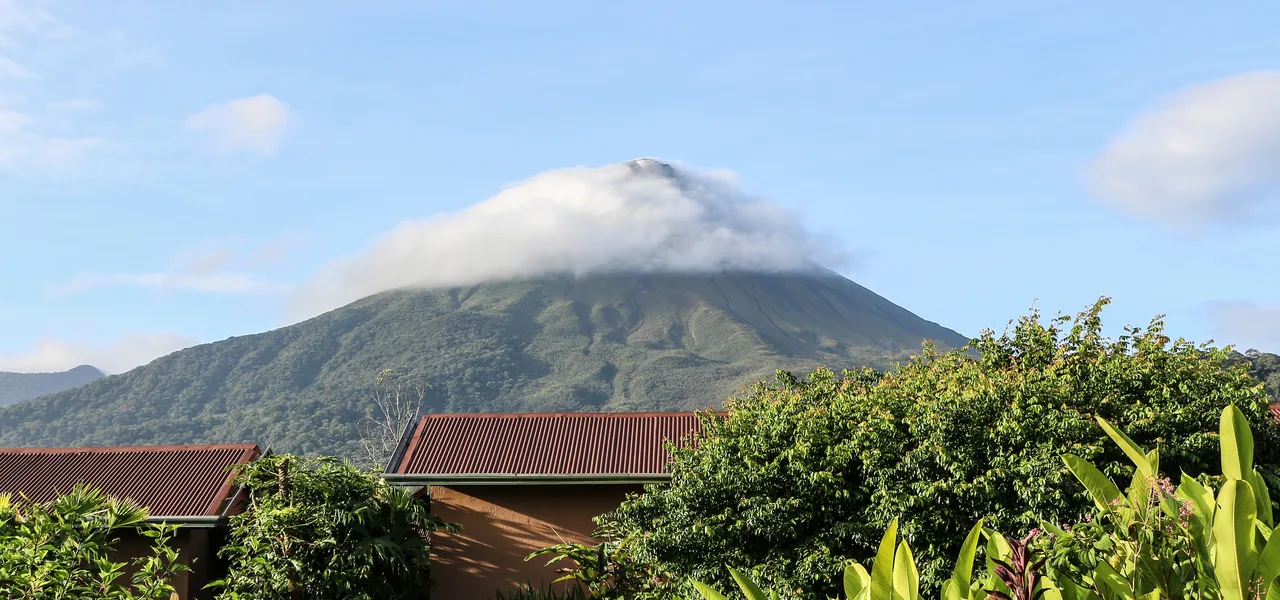
La Fortuna and Arenal Volcano
- 3
Arenal — springs and hanging bridges
- 4
Transfer north to Monteverde
- Ridge transfer to Monteverde — Four to six hours over the mountain road — one of the harder drives in Central America. Do it in one go; there is no stop worth making halfway.
- 5
Monteverde Cloud Forest
- 6
Transfer to the Pacific coast
- 7
Manuel Antonio and Quepos
Plan Costa Rica with our tools
Every tool runs in your browser against our dated cost dataset — no sign-up.
TL;DR
Costa Rica’s defining cost is a car decision, not a tourist tax. The country has no city tourist levy and no accommodation tax to budget for; what it does have is a rental-car market that multiplies the daily number the moment you take the wheel. Budget band runs CRC 43,000-89,000 (US$94-194) per day if you get around by bus and public shuttle, and the comfortable band runs CRC 445,000-806,000 (US$971-1,759) once a car, nicer rooms and paid activities are in the mix.
The entry line that actually gets asked at the airport is statutory: US$100 of proof of economic means per month, or part month, of your legal stay, under Article 42 of the General Law on Immigration and Aliens (No. 8764). Bring a bank statement or balance. Alongside it: a passport valid for your stay, and a return ticket, which is what the officer looks at.
The second structural fact is that national parks have moved to online-only ticketing. Manuel Antonio sells nothing at the gate and caps entry at 600 people a day. On which day it closes, SINAC contradicts itself - the park’s own page says Tuesdays, its tariff PDF says Mondays in the July-November low season - so plan around Tuesday and confirm before booking.
One October-specific closure worth knowing before you go: SINAC’s own tariff schedule closes the Corcovado Sirena sector for the entire month of October, for maintenance and rain. That is the sector the classic La Leona-Sirena walk runs through, so the flagship Corcovado traverse is unavailable in October. Corcovado requires an advance email reservation and a registered guide on its two main sectors. Tortuguero sells through the same online system from 6:00am to 3:30pm. Treat park entry as a pre-trip task.
What is genuinely cheap here is food and ground transport. Numbeo, last updated 2 October 2026, puts an inexpensive meal at CRC 5,486.88 and a one-way bus ticket at CRC 500. What is not cheap is the advisory: the US State Department rates Costa Rica Level 2, Exercise increased caution, issued 2 April 2026, on crime, and its own text is explicit that violent crime also affects tourists.
Who it’s for
You are the person who wants wildlife density and outdoor access without driving a circle of the continent. Costa Rica gives you that at a genuinely fair price on public transport, and at a poor one if you need a car. It suits travellers who will trade a packed itinerary for two or three anchor places - Arenal, Monteverde, the Osa - and sit in them.
It is a good fit if you are comfortable with park logistics being scheduled in advance rather than improvised, because the online-only ticketing genuinely changes how you sequence a trip. It is a poor fit if you want a cheap week of sightseeing across many regions; the internal transfers are long and the buses are slow, and the distance between Arenal and Manuel Antonio is the reason so many itineraries here are two-week rather than one-week.
On safety: this is a country where the ordinary risk is bag-snatching and drink spiking rather than armed robbery, but armed robbery and homicide do occur, the advisory says so directly, and the mitigations are cheap and easy. Do not walk alone at night, do not leave valuables in a car, and do not walk on empty beaches after dark.
Quick Facts
| Currency | Costa Rican colon (CRC, colones) |
| Exchange rate | 1 USD = 458.2758 CRC (Xe mid-market, 2 Oct 2026 19:01 UTC; open.er-api 456.6219 same morning, agreeing within 0.36%) |
| Language | Spanish is official; English is widely spoken in tourism |
| Timezone | GMT-6 (CST), no daylight saving |
| Entry | No visa for US passports; stays up to 180 days, granted by the immigration agent at entry |
| Visa fee | None for US passport holders |
| You must have | Proof of economic means of US$100 per month or part month of stay, plus an onward ticket |
| Airport | Juan Santamaria International (SJO), about 17km from San Jose |
| Tourist tax | No city tourist tax and no accommodation levy; the entry test is the US$100 economic-means requirement, not a fee |
| Park ticketing | Online-only at Manuel Antonio (600/day cap); advance email reservation at Corcovado; SINAC’s two price lists disagree by US$1-2 per park |
| Peak season | December-April (dry season, Pacific); Tortuguero is best September-November |
| Plugs | Type A and B, 110V, 60Hz |
Getting there
Juan Santamaria International (SJO) is the only international airport, and it is about 17km northwest of San Jose at Alajuela, on the road to the airport. The Daniel Oduber airport near Liberia (LIR) in the Guanacaste northwest serves the Pacific side, so which airport you fly into is a real itinerary decision rather than a detail: SJO is the right door for Arenal, Monteverde and the Central Valley, and LIR is the right one for Guanacaste and the northern Pacific beaches.
There is no high-speed rail, and domestic flights exist but are thin, so almost everyone drives. From SJO the practical options to Arenal (about 130km, three to four hours) are a shared shuttle, a private transfer, or a rental car. The state bus system, run under ARESEP tariffs, is genuinely cheap - a local ticket is about CRC 500 - but it is slow and it does not run reliably to every tourist site, which is why most itineraries pair buses with a car for part of the trip.
One practical warning on the airport. SJO’s immigration hall is routinely described in traveller reports as slow, and the wait has grown as arrivals recovered, so allow a real block of time and do not book a same-day connection to another country out of it.
Where to stay
| Tier | Where | Nightly |
|---|---|---|
| Budget | Budget hotels and guesthouses, San Jose and La Fortuna | CRC 25,000-45,000 (~$55-98) |
| Budget | Cabinas and family-run lodges, Monteverde and Manuel Antonio | CRC 20,000-50,000 (~$44-109) |
| Mid | Mid-range hotels and lodges, Arenal and Monteverde | CRC 90,000-160,000 (~$196-349) |
| Mid | Beachfront accommodation, Jaco and Quepos | CRC 100,000-190,000 (~$218-415) |
| Comfortable | All-inclusive and high-end lodges, Arenal | CRC 350,000-600,000 (~$764-1,310) |
Two prices to anchor against rather than a vague band. Numbeo, last updated 2 October 2026, puts a one-bedroom apartment outside the city centre at CRC 297,474.45 a month (about US$650) and inside the centre at CRC 388,681.30 (about US$850) - which is the monthly figure, not the nightly one, and is the clearest published read on how much a long stay costs. For short stays, aggregator snapshots put San Jose hotel averages in October at about US$85 a night, with properties from roughly US$30 up, and a cheap-hotel average in the low US$80s.
Monteverde and Arenal are not interchangeable and the prices differ. Arenal sits in the hot lowlands with hot springs and the volcano; Monteverde is up on the cloud-forest ridge at about 1,300m, cooler and wetter, and the whole reason people go. Both are in the Guanacaste and Puntarenas provinces, and the road between them is one of the more punishing in the country.
Where to eat
| Spot | Meal |
|---|---|
| Inexpensive restaurant (Numbeo, 2 Oct 2026) | CRC 5,486.88 (range 3,500-10,000) |
| Mid-range, three courses for two (Numbeo) | CRC 25,500 (range 18,000-52,000) |
| Fast-food combo (Numbeo) | CRC 5,000 (range 4,500-5,500) |
| Cappuccino (Numbeo) | CRC 2,059.89 |
| Domestic draft beer, one pint (Numbeo) | CRC 1,500 (range 1,000-2,800) |
| Bottled water, 50oz (Numbeo) | CRC 1,240.34 |
| MONTHLY grocery basket (Numbeo, family of four, excl. rent) | CRC 1,629,430.5 (about US$3,556) |
Gallo pinto - rice and beans with the whole country in it, plus eggs, salsa and often meat - is the breakfast everyone eats, and the casado, a set lunch plate, is the standard working meal. Both are inexpensive and good.
Add 10% service and 13% tax to restaurant bills, which is the reason the menu price and the total never match.
The grocery line is the useful one for budget planning. Numbeo’s family-of-four basket at CRC 1,629,430.5 a month (about US$3,556) is roughly a week’s supermarket food for four people, which is why cooking or a mix of cooking and cheap eating is where the real savings sit in this country. Buy where the food is: a franchement cheaper city than a resort town, and markedly cheaper in San Jose than on the Nicoya or Osa.
Itinerary sketch (7 days / 6 nights)
Seven days is the minimum that does not feel like a commute. This is the classic Arenal-plus-Pacific arc, sequenced so the two long transfers do not sit back to back.
- San Jose and the Central Valley - land at SJO, take the day slowly. The Central Valley at about 1,200m is the coolest part of the country and has the National Museum and the coffee and orchid growers’ estates around the city. This is also where you collect the altitude back after flying in.
- La Fortuna and Arenal Volcano - the drive north, three to four hours from SJO. The volcano trail is short and easy; the old lava flows from the 1992 eruption run across the park floor and are easy to walk over.
- Arenal - hot springs and hanging bridges - Tabacon is the famous one and it costs real money, but the free option exists and most people rate it better: the Rio Tabacon free hot springs, roughly a ten-minute drive from town, are genuinely good, and Tabacon sits immediately beside them. Do not treat the paid resort as the only way to see the springs.
- Transfer north to Monteverde - a long, slow, genuinely unpleasant drive of four to six hours over the ridge, one of the more demanding transfers in Central America. Get it done in one go and use the next day to do nothing hard.
- Monteverde Cloud Forest Reserve - early, and take a guide: the reserve is habitat and the birding is genuinely world-class, but the trails are muddy and easy to get turned around in without someone who knows them.
- Transfer to the Pacific coast - down to Quepos and Manuel Antonio, another long leg. Manuel Antonio is closed every Tuesday, so sequence this trip so that day 6 or 7 is not a Tuesday.
- Manuel Antonio and Quepos - rainforest running straight down to the Pacific, sloths and monkeys on the trails in the morning, and the town’s own beaches if you want them. Book this entry online in advance; it is capped at 600 people a day and it sells out.
Activity and park costs
Every figure here is the non-resident rate taken from SINAC’s own park pages, and each is stated with IVA (VAT) included as SINAC publishes it. The rates are strikingly uniform across parks - that is SINAC’s tariff structure, not a coincidence.
SINAC publishes two different price lists, and they disagree. Both are printed here rather than averaged.
| Park | Park’s own SINAC page | SINAC’s official tariff PDF | Booking requirement |
|---|---|---|---|
| Volcan Arenal | US$16.95 | US$15 | Online system; open daily 8am-4pm |
| Manuel Antonio | US$18.08 | US$16 | Online only; see the closure-day contradiction below; 600/day cap |
| Corcovado | US$16.95 | US$15 | Prior reservation by email; registered guide on main sectors |
| Tortuguero (Cuatro Esquinas / Jalova) | US$16.95 | US$15 | Online system; sales 6:00am-3:30pm |
| Volcan Poas | US$16.95 | US$15 | Online system; parking CRC 2,750 for light vehicles |
| Monteverde Cloud Forest | not a SINAC park | not listed | Private/CTE reserve; operator-set pricing |
The two lists are both first-party, both from SINAC, and they do not agree: every park is US$1 to US$2.08 cheaper on the tariff PDF than on its own park page. The PDF (Tarifas de ingreso a areas silvestres protegidas) is the formal posted schedule; the individual park pages are the more recently maintained figures and are IVA-inclusive where the PDF is not clearly labelled. We are not picking a winner by averaging, because averaging two different scopes manufactures a price neither source holds. Budget the higher, park-page figure - it is the one most recently maintained, and under-budgeting a park fee by US$2 per park across five parks is US$10 you will find out at a gate. Children 2-12 pay US$5.65 in both lists; under-2s are free.
The tariff PDF carries no publication or effective date. It does not say “2026”, and it still carries a Turrialba line referencing eruptions “2014-2015”, which is a reason to treat it as the standing posted schedule rather than a current-year instrument. That is exactly why the per-park pages are the better planning figures and why both are shown.
Monteverde is not a SINAC park. The Cloud Forest Reserve is a private conservation-area reserve with operator-set pricing and no SINAC entrance fee, so it does not appear in either list. A guide that quotes a “Monteverde park fee” is quoting something that does not exist.
Two more things the tariff PDF says that the park pages do not, and both matter more than the price:
- Corcovado’s Sirena sector is closed for the whole of October, for maintenance and because it is the wettest month of the year. October is inside the season most guides call good, and this is the sector the classic La Leona-Sirena walk depends on. If you are in Costa Rica in October, the flagship Corcovado traverse is not available. Plan Corcovado around San Pedrillo or Los Patos, or go outside October.
- The PDF says Manuel Antonio closes on Mondays during the low season (July-November); the park’s own page says closed Tuesdays, year-round. We could not reconcile these, and the Tuesday closure is corroborated across the park page and widely reported independently. Treat Tuesday as the closure day to plan around and check with SINAC before you commit non-refundable bookings to a specific date.
Read the Tortuguero row twice, because that page carries two different tariffs and the cheaper one is a real trap. SINAC’s Tortuguero page publishes US$16.95 for Sector Cuatro Esquinas and Jalova, and separately, further down the same page, US$2.26 for the Sendero Cerro Tortuguero trail. These are different access points in the same park, not a contradiction and not a corrected price. Anyone booking a Tortuguero boat trip from Barra del Tortuguero or walking the Cerro trail is on the US$2.26 figure; the park’s main sector is US$16.95. We are not averaging them.
Three booking facts that change an itinerary, all from SINAC’s own pages:
- Manuel Antonio sells no tickets at the gate. Its SINAC page states the entries are obtained only through the SINAC online services site, and the park is open Wednesday to Monday 7am-3pm and closed Tuesdays. The 600-a-day capacity cap is why it books out ahead in high season.
- Corcovado requires an email reservation to acosa.reservaciones@sinac.go.cr, and SINAC states that visitors should enter through official access posts preferably accompanied by a registered guide, with the guide compulsory on the La Leona-Sirena and Los Patos-Sirena sectors. This is the single most logistics-heavy park in the country and the one most independent travellers get wrong.
- Tortuguero’s Cerro trail ticket window is 6:00am to 3:30pm, via the online system, and the card networks accepted are listed explicitly.
The free counterpoint worth knowing: SINAC states that 100% of the Arenal entry fee goes to the Fondo de Parques Nacionales, which funds the protected areas collectively, so the entry is not a resort fee dressed up as a park fee.
Off-park activities are where a budget really moves. Hot springs day passes at Tabacon have been quoted in the US$96-125 range in recent traveller reports, against a free alternative a few minutes away. Guided tours - ziplining, night walks, coffee tours, rafting - are priced per operator rather than by any site, so treat them as negotiated rather than listed. [the hot-springs pass figures are traveller reports, not the operator’s own published tariff page, which we did not reach]
Cost guide (from dataset, hand-verified October 2026)
| Item | Budget | Mid-range | Comfortable |
|---|---|---|---|
| Accommodation | CRC 20,000-45,000 | CRC 90,000-160,000 | CRC 350,000-600,000 |
| Food | CRC 12,000-22,000 | CRC 30,000-45,000 | CRC 50,000-85,000 |
| Local transport | CRC 4,000-9,000 | CRC 22,000-30,000 | CRC 25,000-55,000 |
| Activities & park fees | CRC 7,000-13,000 | CRC 18,000-25,000 | CRC 20,000-66,000 |
| Daily total | CRC 43,000-89,000 | CRC 160,000-260,000 | CRC 445,000-806,000 |
| In USD at 458.28 CRC/USD | US$94-194 | US$349-567 | US$971-1,759 |
| Flights (round trip) | US$500-700 | US$500-700 | US$700-1,100 |
| Visa (one-off) | US$0 | US$0 | US$0 |
The single most important thing to understand about that table is that it is not a car table. The transport row is the whole story: CRC 4,000-9,000 a day (about US$9-20) on buses and public shuttles, against CRC 25,000-55,000 (about US$55-120) the moment a rental car, its fuel, and the mandatory third-party liability insurance are in the budget. Costa Rican rental insurance is not optional and not cheap, and an unbudgeted car can consume the entire difference between the budget and mid bands several times over. If you are choosing one thing to spend on, spend on a car and save on nothing else; if you are choosing one thing to avoid, avoid the car and accept long transfers.
Entry costs you will not have budgeted:
- There is no visa fee for US passport holders. The entry test is the US$100 per month of economic means, which is a proof-of-funds requirement rather than a payment to anybody.
- There is no city tourist tax and no accommodation levy. This is worth stating plainly because it is the most common line item in generic Central America budget writing and it does not apply here.
- Park entry is US$15-18.08 per park for an adult non-resident - depending on which of SINAC’s two first-party lists you read - plus a guide where one is compulsory. Five parks at the higher figure is about US$85; the five days that matter on this itinerary are Arenal, Poas, Monteverde (no SINAC fee - it is a private reserve), Manuel Antonio and either Corcovado or Tortuguero.
What the sources behind these bands can and cannot support. The food, transport and utility figures come from Numbeo, last updated 2 October 2026, built on 1,306 entries in the past 12 months from 99 different contributors - a wide contributor base by that site’s standards, and the best-published cost read on the country, but crowd-sourced and directional rather than authoritative. The park fees are first-party and exact, because SINAC publishes a tariff per park. The accommodation bands are the weakest of the three: they are built from an aggregator average (about US$85 per night in San Jose in October) and Numbeo’s monthly rent figures rather than from a rate sheet, so they are planning numbers and a booked rate is the only real one.
One cross-check worth running against yourself. Numbeo states that the average monthly cost of living for a single person in Costa Rica is CRC 438,634.9, which is about US$957.14 at the house rate of 458.2758, against its own parallel estimate of US$959.3. That is a 0.22% gap, and it is a useful sanity check that the rate we publish and the colones figures we sourced are describing the same country on the same day.
Safety
The US State Department advisory for Costa Rica is Level 2, Exercise increased caution, issued 2 April 2026, with crime as the sole risk factor. Read the advisory’s own summary rather than the headline: “Petty crime is common throughout Costa Rica. Violent crime also affects tourists. This includes armed robbery, homicide, and sexual assault.” That is the most direct statement the US government makes about any destination, and it is worth sitting with.
Level 2 is driven by ordinary crime, not by a war, a disaster or a health emergency - the reason it clears the editorial bar here is that it is not Level 3. Every guide in this series carries its advisory level and issue date, and this is the one to read properly rather than skim.
The specific advisories are concrete and cheap to follow: do not physically resist a robbery attempt, do not display expensive watches or jewellery, stay aware of surroundings, and avoid walking alone on poorly lit beaches or streets. Dial 911 for police; the US embassy’s after-hours line is +506-2220-3127.
The advisory flags one thing that is not about crime and belongs higher in this section than most travellers expect: deadly rip currents. The US embassy is explicit that rip tides kill dozens of US citizens every year in Costa Rica, and its guidance is to swim only in designated areas, look for lifeguards, follow all signs and flags, and not swim alone or after drinking. Costa Rica also sits in an active earthquake and volcanic zone. Marijuana and marijuana-related products remain illegal here.
Two practical safety notes specific to this country. Drugged or spiked drinks are the recurring traveller-reported risk, particularly in bars in the tourist towns and on the solo-traveller scene, and the mitigation is straightforward: keep sight of your drink, and decline the friendly stranger who watches it for you. Separately, the long interior drives are genuinely tiring - a four-to-six-hour mountain transfer on a poor road is a real fatigue risk, and it is the most common way travellers have a bad day here that has nothing to do with crime.
Good to know (2026)
- The economic-means rule is statutory and quotable, and it is the entry line item people miss. Article 42 of the General Law on Immigration and Aliens (No. 8764) and Article 30 of the Immigration Control Regulation (Executive Decree No. 36769-G) require proof of economic means of US$100.00 per month, or partial month, of legal stay, a valid passport, a visa where one is required, a return or onward ticket, and no impediment to entry. Costa Rica’s official visitor guide adds that the officer may ask to see the funds. Carry a bank statement and a printed onward ticket; this is a five-minute preparation that prevents a genuinely unpleasant afternoon.
- Your stay length is decided at the gate, not by your itinerary. The ICT states the maximum legal stay is determined by the immigration agent at entry, and that Group 1 countries - which includes the United States - get up to 180 calendar days, non-extendable. It also states the officer may write a different number in your passport than you asked for. Do not build a non-refundable booking around the full 180 days.
- Bus fares are regulated, so they are knowable in advance. ARESEP, the public-services regulator, sets approved interprovincial bus tariffs and publishes them per route; companies must request a cost review at least annually and ARESEP runs extraordinary reviews twice a year on salaries, fuel and imported inputs, which together are 70% of operators’ costs. There is a concession rate that is genuinely worth knowing: seniors over 65 do not pay on routes under 25 km, pay 50% on routes of 25-50 km, and 75% above 50 km. If you are over 65, that is real money and it is on the regulator’s own page.
- The park booking model is the biggest change to how this trip is planned. SINAC moved Manuel Antonio to online-only ticketing, capped it at 600 visitors a day and closed it on Tuesdays. Corcovado takes reservations by email and requires a registered guide on two sectors. Tortuguero sells online from 6:00am to 3:30pm. This is not a rounding detail - planning a Costa Rica trip around walking up at a gate is now the most common way people get turned away from the park they came to see.
- SINAC publishes two price lists and they disagree, so this guide shows both. Its official tariff PDF puts the non-resident adult rate at US$15 for Arenal, Corcovado, Tortuguero and Poas and US$16 for Manuel Antonio; the individual park pages put the same entries at US$16.95 and US$18.08, IVA-inclusive. Every park is US$1-2.08 cheaper on the PDF. Both are first-party, neither is averaged here, and the guide budgets the higher park-page figure as the better-maintained one. The PDF carries no effective date and still references 2014-15 eruptions at Turrialba, which is why it should be read as a standing schedule rather than a current-year instrument. Separately, SINAC states that 100% of the Arenal entry goes to the Fondo de Parques Nacionales, used to fund all protected areas collectively.
- Two closures are worth planning around, and one of them is October-specific. SINAC’s tariff schedule closes the Corcovado Sirena sector for the whole month of October, for maintenance and because it is the wettest month - and Sirena is the far end of the classic La Leona-Sirena walk, so the flagship Corcovado traverse is not available in October; San Pedrillo and Los Patos remain. Separately, Manuel Antonio’s closure day is genuinely disputed: its own park page says closed Tuesdays year-round, while the tariff PDF says closed Mondays during the July-November low season. We could not reconcile the two and the Tuesday reading is the far more widely corroborated, so treat Tuesday as the day to avoid and verify with SINAC before committing non-refundable bookings.
- Monteverde’s cloud forest reserve is not a SINAC park. It is a private conservation-area reserve with operator-set pricing and no SINAC entrance fee, which is why it appears in neither SINAC list. Any guide quoting a “Monteverde park fee” is quoting a charge that does not exist.
- Poas has a live volcanic risk and check it before you go. Poas is monitored by OVSICORI and has been placed on warning levels for activity at various points; its crater is 1,320m across and 320m deep with a hot acidic crater lake between 20 and 50C, and SINAC can close the trail to it. The park is also the closest volcano day trip from the Central Valley. Verify the current status with SINAC before you drive up.
- December to April is dry season and peak season at once. The Pacific side is reliably dry through that window and the prices are at their highest. September to November is green season on the Pacific - bright mornings, hard afternoon showers, empty trails and lower rates - but that is exactly Tortuguero’s best window, because the Caribbean dries before the Pacific does. Our
peakMonthsis set to 12-4 for the Pacific-first traveller who wants dry roads and the most reliably bookable parks; if your interest is turtles rather than beach weather, the Caribbean season is the one to plan around. - You are in a 110V country. Costa Rica kept the North American 110V system, so type A and B plugs and US-style chargers work directly. This is a genuine regional outlier - most of Latin America is 220V - so a European or UK adapter will not fit and a visitor who assumes Latin American voltage conventions will arrive with unusable kit.
- Costa Rica is not a Schengen or any other visa-scheme member, so a stop here does not consume Schengen 90/180 days. It is however in the region covered by the EES/ETIAS conversation the site covers separately, and Costa Rica’s own entry regime is entirely separate from both.
Frequently asked questions
- Do US citizens need a visa for Costa Rica?
- No. A US passport holder visiting as an ordinary tourist does not need a visa for stays of up to 180 days, and the State Department states plainly that authorities may allow visitors to stay up to 180 days without a visa, though it is not guaranteed. You do need a passport valid for the period of your stay and a return or onward ticket - the ICT lists both as requirements, and the return ticket is the one the immigration officer actually asks for at the gate. The stay length is set by the immigration agent at entry and may be shorter than you asked for, so do not build a plan on the full 180 days being granted automatically.
- What is the US$100 per month entry requirement?
- It is the proof-of-economic-means rule, and it is statutory rather than a rumour. Article 42 of Costa Rica's General Law on Immigration and Aliens (No. 8764) and Article 30 of the Immigration Control Regulation (Executive Decree No. 36769-G), both quoted on the Costa Rican Tourism Institute's entry-requirements page, require every foreign national entering the country to present proof of economic means of a minimum of US$100.00 per month, or part month, of their legal stay. Costa Rica's official visitor guide notes that the immigration officer may ask you to demonstrate you hold those funds. In practice that means a bank statement or a bank balance, plus your onward ticket, and it is the single most commonly cited thing an un-prepared visitor gets held up on at SJO.
- Can you buy national park tickets at the gate?
- Not reliably, and for the most popular park, definitely not. Manuel Antonio's official SINAC page states the tickets are obtained only through the SINAC online services site, and the park is closed on Tuesdays. The park's daily capacity is capped at 600 visitors, which is why it sells out days ahead in high season. Corcovado goes further and requires a prior reservation by email to acosa.reservaciones@sinac.go.cr, with a registered guide required on the La Leona-Sirena and Los Patos-Sirena sectors. Tortuguero also sells through the online reservation system, with ticket sales from 6:00am to 3:30pm. Budget the ticketing as a pre-trip task rather than a walk-up expense.
- Is Costa Rica expensive?
- It depends almost entirely on whether you rent a car. Food and buses are cheap by regional standards - Numbeo, updated 2 October 2026, puts an inexpensive meal at CRC 5,486.88 (about US$12), a mid-range three-course meal for two at CRC 25,500, and a one-way local bus ticket at CRC 500 (about US$1.09). Accommodation is where it bites: a one-bedroom apartment outside the city centre runs CRC 297,474.45 a month (about US$650), and aggregator snapshots put San Jose hotel averages in October near US$85 a night [inferred: no first-party rate sheet was reachable, so treat this as a planning number rather than a quote]. Our budget band assumes you get around by bus and shuttle; our comfortable band assumes a rental car, which is the single biggest cost step in a Costa Rica itinerary.
- Is October a good time to visit?
- It is a trade rather than a clear yes. December to April is the dry season and the peak, with the Pacific reliably dry; October is green season on the Pacific, meaning bright mornings and a strong afternoon shower, but also green hills, waterfalls at full flow after nine months of rain, fewer crowds and lower rates. October is, however, inside Tortuguero's best window, because the Caribbean side dries out before the Pacific does. Plan two closures around it. SINAC's tariff schedule closes the Corcovado Sirena sector for the whole of October - the sector the classic La Leona-Sirena walk runs through - so use San Pedrillo or Los Patos instead. And Manuel Antonio's closure day is itself disputed: its park page says Tuesdays, SINAC's tariff PDF says Mondays in the low season. We could not reconcile them, so treat Tuesday as the day to avoid and confirm before booking.